

















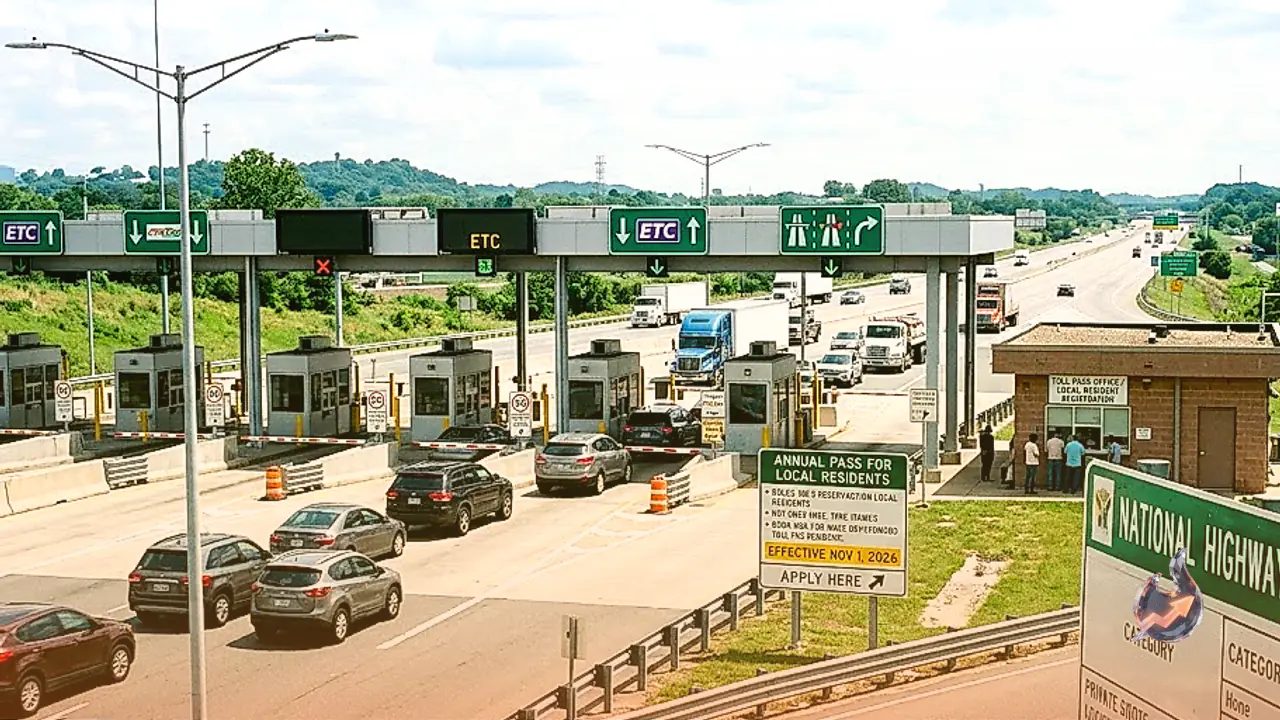

Frequent commuters who cross national highways and pay toll taxes regularly will find an important update awaiting them. The central government has decided to implement modifications in highway toll regulations, which are scheduled to come into effect starting November 1, 2026. Under these updated provisions, eligible local residents will be able to secure annual discounted toll passes for their personal vehicles. However, this facility is not designed for everyone universally; eligibility will depend heavily on where an individual resides and the specific operational arrangements enforced at the concerned toll plaza. Regular highway travellers must understand the applicable pass rates and the specific conditions they need to fulfill.
Annual pass pricing structured by residential boundaries
According to the notification issued by the Ministry of Road Transport and Highways, eligible local residents can take advantage of this facility exclusively for their private vehicles. The pricing is divided based on residential locations. For eligible individuals living outside the boundaries of a municipality or local body, the annual pass will cost 1,500 rupees. Conversely, for eligible residents living within such municipal boundaries, the annual cost for the pass is set at 3,000 rupees. Merely being a local resident does not automatically guarantee the issuance of a pass, as the rules and eligibility criteria implemented at the specific toll plaza will be thoroughly examined. In certain scenarios, such as the availability of an alternative road or specific toll collection frameworks, this facility might not be applicable.
Annual pass priced at 1,500 rupees for those outside municipal limits
Under the revised rules, eligible people residing outside the jurisdiction of a municipal corporation or local body can acquire a concessional annual toll pass for their private vehicles priced at 1,500 rupees. This provision will prove beneficial for individuals who need to travel regularly through highway toll plazas from their homes for work or other essential daily tasks. However, before any pass is officially issued, verification of the applicant's eligibility and adherence to the conditions enforced at the relevant toll plaza remains mandatory.
Annual pass set at 3,000 rupees for residents within municipal limits
For eligible individuals whose residences fall within the limits of a municipality or local body, the annual pass will cost 3,000 rupees. This means the pricing structure varies distinctly between the two categories. Therefore, before submitting any application, vehicle owners must ascertain which residential category their home falls under. Simply residing in close proximity to a toll plaza does not give anyone the right to claim a concessional pass, and validation of eligibility will proceed strictly according to the established guidelines.
Categories of people excluded from the concessional pass
This exemption is not granted automatically to every vehicle or individual. As per the official notification, toll plazas where collections are determined based on specific usage frameworks will not accommodate this concession. Furthermore, if an alternative service road or public road is readily available for the commute of a private vehicle, a concessional pass will not be issued for that route. Consequently, checking the operational status of rules at the specific toll plaza beforehand is essential before making any formal application.
Important factors to consider before securing the pass
Since the new regulations become operational on November 1, 2026, eligible locals should proceed only after acquiring complete information regarding pass pricing and application requirements. It remains equally vital to inspect which system is enforced at the specific toll plaza and whether an alternative route exists. Daily highway commuters can significantly reduce travel expenses through these annual passes, provided they meet all eligibility criteria and conditions. For ultimate clarity on the regulations, reviewing the official notification from the Ministry of Road Transport and Highways remains the best course of action.