




















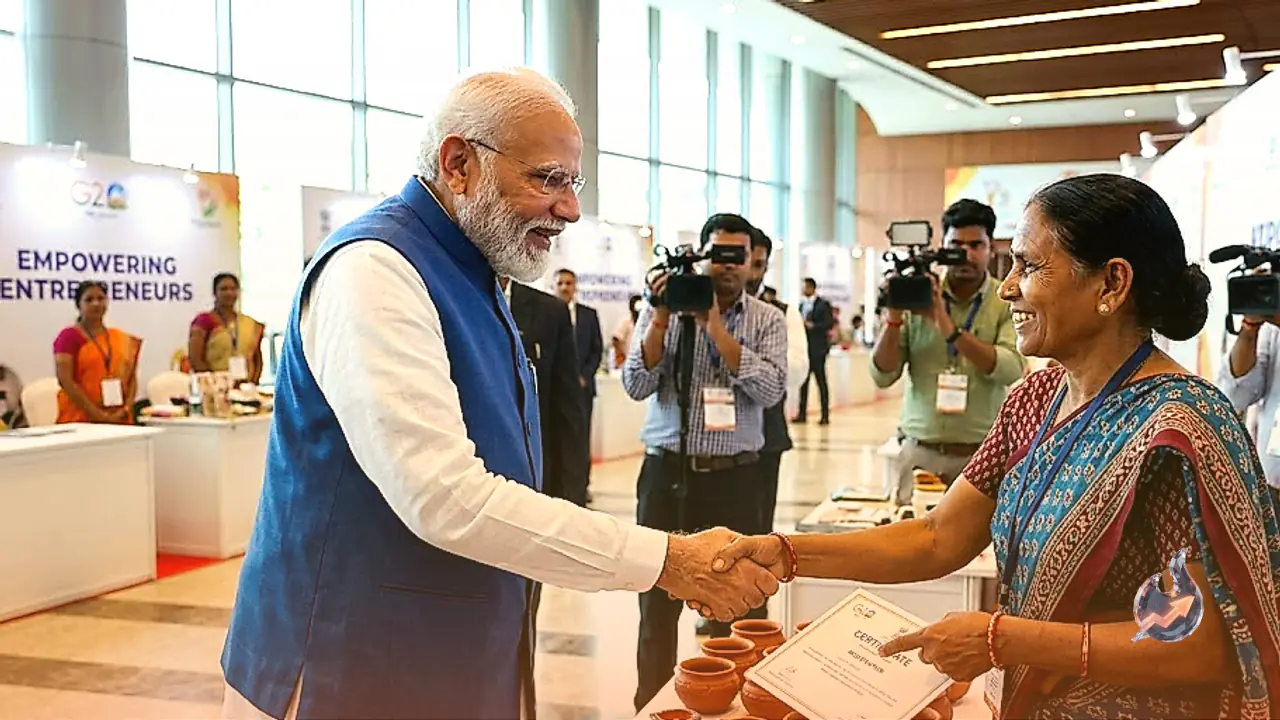

Addressing a media event on Friday, PM Narendra Modi highlighted a fundamental shift in administrative philosophy and governance across the country. He emphasized that the relationship between the government and citizens in 21st-century India is built on mutual trust rather than suspicion. Instead of merely modifying individual regulations, the administration has overhauled the core mindset governing policy creation. Under this new approach, the government is moving rapidly toward a framework where activities are permitted unless explicitly prohibited by law. This means citizens and businesses no longer need to seek repeated official approvals for actions that are not barred by statutory rules. According to PM Modi, India has positioned itself as a major beacon of economic growth and global optimism.
Reframing Industrial Policy Away from License Raj
Reflecting on past governance models, PM Narendra Modi criticized the policies of previous administrations for fostering an environment of artificial scarcity. He noted that former systems forced citizens to repeatedly approach government authorities even for basic necessities. The restrictive nature of the historical License Raj placed a heavy burden on the national economy, contributing significantly to widespread unemployment. In contrast, current governance prioritizes streamlined administration, proactive reforms, and institutional support for enterprise.
Focusing on industrial output, he asserted that manufacturing enterprises achieving higher production volumes deserve rewards rather than regulatory penalties. He contrasted the earlier mindset, characterized as a Production Linked Punishment (PLP) framework, with the current Production Linked Incentive (PLI) model. By offering financial incentives for increased manufacturing, the initiative has stimulated domestic industrial growth and generated extensive employment opportunities for youth across various sectors.
Advancements in Digital Infrastructure and Mapping Deregulation
Highlighting developments in technology and digital connectivity, PM Modi pointed out that India currently offers some of the most affordable mobile data rates worldwide. Concurrently, the country has grown into a major hub for manufacturing high-quality, low-cost mobile handsets. He illustrated the elimination of archaic regulatory barriers by referencing the former restrictions surrounding geographical mapping.
Previously, creating a map of India required cumbersome official permissions. While foreign satellites could freely map Indian territory, local citizens and entities were restricted from undertaking mapping activities. The government completely scrapped this obsolete regulatory framework, thereby empowering domestic developers, spatial researchers, and tech enterprises to leverage geographic data freely.
Strengthening Border Infrastructure and Transport Networks
Turning to national security and physical connectivity, PM Narendra Modi underscored a strategic shift regarding border infrastructure. He stated that infrastructure along the borders is now treated as a vital strategic asset rather than a vulnerability. The administration has prioritized developing robust border corridors to ensure national security and regional integration.
Furthermore, extensive modernization programs are underway across the nation's public transit infrastructure. Modern reforms are being integrated into Indian Railways, while urban mass transit projects such as the Delhi Metro and the Namo Rapid Rail network continue to expand rapidly. PM Modi concluded that these comprehensive changes demonstrate how India is adapting swiftly to meet modern requirements while maintaining a fast pace of development.