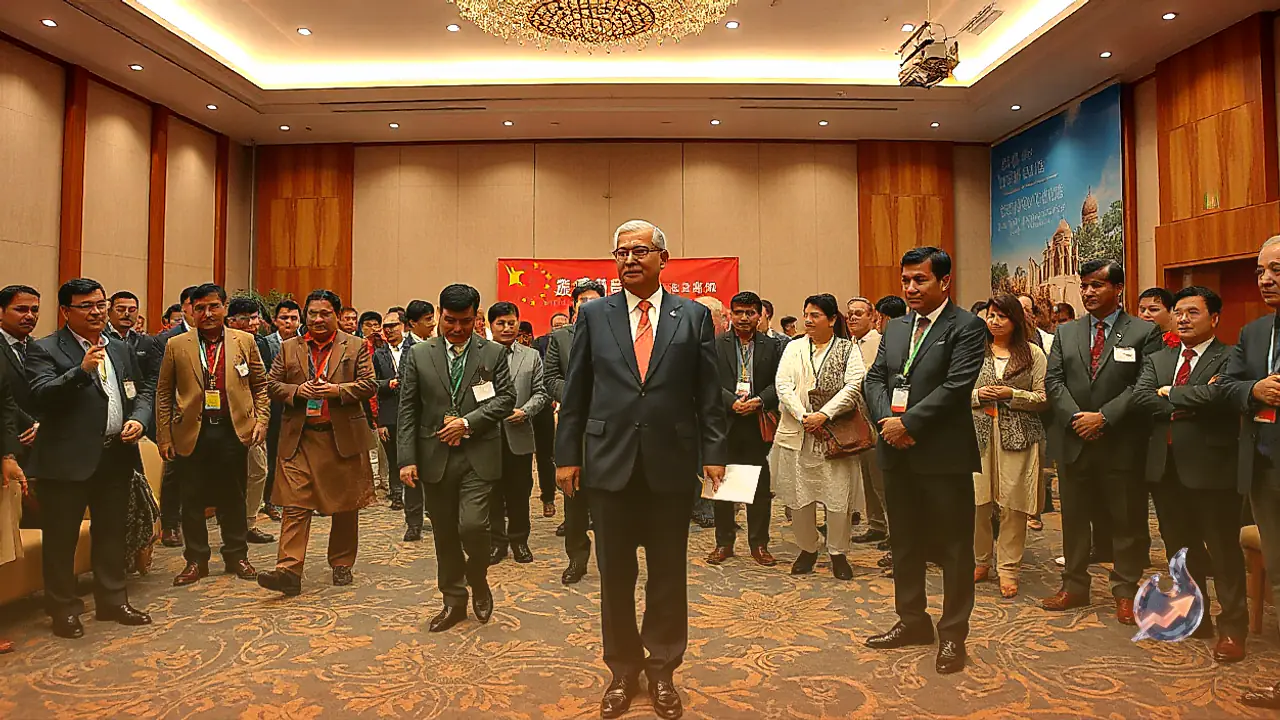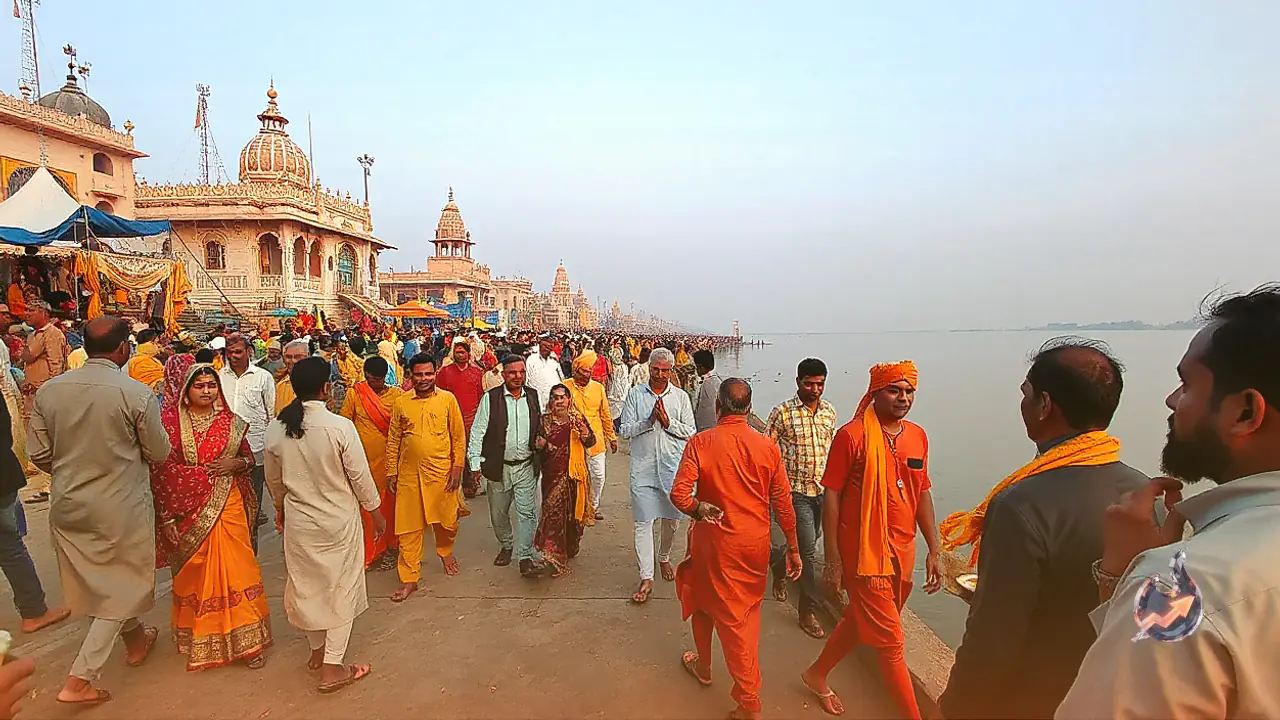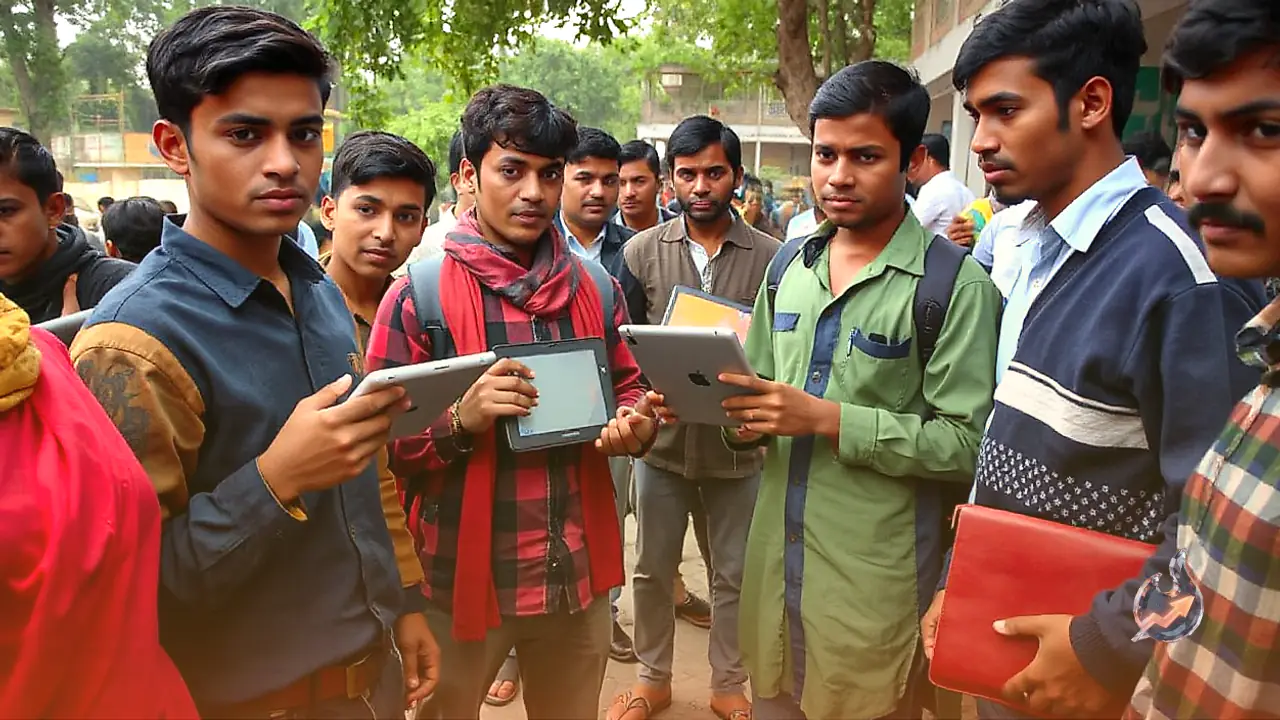

Prime Minister Narendra Modi launched an extensive multi-state outreach campaign on Thursday, completing a whirlwind marathon tour across three key states within a span of 12 hours. Covering West Bengal, Bihar, and Uttar Pradesh, the Prime Minister highlighted distinct developmental agendas aligned with the overarching vision of Viksit Bharat 2047. The high-profile tour commenced with an emphasis on higher education and technological innovation at IIT Kharagpur in West Bengal, shifted toward large-scale infrastructure and connectivity projects in Bihar's Vaishali, and concluded with a focus on youth empowerment and vocational training in Lucknow, Uttar Pradesh. Beyond the inauguration of public welfare schemes, political observers view this triple-state push as a deliberate effort by the Bharatiya Janata Party to lay the groundwork for the crucial 2027 Uttar Pradesh Assembly elections.
Platinum Jubilee Celebrations at IIT Kharagpur and Direct Interaction with Youth
The first leg of Prime Minister Modi's three-state tour began in the Paschim Medinipur district of West Bengal. Here, he attended the Platinum Jubilee celebrations marking the 75th anniversary of India's premier engineering institution, IIT Kharagpur. Interacting directly with the academic community, the Prime Minister launched the '75 Voices for Viksit Bharat' initiative, engaging in an insightful dialogue with 75 selected students. The session focused on reflecting upon the institution's 75-year legacy while exploring how young minds can drive the nation's technological and economic advancements in the coming decades.
Addressing the gathering, Prime Minister Modi shared a personal reflection on overcoming obstacles, emphasizing that tackling difficulties head-on defines his leadership style. "It is in my nature that I cannot rest without challenging a challenge," he remarked. Encouraging the student community, he advised them to remain resilient in the face of complex global and technological hurdles, urging them to view challenges as stepping stones toward innovation and national progress.
Bihar Mega Infrastructure Push Worth Rs 34,470 Crore and the 6-Lane Nitish Setu
Following his engagement in West Bengal, Prime Minister Modi arrived in Vaishali, Bihar, on November 21 to dedicate and lay the foundation stones for developmental projects valued at approximately Rs 34,470 crore. This extensive economic package encompasses projects across critical sectors including road infrastructure, power generation, urban transformation, irrigation networks, healthcare, education, and public transportation.
The centerpiece of the Bihar visit was the inauguration of the newly constructed 6-lane Nitish Setu over the Ganga River, built at a total cost of Rs 4,280 crore. Spanning an impressive length of 19.7 kilometers, this engineering marvel establishes vital high-speed connectivity between North and South Bihar. The southern terminus of the bridge connects to Kacchi Dargah in Patna district along NH-22, while its northern terminus lands at Bidupur in Vaishali district along NH-322.
The operationalization of the Nitish Setu is projected to transform regional logistics and transit. It will significantly alleviate chronic traffic congestion on the existing Mahatma Gandhi Setu and JP Setu. Furthermore, the bridge offers direct access to Patna for residents of the riverine island of Raghopur Diara, enabling local farmers to transport their agricultural produce swiftly to urban markets, thereby boosting rural economic livelihoods. During the event, the Prime Minister gestured dynamically to the crowd, waving his shawl like a traditional angocha, which drew enthusiastic cheers from the assembled audience.
Comprehensive Project Breakdown and Housing Handover in Bihar
The Rs 34,470 crore development package for Bihar comprises two distinct financial allocations. Projects worth more than Rs 15,600 crore were fully completed and formally inaugurated during the event. Concurrently, foundation stones were laid for upcoming projects estimated at around Rs 14,450 crore, marking the commencement of new construction phases across the state.
To promote sustainable urban mobility, Prime Minister Modi officially flagged off 100 PM e-buses. In addition, the event celebrated a major housing milestone under the PM Awas Yojana, facilitating the formal housewarming (graha pravesh) ceremonies for more than 26,900 beneficiaries. These combined initiatives in power, roads, healthcare, and housing are expected to upgrade basic living standards and accelerate economic development across urban and rural Bihar.
Skill Convocation Ceremony in Lucknow and Honoring Skill Warriors
The final leg of the tour brought Prime Minister Modi to Lucknow, the capital of Uttar Pradesh. Attending the 5th Skill Convocation Ceremony held at the Indira Gandhi Pratishthan in Gomti Nagar, the Prime Minister shared the stage with Uttar Pradesh Chief Minister Yogi Adityanath. During the ceremony, 52 national toppers from Industrial Training Institutes (ITIs), National Skill Training Institutes (NSTIs), and trainer training centers were formally felicitated for their technical excellence.
Addressing the graduates, Prime Minister Modi hailed the young technicians and craftspeople as the "skill warriors of future India." He stressed that vocational competence and technical mastery are fundamental to sustaining India's economic growth and achieving self-reliance. He reaffirmed the government's commitment to continuously modernizing training infrastructure so that Indian youth remain competitive in a rapidly evolving global job market.
Political Dynamics and Strategic Roadmap for the 2027 UP Assembly Elections
While the three-state tour officially focused on government inaugurations and youth development, its political ramifications are particularly acute in Uttar Pradesh. Following unexpected electoral setbacks in the 2024 Lok Sabha elections within the state, the ruling Bharatiya Janata Party is actively recalibrating its political strategy ahead of the 2027 Assembly polls.
The party's campaign strategy is expected to center around three key pillars: Prime Minister Narendra Modi's national leadership, Chief Minister Yogi Adityanath's administrative record, and an aggressive development agenda. However, the political landscape in Uttar Pradesh presents a formidable challenge. Samajwadi Party chief Akhilesh Yadav continues to consolidate his PDA (Pichhda, Dalit, Alpasankhyak) alliance targeting backward classes, Dalits, and minorities. Meanwhile, Rahul Gandhi and the Congress party are working to rebuild their organizational presence, and a new alliance forged by Asaduddin Owaisi and Chandrashekhar Azad seeks to influence key voting demographics. Against this backdrop, PM Modi's multi-state outreach serves as an early salvo signaling the BJP's readiness for the upcoming electoral battle.