




















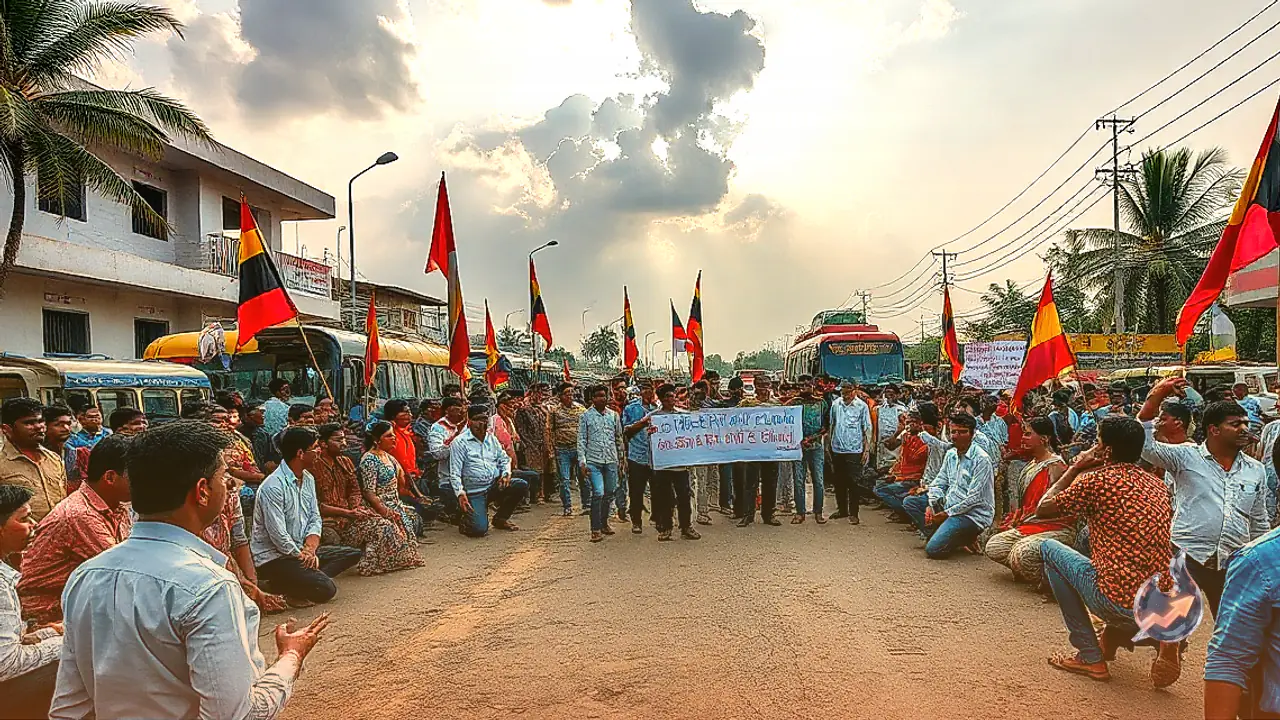

The long-standing conflict over the sharing of Cauvery river water has escalated once again across Karnataka. On August 13, numerous Kannada organizations and agricultural unions launched demonstrations to express their opposition against releasing river water to neighboring Tamil Nadu. Despite calls for a state-wide shutdown from organizing groups, routine public life has not been completely disrupted. Schools, financial institutions, healthcare facilities, pharmacies, and public transportation networks continue to operate according to their regular schedules.
Protest Mobilization in Mandya and Cauvery Basin
The intensity of the demonstrations remains highest in Bengaluru and key districts falling within the Cauvery basin. In Mandya, local farmer unions organized rallies early in the morning, voicing strong objections against administrative decisions prioritizing downstream water releases. Protesting agricultural groups argue that sending water out of the state during periods of strained reservoir storage directly threatens local irrigation and municipal drinking water reserves. Agitations across Mandya reflect deep-seated regional concerns over local resource security.
CWMA Mandate and Water Measurements at Biligundlu
The immediate trigger for the current unrest is an official order issued by the Cauvery Water Management Authority (CWMA). The authority directed Karnataka to release a daily quota of 12,000 cusecs of water to Tamil Nadu over a period of 15 consecutive days. This flow is designated to be monitored and measured at the Biligundlu gauge station. The CWMA order aligned with an earlier technical evaluation and recommendation submitted by the Cauvery Water Regulation Committee (CWRC), which analyzed seasonal rainfall metrics and catchment storage levels before finalizing the figure.Operational Status of Schools, Medical Facilities, and Transport
Daily routines for the general public remain largely operational as civil authorities ensured uninterrupted functioning of critical infrastructure. Across major urban centers including Bengaluru, public buses, auto-rickshaws, metro lines, and private commuter vehicles operate smoothly. Hospitals, emergency clinics, pharmacies, and commercial banking branches remain open to citizens. While certain retail hubs reported slower footfall due to procession rallies nearby, widespread closure of commercial establishments has been effectively avoided.
Bengaluru Police Directives on Law and Order
To prevent public inconvenience and ensure civil stability, the Bengaluru City Police issued a formal press advisory regarding the protests. Law enforcement officials emphasized that while the right to peaceful democratic assembly and freedom of expression is fully respected, any forced closure of commercial entities or obstruction of public transit will draw strict legal consequences. Additional police units have been deployed at key traffic junctions, inter-state transit nodes, and administrative centers to maintain order.
Context of the Inter-State Cauvery Water Sharing Dispute
The distribution of Cauvery river waters remains a sensitive geopolitical and economic subject between Karnataka and Tamil Nadu. Karnataka consistently maintains that seasonal rainfall variability, local reservoir depletion, and regional drinking and farming necessities must dictate water outflow decisions. Conversely, Tamil Nadu emphasizes the timely receipt of its allocated river volume to sustain agricultural cycles in its delta region. The recent CWMA direction has reactivated these core arguments, bringing the dispute back into public focus.