




















The legal troubles for Ruchika Singh are far from over, despite Prime Minister Narendra Modi publicly stating that he forgives her for the derogatory comments she made during a protest at Jantar Mantar in Delhi. Although the Prime Minister shared a video message expressing deep objection and sadness over the offensive language used against a constitutional office, his personal forgiveness does not automatically terminate the criminal charges pending against her. Under the provisions of the Indian criminal justice system, an offense cannot be withdrawn or quashed simply because the victim or complainant chooses to forgive the accused.
Nature of the Charges and Filing of the Complaint
The controversy escalated after a video showing Ruchika Singh making objectionable remarks was widely circulated across social media platforms. Following the viral spread of the footage, Smriti Singh, a resident of Ghaziabad, lodged a formal complaint at the Expressway police station on Wednesday. The complaint alleged that Ruchika Singh intentionally used abusive language to undermine the dignity of the Prime Minister's constitutional position, deliberately spread hatred among the public, and attempted to disturb public tranquility. Based on these allegations, preliminary legal action was initiated, leading to the registration of a Zero FIR.
The police have booked Ruchika Singh under several relevant provisions of the Bharatiya Nyaya Sanhita (BNS). These include Section 352, which pertains to intentional insult with intent to provoke a breach of the peace; Section 353(1), which addresses statements conducing to public mischief; and Section 356(1), which covers the offense of defamation. Because these sections involve matters of public order and social harmony, the prosecution is conducted by the state, rendering individual forgiveness legally insufficient to drop the case.
Compoundable Versus Non-Compoundable Offenses in Indian Law
In Indian jurisprudence, criminal offenses are divided into compoundable and non-compoundable categories. Compoundable offenses allow the parties involved to reach a mutual compromise and settle the matter outside or inside court with minimal procedure. However, non-compoundable offenses are viewed as crimes committed against society or the state rather than just an individual. In such matters, even if the affected person or victim expresses forgiveness, the judicial system mandates that the trial must proceed to its logical conclusion in court. Consequently, the public pardon offered by Prime Minister Narendra Modi does not legally close the investigation or trial against Ruchika Singh.
Precedent from the Supreme Court Incident
A recent judicial event underscores how criminal proceedings continue regardless of personal or judicial pardon. On 10 July 2026, during a proceeding in the Supreme Court, a student named Prabal Pratap disrupted courtroom decorum. He attempted to dictate terms to the bench, threw legal papers into the air, and used abusive language directed at the Chief Justice of India (CJI). Court security personnel acted swiftly to remove the individual from the courtroom to restore order.
The matter came up before a bench comprising Justice K.V. Viswanathan and Justice Alok Aradhe. Observing the circumstances, the court recognized that the petitioner's outburst was the result of severe mental distress and deep frustration, and therefore decided not to initiate punitive contempt actions against him. Although the bench pardoned Prabal Pratap and his companion, the legal mechanism of criminal law proceeded independently.
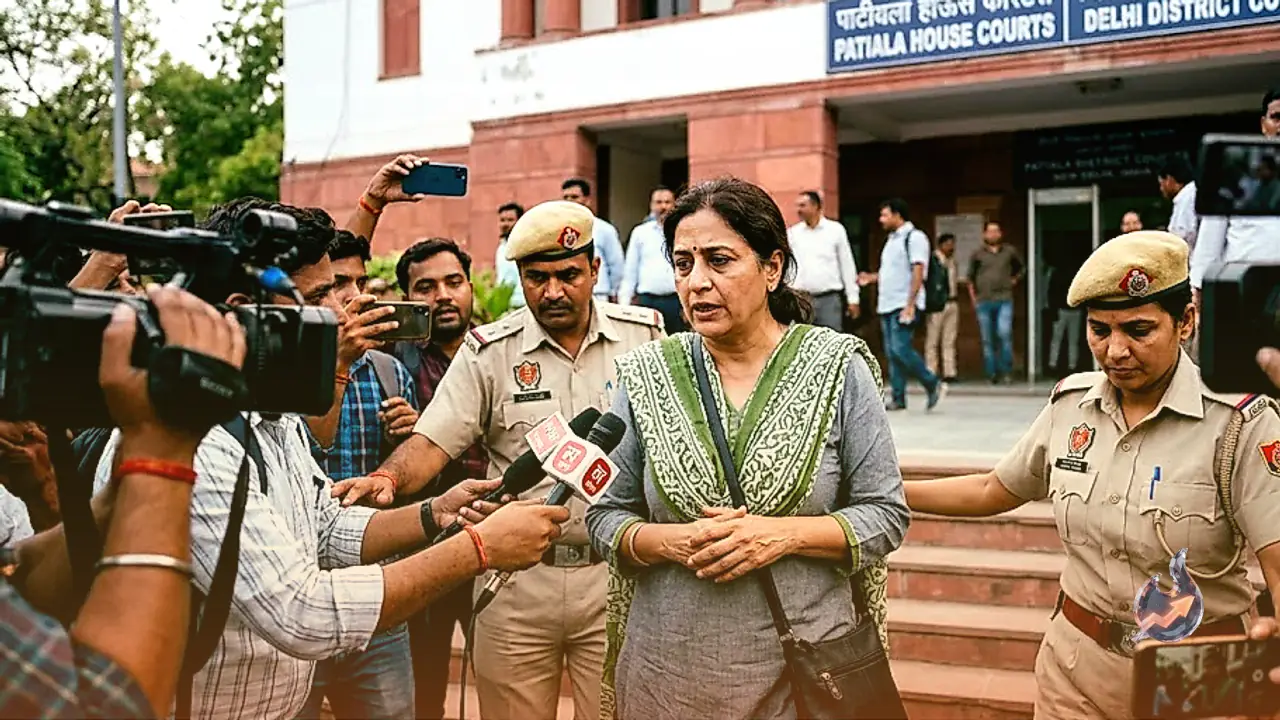
The Delhi Police registered an FIR at the Tilak Marg police station and formally arrested the individuals. Later, Patiala House Court granted bail to Prabal Pratap and his associate Chander Bhan on a personal bond of Rs 25,000. Additionally, Lucknow University placed both accused students under indefinite suspension following the incident. This case serves as a clear precedent demonstrating that forgiveness by an authority or victim does not halt the statutory criminal process.