



















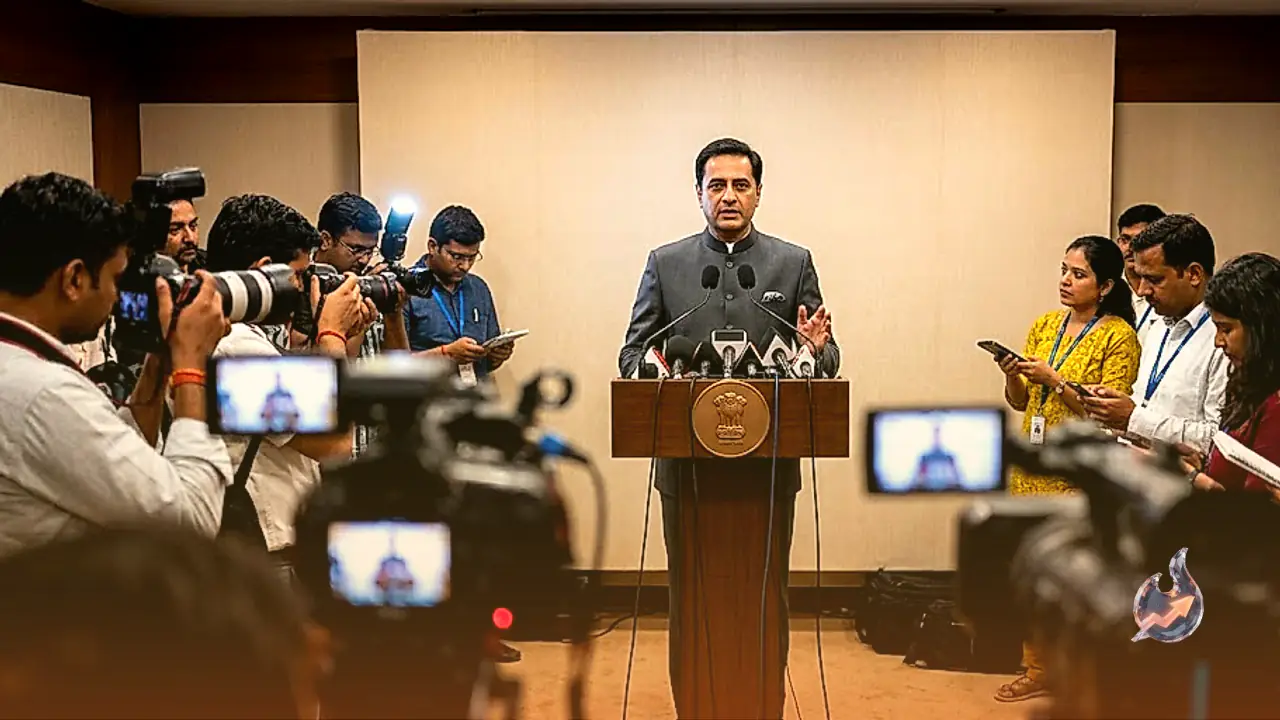

The Ministry of External Affairs has adopted a firm diplomatic stance following recent remarks by Maldives President Mohamed Muizzu regarding the revival of the South Asian Association for Regional Cooperation (SAARC). Responding during a media briefing, Official Spokesperson Randhir Jaiswal made it evident without explicitly naming Pakistan that the entire South Asian region is well aware of which country and what actions are impeding regional progress.
Goodwill and Intent Essential for Regional Progress
Addressing questions during the press interaction, Randhir Jaiswal underlined that India has consistently championed and actively supported robust, meaningful regional cooperation over the past several decades. However, he stressed that every nation across South Asia recognizes precisely which member state and what pattern of behavior remain responsible for disrupting SAARC's functional capabilities. The spokesperson emphasized that genuine goodwill and constructive intentions are the most essential preconditions for any regional initiative to succeed. Without an end to counterproductive actions and support for cross-border terrorism, institutional mechanisms cannot function effectively.
Maldives President Advocates Dialogue and Revival
The Ministry of External Affairs statement follows a recent public address by Maldives President Mohamed Muizzu, who called for reactivating the dormant SAARC framework. During his address, Muizzu urged member nations to address their bilateral and regional differences through diplomatic dialogue. India's official response, however, reiterates a long-standing position: regional platforms cannot operate meaningfully as long as a neighboring country continues its patronage of terror and hostile policies.
Stalled Since the 2016 Uri Terror Attack
SAARC comprises eight South Asian member states: India, Bangladesh, Bhutan, Maldives, Nepal, Pakistan, Sri Lanka, and Afghanistan. The organization last held its summit meeting in 2014 in Kathmandu, Nepal. The subsequent summit was scheduled to take place in Islamabad, Pakistan, in 2016.
However, plans were disrupted following the deadly terror attack on an Indian military encampment in Uri, Jammu and Kashmir, on September 18, 2016. In the wake of that assault, India firmly declined to participate in a summit held under the shadow of state-sponsored terrorism. Standing in solidarity with India, Bangladesh, Bhutan, and Afghanistan also chose to boycott the planned Islamabad summit. Consequently, the regional grouping has remained virtually dormant for nearly a decade.