






















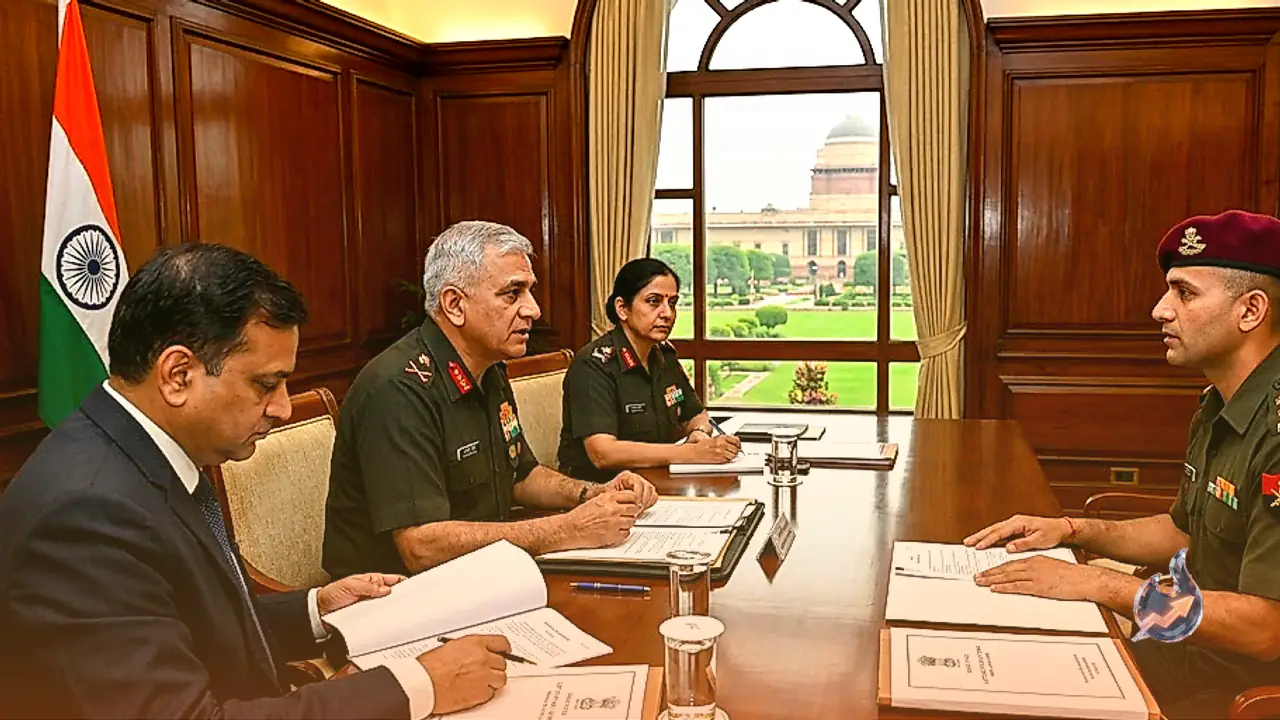

During major ceremonial events such as Republic Day celebrations, Independence Day parades, or state functions, disciplined officers in crisp uniforms can consistently be seen accompanying the President or Governors. Formally designated as an ADC or Aide-de-Camp, these officers are an integral part of official protocol. A widespread perception often persists among observers that this sensitive appointment is reserved solely for officers holding the rank of Major in the military. However, an analysis of service rules and longstanding military traditions reveals a far more dynamic picture.
Is the Rank of Major Mandatory to Become an ADC?
According to established defence regulations, holding the rank of Major is not an exclusive requirement for appointment as an ADC. Conventional service customs and protocol guidelines demonstrate that officers chosen for this responsibility generally hail from the ranks of Captain, Major, or Lieutenant Colonel in the Army, alongside equivalent ranks in the Indian Navy and the Indian Air Force.
Selection does not depend on a rigid rank cutoff. Instead, the primary determinants include an officer's exceptional operational track record, work discipline, physical conditioning, mental acuity, and capacity to coordinate effortlessly with high-ranking dignitaries. The specific rank benchmarks can also differ depending on whether the deployment is as an ADC to the President or to a Governor, meaning promising officers at the rank of Captain or Lieutenant can also be entrusted with this responsibility.
Precedents of Major Rishabh Singh Sambyal and Navya Shekhawat
The appointment dynamics are well illustrated by real-world service records associated with the Secretariat of President Droupadi Murmu. Former ADC Major Rishabh Singh Sambyal attained this position on the back of proven efficiency and commendable military bearing, which inadvertently contributed to the common public impression that the role was meant only for Majors.
Conversely, the appointment of serving ADC Navya Shekhawat highlights the expanding operational horizons for women officers across high-profile military assignments. During extensive ceremonial occasions and official VVIP travels, women officers holding ranks such as Captain or other junior commissioned levels have executed ADC duties with distinction. This confirms that neither gender nor an arbitrary restriction to the rank of Major dictates selection.
The Selection Architecture and Primary Responsibilities
The role of an ADC is far more than a ceremonial assignment; it demands sustained vigilance, profound accountability, and absolute discretion.
The Selection Pipeline: Candidates are drawn internally from the armed forces following a comprehensive screening process. The evaluation entails a detailed assessment of the officer's past service trajectory, drill and ceremonial presentation, confidential recommendations from their Commanding Officer, and structured interviews to assess their suitability for high-visibility protocol duties.
Core Responsibilities: The primary function of an ADC involves providing immediate administrative and protocol assistance to the President, Governors, or senior military commanders during official visits, security briefings, and high-level engagements. Acting as an immediate point of contact, they guarantee that every facet of prescribed protocol, movement coordination, and scheduling is executed without error.
Historical Foundations and Deputation Framework
The lineage of the ADC role traces back to military structures formalized during the British period. Following independence, the Indian armed forces preserved and refined this institutional practice to maintain the highest levels of decorum and ceremonial dignity.
Officers appointed as ADCs typically arrive on deputation from their parent regiments or units for a fixed tenure spanning a few years. During this assignment, they gain firsthand exposure to the functioning of national executive leadership and the complexities of governance protocols. Ultimately, the position reaffirms that distinction in military service is rooted in capability, integrity, and operational merit rather than mere seniority or age.