























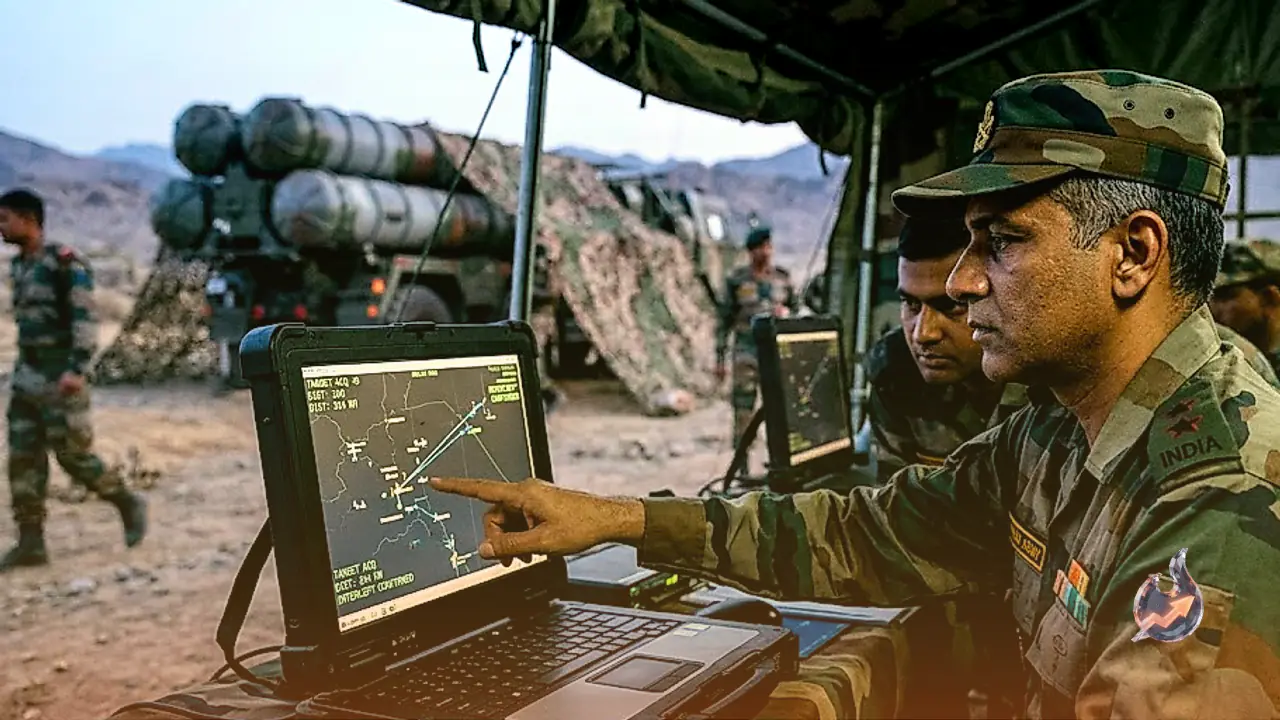

The Indian Air Force has shattered the long-held notion of cross-border adversaries who relied on distance as their ultimate shield. A striking disclosure in the Ministry of Defence annual report has brought to light the country's most significant aerial strike to date. During the course of Operation Sindoor, the S-400 Sudarshan air defence system successfully neutralized a Pakistani special-mission aircraft at an astonishing distance of exactly 314 kilometers. This surface-to-air missile engagement stands recorded as the longest and most precise long-range kill in Indian military history.
Demonstration of Long-Range Capability
The official document highlights this military action as a prime demonstration of the air force's extended-range air defence prowess. It notes that the operation effectively challenged the enemy belief that such vast distances could provide immunity from Indian air defence systems. According to the report, Indian radars quietly tracked the threat, and a long-range surface-to-air missile was guided toward the target positioned near the very edge of its operational envelope. The engagement thoroughly established that targets positioned far away remain well within the reach of India's protective shield.
Prime Minister Visit and Gallantry Awards
Released on September 13, the report details that Prime Minister Narendra Modi subsequently visited the Adampur Air Force Station on May 12, 2025, where he commended the air warriors involved in the mission. It further notes that 219 Presidential Gallantry Awards were presented to air force personnel on August 15, 2025, for their respective roles during the operation. This high-stakes engagement formed a crucial component of a larger integrated air defence effort executed over four intense days of conflict between May 7 and May 10, 2025.
Indigenous Network and Command Coordination
Tasked with safeguarding national airspace, the Indian Air Force utilized centralized control and coordination through its indigenous Integrated Air Command and Control System, known as IACCS. The report outlines that IACCS served as the foundational framework for integrated air defence operations by successfully fusing military and civilian surveillance sensors while providing stakeholders with a common recognized air situation picture. Operations were centrally managed across multiple locations through networked tactical nodes operated by the air force.
Civilian Aircraft Protection and Strikes
These tactical nodes played a vital role in identifying and classifying aerial targets, while trained operators ensured that civilian aircraft were strictly avoided throughout the combat operations. The report alleges that Pakistan kept its civilian airspace active during the hostilities, which included the operation of civilian flights amidst active engagement. Conversely, India maintained a posture focused entirely on ensuring that international air traffic faced no hazard whatsoever. In addition to the long-range kill, the air force targeted Pakistani air defence radars, command-and-control centers, and military infrastructure at locations including Chaklala, Rahim Yar Khan, Sukkur, Murid, Sargodha, Jacobabad, and Bholari.