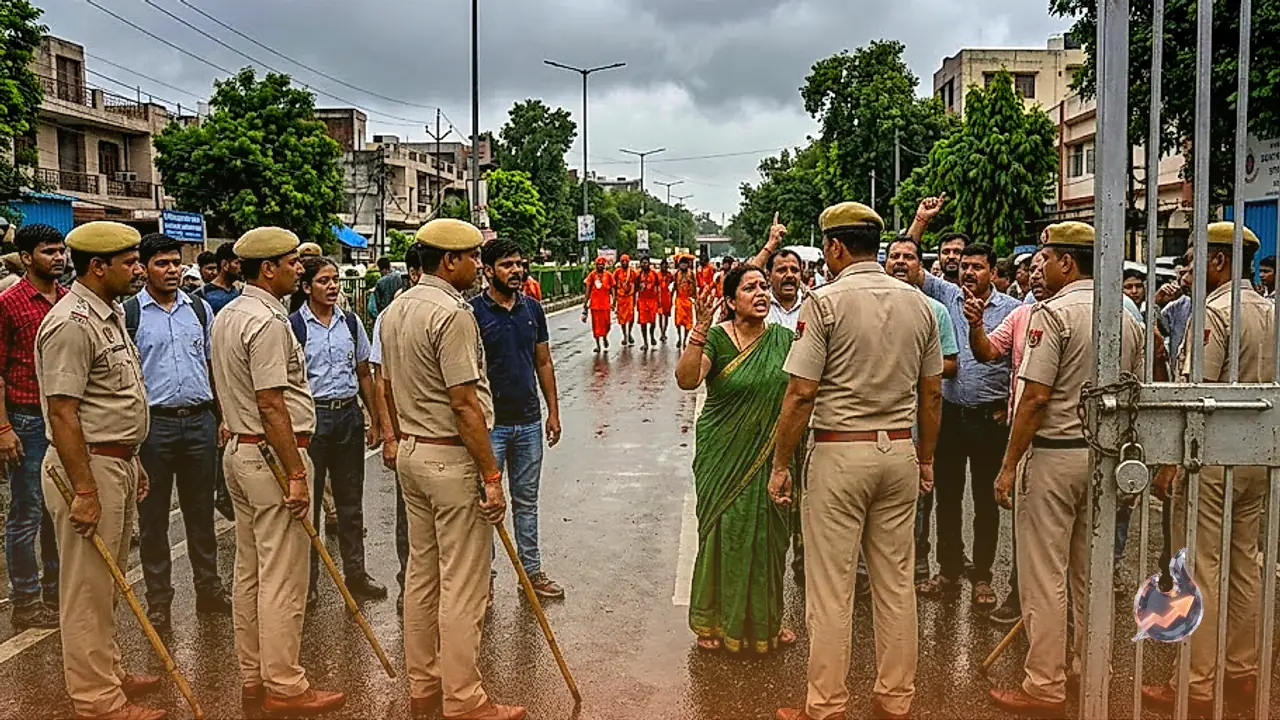






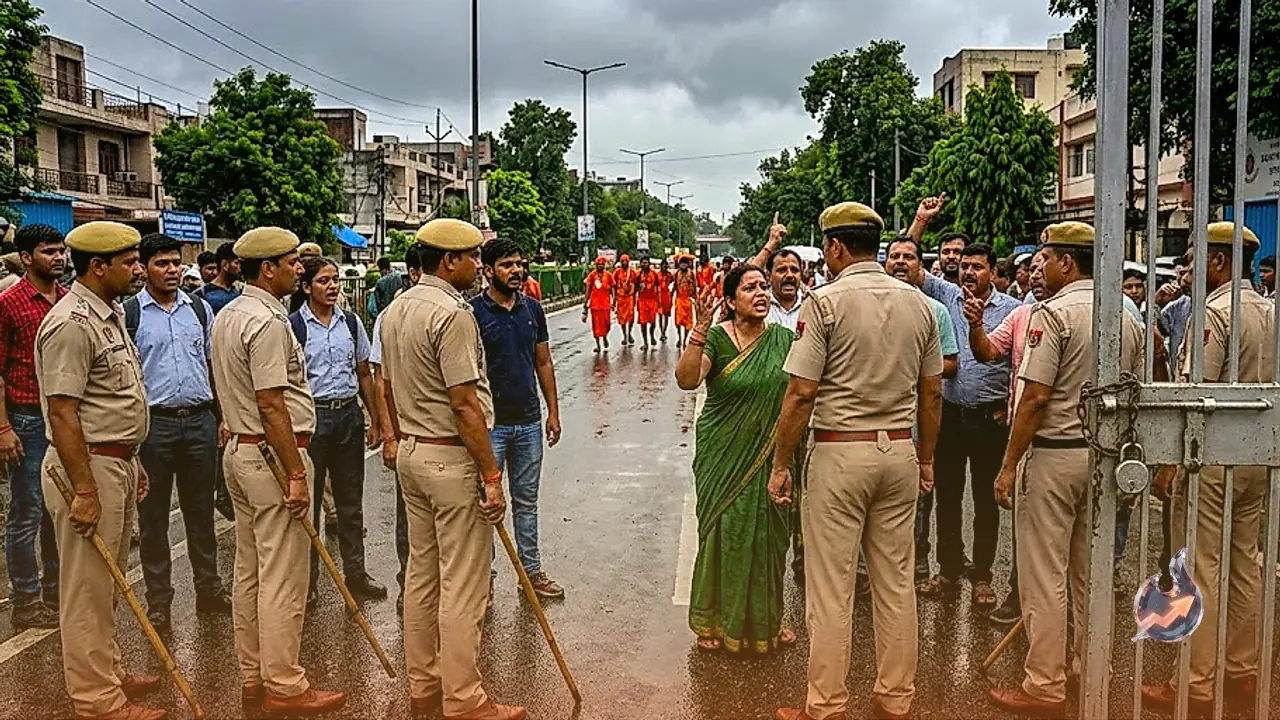














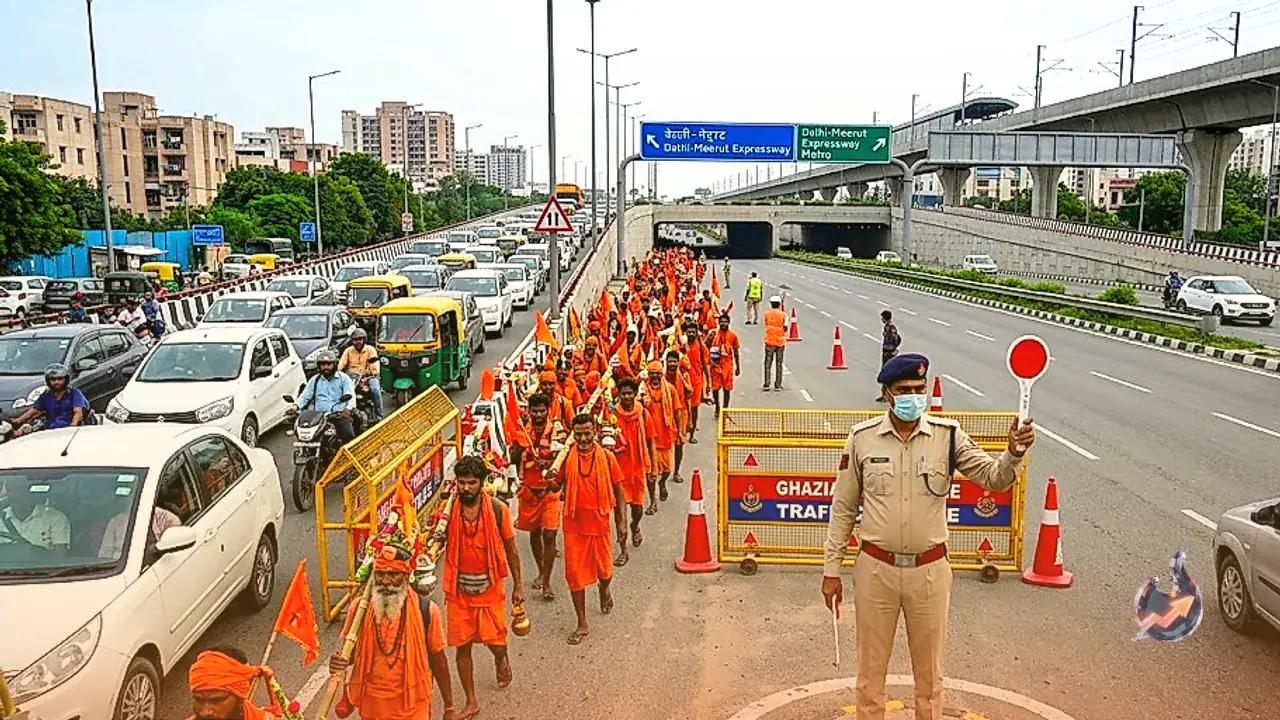

With the second Monday of the holy month of Sawan drawing immense crowds of devotees, a massive wave of Kanwar pilgrims transporting sacred Ganga water from Har Ki Pauri in Haridwar has reached the borders of Delhi and Ghaziabad. Ahead of the crucial Jalabhishek ceremony scheduled for Sawan Shivratri on Tuesday, 11 August, corresponding to the Chaturdashi date, police departments in both regions have put extensive traffic diversions and temporary route closures in place. Commuters traveling across the national capital region have been strictly advised to check official advisories and avoid highly congested transit corridors until the evening of 11 August. Several primary roadways have been exclusively reserved for the safe transit of pilgrims who are resting in Delhi-NCR before continuing their journey toward Uttar Pradesh, Haryana, and Rajasthan.
Key Route Restrictions and Diversions Across Eastern Delhi
The arrival of Kanwariyas has led to major traffic realignments in eastern parts of Delhi, with the Shahdara GT Road emerging as one of the most heavily regulated stretches. To shield foot-traveling pilgrims from vehicular traffic, Delhi Traffic Police has closed off the section extending from the Seemapuri roundabout to the Chintamani red light for all general vehicles. This specific stretch is currently functioning strictly as a dedicated lane reserved for the movement of pilgrims.
Furthermore, vehicular movement originating from the direction of Anand Vihar is being actively controlled and diverted at the Chintamani red light intersection. Traffic officers positioned at key intersections are redirecting general traffic away from the main procession corridor. These restrictions will remain in full force until the evening of 11 August. To minimize public inconvenience while ensuring unhindered movement for the pilgrims, additional traffic police units have been deployed along major routes to handle peak hour flow.
Dynamic Regulation on Ghaziabad and Delhi-Meerut Expressway Corridors
The impact of the Kanwar Yatra is equally significant in neighboring Ghaziabad, where police forces are actively managing the overflow of incoming pilgrims. On the vital Delhi-Meerut Expressway, traffic movement along the stretch between Meerut and UP Gate is being dynamically regulated in response to live crowd density. Whenever pilgrim volume surges beyond safe thresholds, access points along the expressway are temporarily closed to regular traffic, and vehicles are held back or re-routed.
As soon as the pilgrim rush on the highway eases and traffic conditions return to normal, regular vehicular movement is permitted to resume. This flexible, crowd-responsive system prevents severe bottlenecks and mitigates any safety hazards for devotees walking along high-speed corridors. Police authorities are closely monitoring expressway entry and exit points to ensure continuous coordination.
Drone Surveillance, Heavy Vehicle Restrictions, and Commuter Guidelines
To bolster safety along all critical routes, police authorities are employing modern technical surveillance alongside ground forces. High-resolution drone cameras are being operated to monitor sensitive stretches from the air, allowing officers to track crowd movements and detect potential congestion points in real time. In addition to aerial monitoring, authorities have placed a strict ban on heavy commercial vehicles along all designated Kanwar routes.
Traffic police have issued a strong advisory for residents and travelers planning journeys through Shahdara, Seemapuri, Anand Vihar, Ghaziabad, or the Delhi-Meerut Expressway, urging them to budget significant extra travel time. With high congestion expected through the evening of 11 August, travelers heading toward Uttar Pradesh, Haryana, and Rajasthan are strongly encouraged to utilize suggested alternative routes to avoid prolonged delays.