


















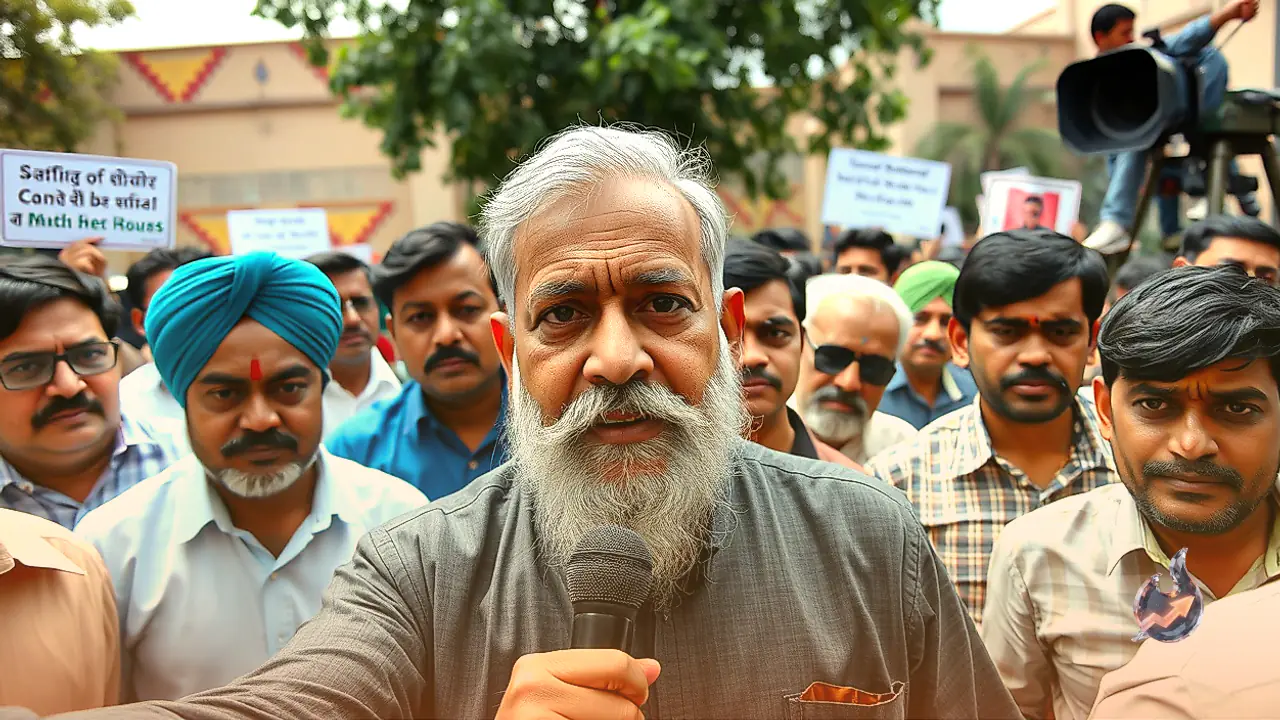

Demanding a change of government through peaceful political expression is a fundamental constitutional guarantee for every citizen rather than an unlawful conspiracy. Senior advocate Prashant Bhushan presented this firm legal perspective while addressing journalists in Delhi on October 15. Asserting that a transition of political leadership is a natural part of democratic governance, he questioned the ruling Bharatiya Janata Party for branding public dissent as a sinister plot, recalling that the party itself had organized extensive street demonstrations to remove incumbent regimes when it was in opposition.
Constitutional safeguards and the legal stance on sedition
Bhushan anchored his arguments in established constitutional jurisprudence and the Supreme Court's clear rulings regarding dissent and free speech. He pointed out that challenging the establishment or voicing dissatisfaction with the government cannot be deemed criminal so long as there is no incitement to violence or direct disruption of public tranquility. Pointing out historical legal excesses, he highlighted how the colonial-era sedition framework was repudiated by the judiciary because merely generating political disaffection against the state does not constitute an offense.
“Demanding a change of government is the constitutional right of every citizen. That is why the Supreme Court held that the colonial-era sedition law is unconstitutional. Therefore, unless violence or public disorder is incited, merely creating disaffection against the government is not an offence under our Constitution.”
Regime change demands and charges of political double standards
Emphasizing the core philosophy behind current street agitations, the senior lawyer characterized the broader movement as an outright effort to achieve political change. He cautioned against attempting to delegitimize the opposition's democratic ambitions.
“There will definitely be a regime change. We all want a regime change. Is there anything wrong with that?”
Bhushan observed that political parties currently at the helm built their own public base by calling for the unseating of prior administrations through peaceful protests, making it hypocritical to treat similar contemporary demands as an alleged conspiracy against the country.
Election Commission revisions and heavy security restrictions in Delhi
These pointed remarks unfolded against the backdrop of ongoing public protests targeting Chief Election Commissioner Gyanesh Kumar and the Election Commission's Special Intensive Revision of electoral rolls. Opposition factions and student organizations have raised serious concerns regarding the revision drive. Taking aim at the administrative response in the capital, Abhijeet Dipke, founder of the Cockroach Janata Party, questioned the severe security barriers placed across Delhi. He alleged that authorities resorted to heavy-handed enforcement measures against peaceful student demonstrators, political activists, and opposition figures exercising their right to assembly.