






















For several decades, regional political formations held sway as the fulcrum of power within India's federal framework. Rising on the back of regional pride, linguistic identity, and local governance priorities, these outfits frequently challenged national giants and established themselves as vital power brokers. The balance of power often tilted so heavily that central ruling parties had to rely on coalitions with these regional satraps to govern the country. However, recent developments across multiple states suggest an unprecedented shift in this dynamic. A series of deep internal rifts, sudden rebellions, and split factions has placed the long-term survival and relevance of regional parties under severe strain. From the dramatic splintering of the Shiv Sena and the Nationalist Congress Party in Maharashtra to the historical fragmentation of the Trinamool Congress in West Bengal, the foundational authority of regional dynasties is being systematically eroded.
A structural consequence of these recurring political ruptures is the decisive advantage they deliver to the Bharatiya Janata Party. Whenever a prominent regional opponent fractures from within, the splintered groups often struggle to maintain their independent clout, while the ruling national party consolidates its footprint across formerly resistant territories. In Maharashtra, the realignment yielded immediate executive power for rebel factions alongside their national partner. By contrast, in West Bengal, the consequences of division manifested quite differently, demonstrating that internal rebellion does not always guarantee smooth political elevation for those who walk away from their founding leadership.
The Maharashtra Realignments: How Shiv Sena and NCP Fractured
Founded by Balasaheb Thackeray, the Shiv Sena stood for decades as the premier symbol of regional assertion in Maharashtra. The landscape shifted radically in 2022 when Eknath Shinde led a massive cohort of legislators to break away from the established party high command. By entering into an alliance with the Bharatiya Janata Party, Shinde secured the office of Chief Minister of Maharashtra. This rebellion dealt a devastating blow to Uddhav Thackeray's faction, Shiv Sena (UBT), which not only lost the reins of government but was subsequently stripped of the party's legal title and its historic bow-and-arrow electoral symbol. The Election Commission awarded the original name and symbol to the Shinde-led faction, permanently altering the state's political calculus and folding the legacy of a regional behemoth directly into the ruling coalition.
A remarkably similar chapter unfolded within the Nationalist Congress Party, established by veteran leader Sharad Pawar. Ajit Pawar gathered his own block of supportive legislators and crossed over to join the ruling BJP-Shiv Sena government, securing the post of Deputy Chief Minister. The Election Commission subsequently recognized Ajit Pawar's faction as the legitimate NCP, awarding them the official party name and the clock symbol. Consequently, Sharad Pawar was left with no choice but to rebuild under an entirely new banner and electoral identifier. Even after Ajit Pawar's demise, the Deputy Chief Minister position remained with a member of his immediate family. Nevertheless, the simultaneous splitting of Maharashtra's two foremost regional organizations effectively dismantled the state's traditional opposition structure, allowing the ruling alliance to entrench its authority deeply.
West Bengal's Shift: Mutual Loss in the Trinamool Congress Split
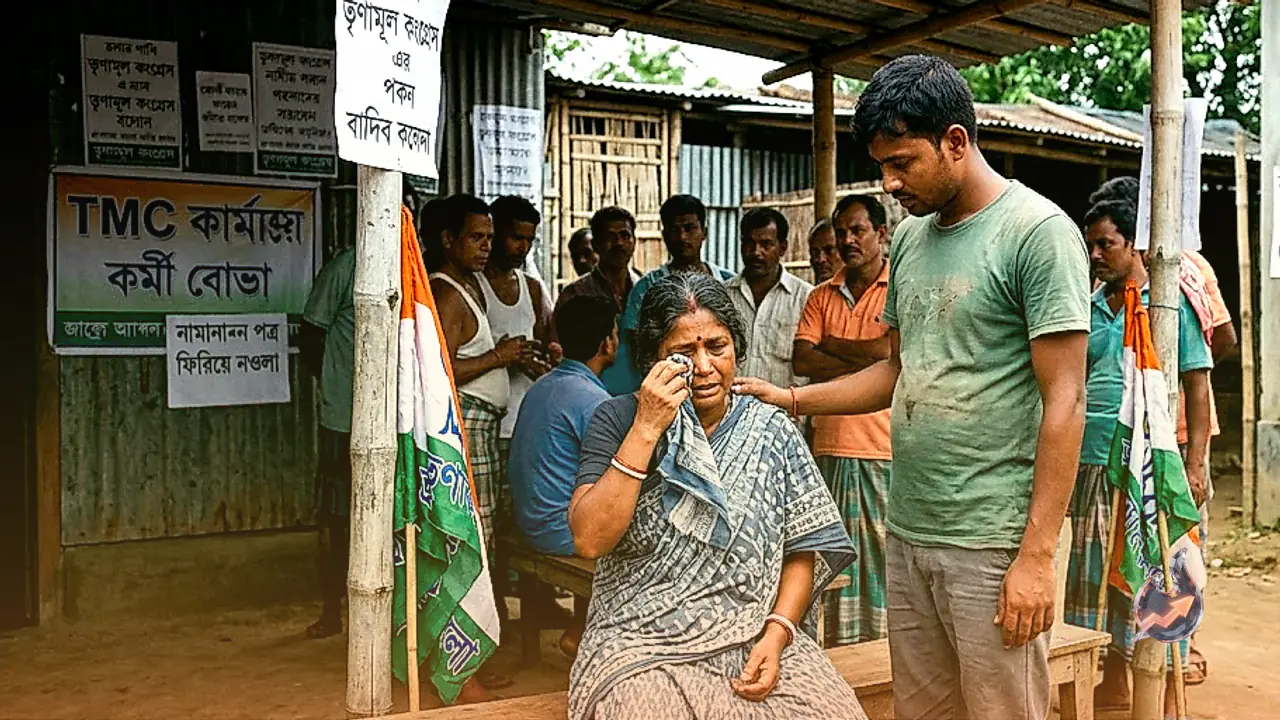
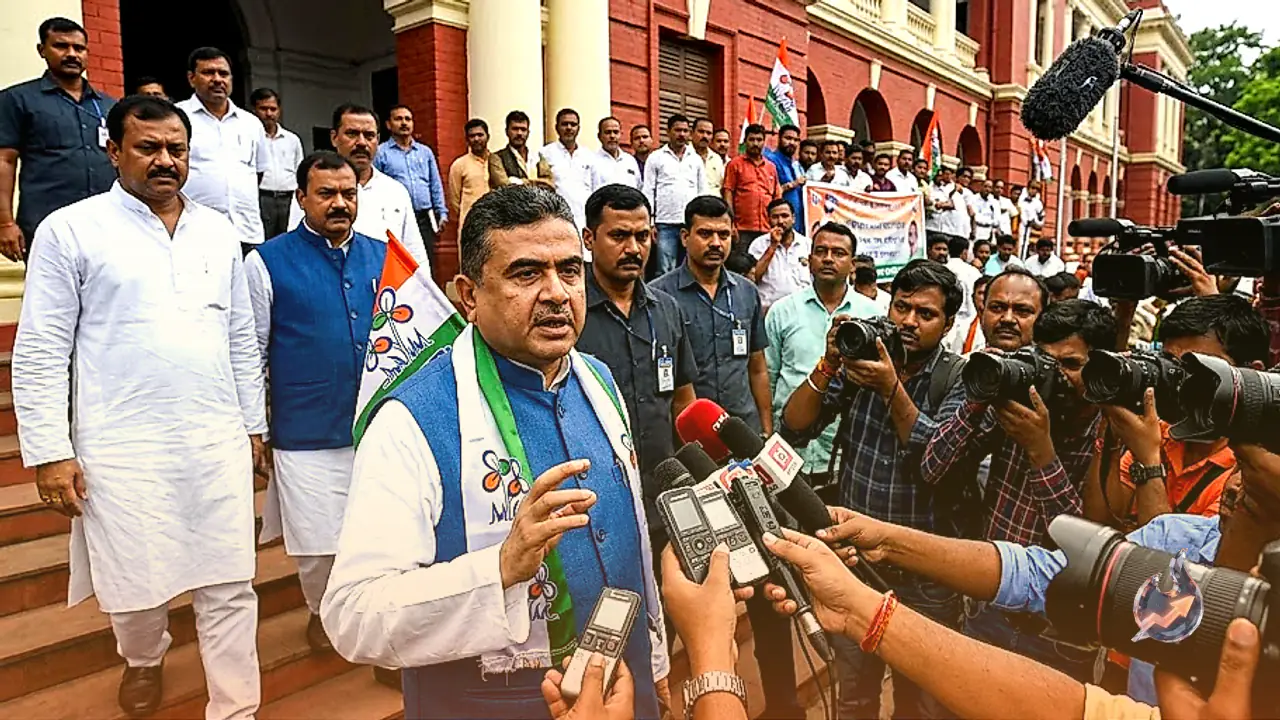
West Bengal witnessed its own seismic political fracture following the defeat of the Trinamool Congress in the 2026 assembly elections. The party suffered an unprecedented internal revolt when approximately 58 to 60 legislators rebelled under the leadership of Ritabrata Banerjee. The Speaker of the Legislative Assembly formally recognized Ritabrata's faction as the principal opposition, sparking a bitter legal and administrative war over the party's legacy between the Mamata Banerjee-Abhishek Banerjee bloc and the Ritabrata Banerjee-Arup Roy faction.
The battle for legitimacy reached the Election Commission, which issued an interim ruling in September 2026 freezing both the historic Trinamool Congress name and its signature grass-flower symbol. To navigate upcoming contests, Mamata Banerjee's camp was assigned the designation Mamata All India Trinamool Congress along with the football player symbol, while the rebel faction led by Ritabrata Banerjee was granted the name Democratic Trinamool Congress and the envelope symbol. Unlike the scenario in Maharashtra, where breakaway groups walked straight into corridors of power, neither faction in Bengal extracted an immediate strategic victory. The rebel legislators found limited leverage because the Bharatiya Janata Party already commanded a formidable independent presence in the state. Although several dissident members of parliament affiliated themselves with the BJP through the NCPI, meaningful political dividends have so far eluded them.
Undercurrents in the Aam Aadmi Party and RJD
Signs of internal friction have also emerged beyond Maharashtra and West Bengal. While the Aam Aadmi Party has avoided a comprehensive organizational split, the defection of select members of parliament to the Bharatiya Janata Party has noticeably weakened its organizational cohesion across Delhi and Punjab. This steady attrition and underlying discord have eroded public perceptions of party stability at a sensitive juncture, with Punjab scheduled to hold assembly elections next year. Observers suggest that as political alignments shift ahead of the polls, additional figures within the party may look toward switching their allegiance.
Meanwhile, in Bihar, the Rashtriya Janata Dal faces mounting speculation regarding its internal cohesion. The party currently holds a modest tally of 25 seats in the state legislative assembly, a constrained numerical base that makes managing potential defections exceptionally precarious. The vulnerability of the caucus was underscored previously when one of its legislators deviated from the party line during a Rajya Sabha vote. Concerns over dynastic leadership and organizational control continue to stir discontent among ranks, while figures within the National Democratic Alliance repeatedly assert that multiple RJD legislators remain in active communication with them. Should an overt split occur within the RJD, Bihar's remaining opposition front could find itself largely neutralized.
Consequences of Regional Fragmentation on National Coalitions
The trajectories observed in the Shiv Sena, NCP, and TMC illuminate a clear structural pattern: the fragmentation of regional parties reliably accrues to the advantage of the Bharatiya Janata Party. In Maharashtra, these divisions paved the way for governing majorities, while in West Bengal, they split the anti-incumbent vote and disrupted the opposition's grassroots machine. On the national stage, internal party rebellions directly degrade the opposition's numerical strength across both houses of Parliament. When regional parties become consumed by court battles to retain their identity and ballot symbols, the broader national effort to mount a unified challenge against the ruling establishment becomes increasingly fragmented and ineffective.