




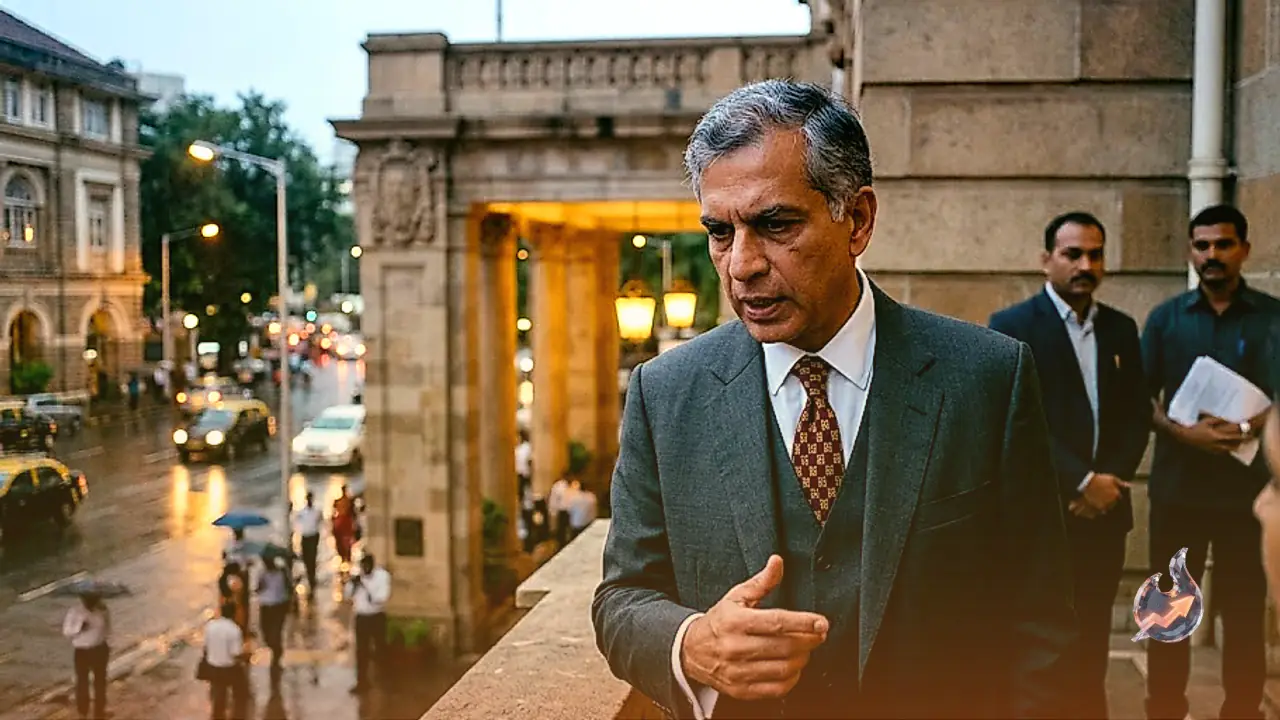

















Delivering an address at the AG Noorani Memorial Lecture, former Vice President Hamid Ansari referenced AG Noorani's book The RSS: A Menace to India to bring back into focus a historical observation by India's first Prime Minister, Jawaharlal Nehru. In that earlier remark, Nehru had characterized right-wing Hindu communalism as posing a far greater hazard to the country than communism. Hamid Ansari's citation immediately sparked intense political discussions across the nation, refocusing public attention on Nehru's ideological outlook toward Hindu traditions and social conventions. Yet, the discourse surrounding Nehru's perception of Indian heritage extends far beyond that single political assessment. Historical archives reveal that his aesthetic and cultural evaluations were equally complex, as reflected in a notable 1959 address on architecture where he directly assessed South Indian temples alongside the Taj Mahal.
Arguments over Jawaharlal Nehru's world view have surfaced periodically across independent India's history. Whenever his past declarations are re-examined in modern contexts, they inevitably generate competing interpretations regarding his philosophical inclinations and his discomfort with orthodox structures.
The Architecture Seminar of March 17, 1959
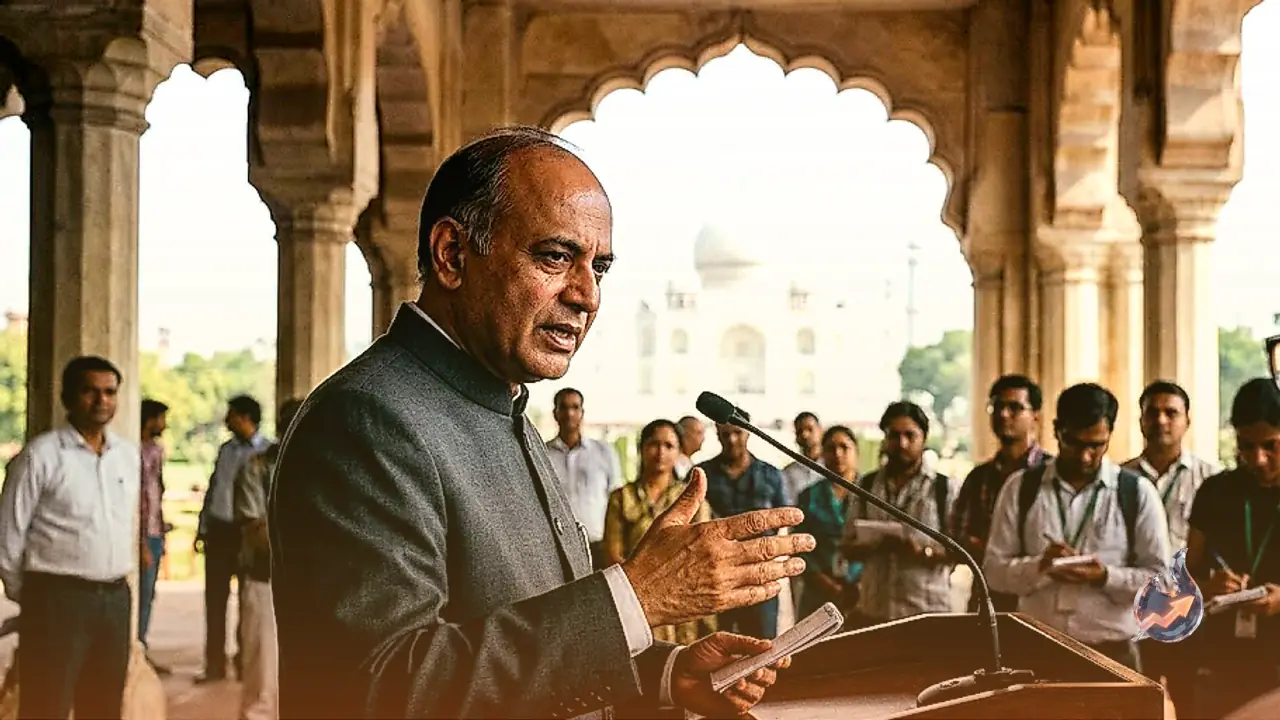
The event took place on March 17, 1959, when Prime Minister Jawaharlal Nehru delivered a speech at the All India Fine Arts and Crafts Society in New Delhi during an architectural seminar organized under the aegis of the Lalit Kala Akademi. The proceedings were specifically oriented around architectural forms, spatial aesthetics, and contemporary design principles. In his preliminary remarks, the then Minister for Cultural Affairs, Humayun Kabir, had drawn attention to the grandeur of South India's historic temple complexes as well as the world-renowned Mughal monument, the Taj Mahal.
Taking the podium to reflect on those points, Jawaharlal Nehru acknowledged that the great temple complexes of southern India were unquestionably majestic and magnificent. However, he followed that aesthetic recognition with a striking reservation: despite their acknowledged splendor, several of these sacred structures repelled him. Pinpointing the reason behind his unease, the prime minister identified the shadowy, enclosed hallways characteristic of ancient southern temple architecture. In his assessment, such spaces induced an oppressive feeling of confinement that weighed heavily on his disposition and hindered his spirit from soaring.
Nehru articulated his perspective in the following words
"Mr. Humayun Kabir referred to the great temples of the South and Taj Mahal. Well, they are very beautiful and some of the temples of the South, however, repel me in spite of their beauty. I just cannot stand them, why I do not know, I cannot explain that, but they are oppressive, they suppress my spirit. They do not allow me to rise, they keep me down, dark corridors. I like the sun and air, not dark corridors…"
Through this observation, Nehru gave voice to his innate affinity for open sunlight and circulating air, candidly describing how the dim, labyrinthine stone corridors of classic sanctuaries stifled his personal sensibility.
Praise for the Taj Mahal and the Architectural Contrast
In sharp contrast to his visceral discomfort inside enclosed temple interiors, Jawaharlal Nehru offered unreserved adulation for the Taj Mahal in the very same address. He elevated the Mughal mausoleum as one of the supreme artistic accomplishments on Earth, noting that beholding the marble wonder brought immense delight to both the eyes and the human spirit.
Describing the monument, Nehru remarked
"The Taj Mahal is, of course, one of the most beautiful things anywhere and it is a delight to the eye and to the spirit to see it."
These reflections remain documented within the volumes of the Selected Works of Jawaharlal Nehru and the historical Nehru Archive. Over decades, this comparative assessment has prompted intense scrutiny. Commentators have pointed out the inherent symbolism involved: while the Taj Mahal is fundamentally a sepulcher or tomb, the southern temples function as thriving sanctums deeply intertwined with the spiritual faith and collective soul of Hindu devotees. The juxtaposition has consequently led critics to question whether Nehru's reaction was purely an architectural critique of confined spaces or whether it mirrored a deeper detachment from Hindu religious practices and traditional expressions of devotion.
Evolution of Thought: From Lahore in 1929 to the 1950s
Traces of this complex relationship with traditional religious identity can be observed across multiple milestones in Nehru's political trajectory. As early as 1929, during the Lahore session of the Indian National Congress, he reflected candidly on his lineage and inner convictions, stating
"I was born a Hindu but I do not know how far I am justified in calling myself one or in speaking on behalf of Hindus."
While acknowledging his ancestral roots, he remained wary of embracing orthodox dogmas or positioning himself as a spokesperson for any single confessional group, demonstrating his lifelong commitment to secular rationalism.
Decades later, during his tenure as head of government, his critique of traditional practices continued to manifest in formal governance and public discourse. In 1953, he openly condemned the pervasive caste hierarchy and regressive societal conduct within Hindu communities. In 1954, he took strong public aim at right-wing organizations, including the Hindu Mahasabha and the Rashtriya Swayamsevak Sangh (RSS), critiquing communal mobilization. His 1959 remarks on temple layout added an aesthetic dimension to this overarching posture of personal detachment from orthodox environs.
Reconciling Critique with Pluralist Respect
Scholars also emphasize that Jawaharlal Nehru's intellectual record was far from one-dimensional. In 1955, for instance, he delivered speeches affirming the necessity of equal respect for every faith tradition present across India, explicitly upholding Hinduism alongside other religious identities. Throughout his life, he frequently commended the historical resilience, philosophical depth, and syncretic nature of Indian civilization.
Nevertheless, examining his collected statements side by side illustrates a consistent tendency: even when honoring India's vast cultural heritage, Nehru frequently focused on rectifying institutional flaws, challenging ritualism, and dismantling caste prejudice. Whether his 1959 architectural critique was an innocent personal reaction to dark corridors or indicative of an ingrained cultural distance remains an active debate in contemporary Indian political discourse.