



















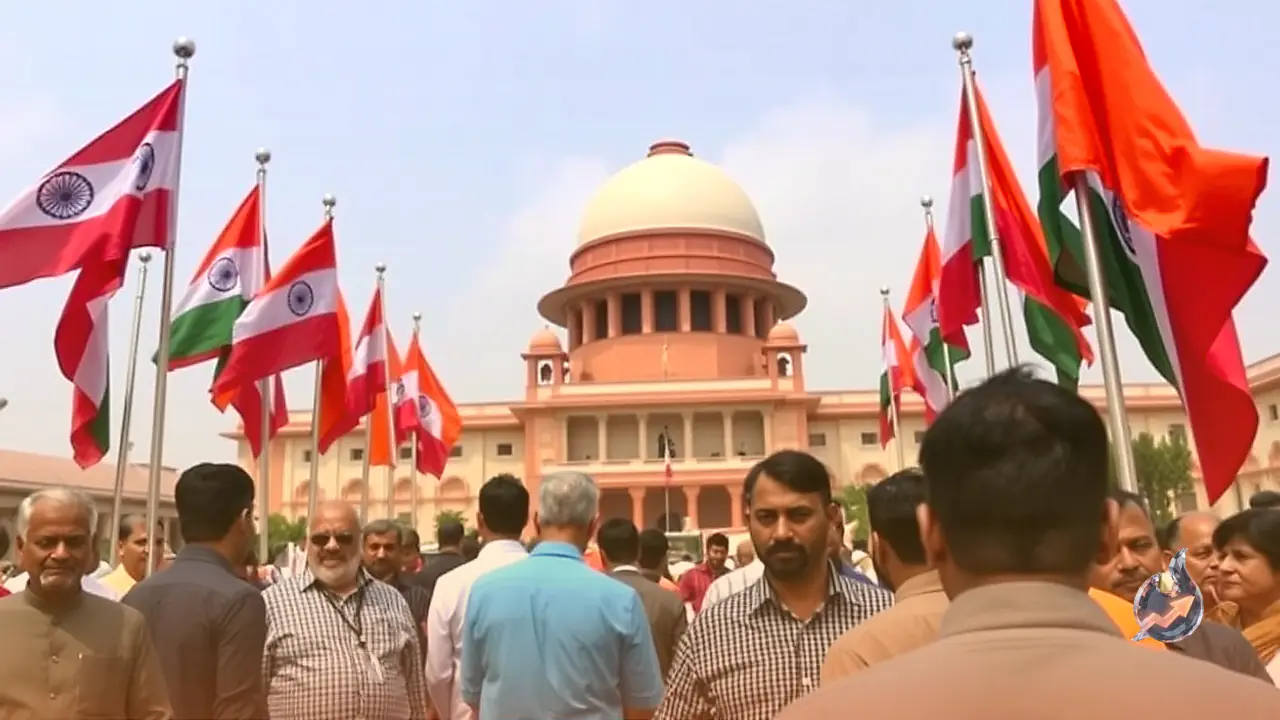

The Supreme Court has taken a strong stance regarding unauthorised modifications introduced to Form 6, the statutory application used by first-time voters to register on the electoral roll. Heading a three-judge bench, Chief Justice of India Surya Kant stated unequivocally that the apex court has granted no approval for any alteration to Form 6. The Chief Justice underscored that once the Election Commission submits its formal report, the court will specifically examine who was responsible for executing these contentious modifications.
Hearing on Petitions Challenging Chief Election Commissioner Powers
These observations came on Monday during the hearing of petitions challenging the powers exercised by Chief Election Commissioner Gyanesh Kumar. The matter was brought before the top court through a petition filed by advocate Shailendra Mani Tripathi. Senior advocate Menaka Guruswamy, appearing on behalf of the petitioners, submitted that the poll panel altered Form 6 on its online portal without obtaining the requisite statutory approvals, creating significant hurdles for citizens applying to be enrolled as voters.
Mandatory Parental Details and Special Intensive Revision Conditions
Arguing the practical consequences of the alteration, senior advocate Menaka Guruswamy pointed out that during the Special Intensive Revision (SIR) exercise conducted in Delhi, two unprecedented conditions were inserted into Form 6. She highlighted that notices were subsequently issued to prospective voters solely on the basis of these newly incorporated requirements. According to the petitioners, the fresh section inserted into the form asked applicants to provide specific background regarding their parents, explicitly demanding disclosure on whether their parents were registered voters during the preceding Special Intensive Revision. The counsel noted that she had personally received such a notice, adding that new voters are now being denied entry onto the electoral roll under the pretext of these revised requirements.
Modifications Without Amending Registration of Electors Rules 1960
The core legal dispute stems from the fact that Form 6, as prescribed under the Registration of Electors Rules 1960, was never formally or officially amended. The petitioners questioned how an online portal could display a substantially altered version of a statutory form in the total absence of a gazetted amendment to the underlying rules. The petition alleges that Chief Election Commissioner Gyanesh Kumar, acting in concert with the Director General IT, introduced these unilateral changes to Form 6 on the ECINET portal in July 2026 without following lawful procedure.
Internal Dissent Within the Commission and Calls for Criminal Liability
The petition further claimed that the modification triggered internal dissent within the Election Commission itself. According to the filings, Election Commissioner Sukhbir Singh Sandhu had deemed the change unauthorised and unlawful, formally urging that the directive be rescinded immediately. Despite this internal objection, the modified form continued to remain accessible on the ECINET portal. The plea contends that altering a statutory document meant for young first-time voters without amending the Registration of Electors Rules 1960 constitutes an illegal act, urging the court to establish individual criminal liability against the officials responsible.
Bench Resolves to Identify Those Behind the Shift
Responding to senior advocate Menaka Guruswamy's submissions, Chief Justice Surya Kant reiterated that no changes to Form 6 carried judicial sanction from the Supreme Court. The Chief Justice noted that the bench will review the detailed report sought from the Election Commission to ascertain whether the decision was taken by consensus or implemented arbitrarily. The bench affirmed that if the alterations were carried out through unlawful means, the court will closely scrutinise who was behind the move.