



















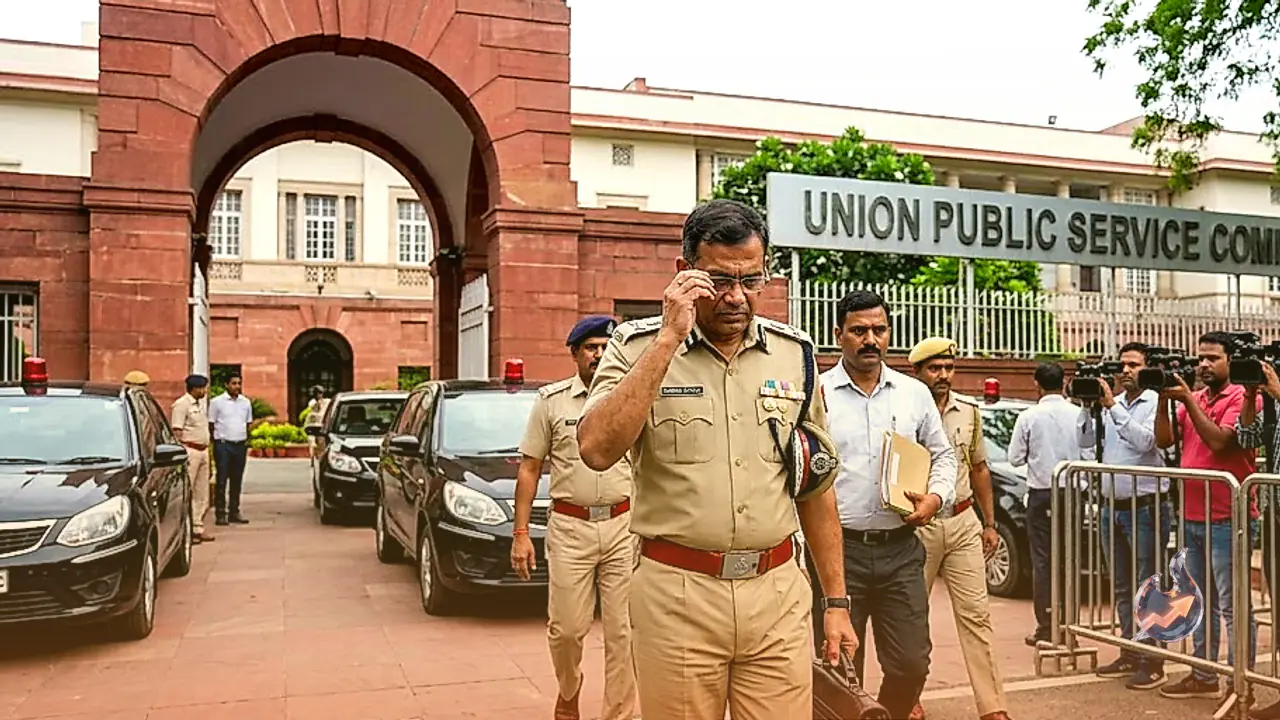

Supreme Court Halts Odisha Police Chief Selection Process and Orders UPSC to Postpone Key MeetingIndia
13 Aug 2026, 9:02 pm (2 hours ago)· 2

Supreme Court Halts Odisha Police Chief Selection Process and Orders UPSC to Postpone Key Meeting

The Supreme Court has stayed the selection process for Odisha's new Director General of Police (DGP) until August 18. The apex court directed the Union Public Service Commission (UPSC) to immediately defer its panel meeting.

A intense legal conflict surrounding the appointment of Odisha's new Director General of Police (DGP) reached the Supreme Court, prompting the apex court to intervene and halt the process. Taking a firm stance on the matter, the court instructed the Union Public Service Commission (UPSC) to immediately postpone its meeting scheduled to finalize the candidate. The bench further ordered that no final decision regarding the state's police chief should be taken until August 18, following serious allegations of procedural breaches.

Chidambaram Raises Allegations of Procedural Violations

Senior Advocate P. Chidambaram mentioned the Public Interest Litigation (PIL) before a bench presided over by Chief Justice of India (CJI) Surya Kant. During the hearing, he argued that the selection process directly violated the mandatory guidelines laid down by the Supreme Court in the landmark Prakash Singh judgment on police reforms. Chidambaram urged the court to intervene urgently, pointing out that the UPSC was set to convene a meeting on the very same day to finalize the panel name.

Also read

Highlighting a specific irregularity, P. Chidambaram alleged that an official was given a rushed overnight promotion just a day prior to the court hearing. He asserted that this sudden promotion was executed solely to make the officer eligible for inclusion in the eligibility panel submitted to the UPSC, thereby undermining the integrity of the selection framework.

State Defense and Initial Judicial Observations

Representing the state government, Advocate General of Odisha Pitambar Acharya denied all allegations of procedural non-compliance. He defended the state's actions and questioned the maintainability of a PIL in service-related disputes, arguing that administrative appointments should not be challenged through public interest petitions by third parties.

Initially, CJI Surya Kant observed that no officer directly aggrieved by the selection process had personally approached the court. This initial remark suggested reluctance to stay the ongoing process, leaving the immediate outcome of the petition uncertain during the early stages of arguments.

Intervention of Amicus Curiae Leads to Stay Order

The turning point in the proceedings came when the bench sought the view of Senior Advocate Raju Ramachandran, who serves as the Amicus Curiae in the Prakash Singh case. Raju Ramachandran supported the petition and affirmed before the bench that the ongoing selection procedure indeed violated the Supreme Court guidelines governing DGP appointments.

Following the opinion expressed by the Amicus Curiae, the bench headed by CJI Surya Kant directed the counsel representing the UPSC to defer the scheduled meeting immediately. The court mandated that the selection process must remain on hold until the next comprehensive hearing scheduled for August 18, when the legal issues will be examined in detail.


Questions & Answers

What order did the Supreme Court issue regarding the Odisha DGP selection?
The Supreme Court put a stay on the Odisha DGP selection process until August 18 and instructed the UPSC to postpone its scheduled selection meeting.
Who raised the issue before the Supreme Court bench?
Senior Advocate P. Chidambaram presented the petition before the bench led by Chief Justice of India Surya Kant, alleging procedural violations.
What was the main allegation against the selection process?
It was alleged that an official was hastily promoted overnight just a day before the hearing to facilitate their inclusion in the panel sent to the UPSC.
Who presented the state government's argument in court?
Advocate General of Odisha Pitambar Acharya represented the state government and denied any violation of established norms.
What role did the Amicus Curiae play in the court's decision?
Senior Advocate Raju Ramachandran, acting as Amicus Curiae, affirmed that guidelines were being violated, which prompted the court to issue a stay.
When is the next hearing on the Odisha DGP selection dispute?
The Supreme Court will conduct the next detailed hearing on the matter on August 18.

Comments 2

Karan Malhotra@karan-malhotra·20m ago

The Supreme Court's halt on Odisha's DGP selection process reaffirms the critical importance of the landmark guidelines established in the Prakash Singh judgment. The arguments presented by Senior Advocate P. Chidambaram and the crucial intervention of Amicus Curiae Raju Ramachandran clearly indicate that procedural transparency in police appointments cannot be compromised. The upcoming hearing on August 18 will determine how strictly the apex court views the administrative haste and the specific procedural violations alleged in this high-profile appointment matter.

Ravikash Gupta@ravikash·20m ago

This legal deadlock goes beyond a mere administrative appointment dispute, serving instead as a litmus test for good governance and institutional transparency. Much like corporate and financial markets, any manipulation of rules or last-minute executive shuffling within state machinery severely impacts systemic credibility among stakeholders and the public. The judicial outcome post-August 18 will establish a crucial precedent for regulatory compliance and accountability in high-level state appointments, carrying significant implications for executive governance frameworks.

Citizen journalism

Become a TrendKia journalist

Voice of the people

Share news, photos and videos from your area with TrendKia and let your voice reach the nation. Every citizen a journalist.

Join now
CH 01 LIVE
TrendKia TV ON AIR