


















Motorists who habitually disregard road safety regulations and ignore pending traffic penalties may soon face unprecedented administrative repercussions. During a recent court proceeding, the Supreme Court suggested that states and Union territories could link unpaid e-challan fines directly to domestic electricity bills to enforce compliance. The proposal highlights the judiciary's growing concern over widespread non-payment of penalties, raising the possibility that failing to settle traffic violations could ultimately lead to the disconnection of residential power supplies.
Massive 45,000 Crore Rupee Fine Backlog Triggers Judicial Concern
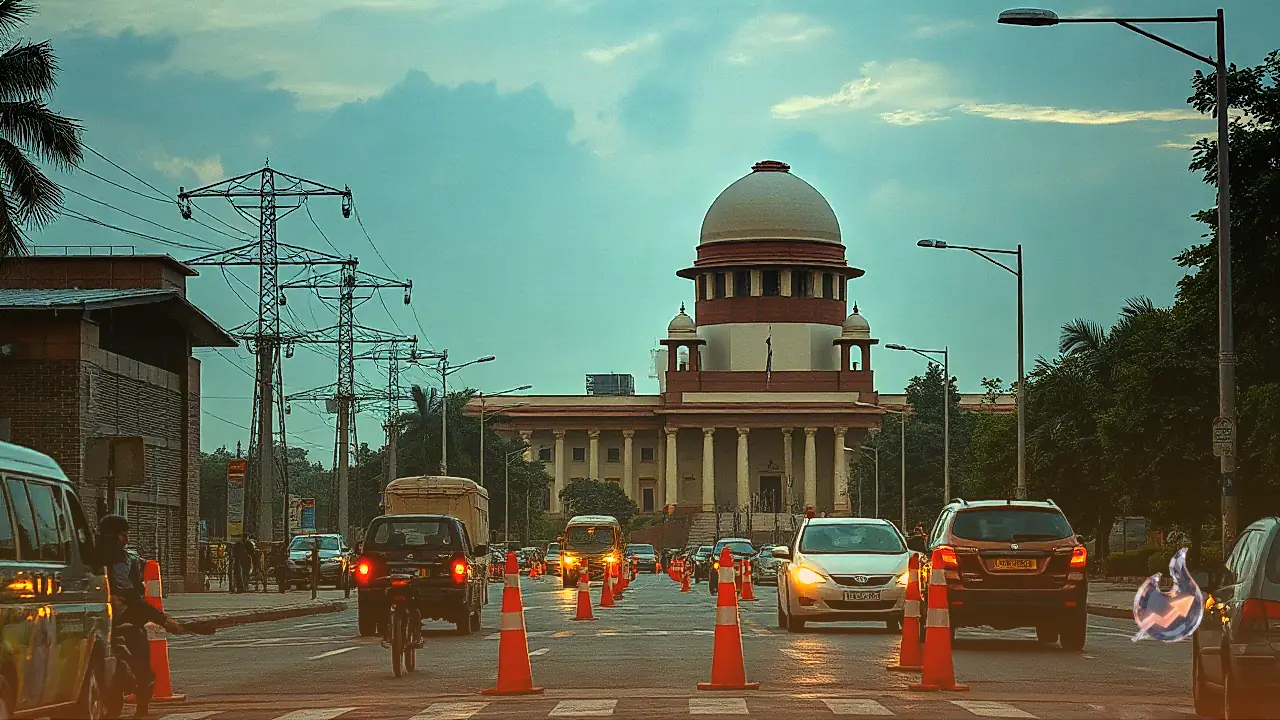
The suggestions emerged during a hearing conducted by a bench comprising Justice JB Pardiwala and Justice KV Viswanathan, which was examining a petition focused on electronic traffic violations and the systemic recovery of pending penalties. Official figures presented before the bench revealed that roughly 45,000 crore rupees worth of e-challans remain unpaid across various states and Union territories nationwide. Out of this vast sum, authorities have managed to recover only 25,000 crore rupees so far. Confronted with such a substantial deficit, the court noted that stringent mechanisms are urgently required to clear the backlog and instill greater discipline among motorists on public roads.
Disconnection of Power and Vehicle Seizures Under Discussion
Highlighting the need for deterrence, Justice JB Pardiwala observed that if an offender fails to clear traffic dues over an extended timeframe, regulatory authorities ought to consider severe actions such as disconnecting their household electricity supply. In addition, the bench recommended instituting random on-road vehicle inspections to identify and impound vehicles that carry a history of unresolved challans. The objective behind these proposed enforcement measures is to curb the culture of non-compliance and ensure violators cannot operate freely without clearing their legal dues.
Suspension of Licences and Blacklisting on the Parivahan Portal
Beyond utility disconnections, the bench outlined several administrative sanctions to restrict vehicular transactions for persistent defaulters. The Supreme Court suggested that driving licences should be placed under suspension until all outstanding fines are fully settled. Furthermore, the court recommended halting the renewal of registration certificates, along with withholding mandatory fitness and Pollution Under Control certificates. The recommendations also encompass blacklisting offending vehicles on the official Parivahan digital portal, effectively freezing essential services such as the issuance of duplicate registration certificates and vehicle ownership transfers.
Proposals Emerge as Discussion Points Pending Formal Rulings
It is important to emphasize that these stern measures surfaced during bench deliberations and currently stand as recommendations rather than finalized statutory rules or binding judicial directives. Nevertheless, the court's unambiguous stance signals to state administrations and transport authorities that coercive enforcement policies may soon become necessary to recover unpaid revenue and restore order on Indian roadways.