























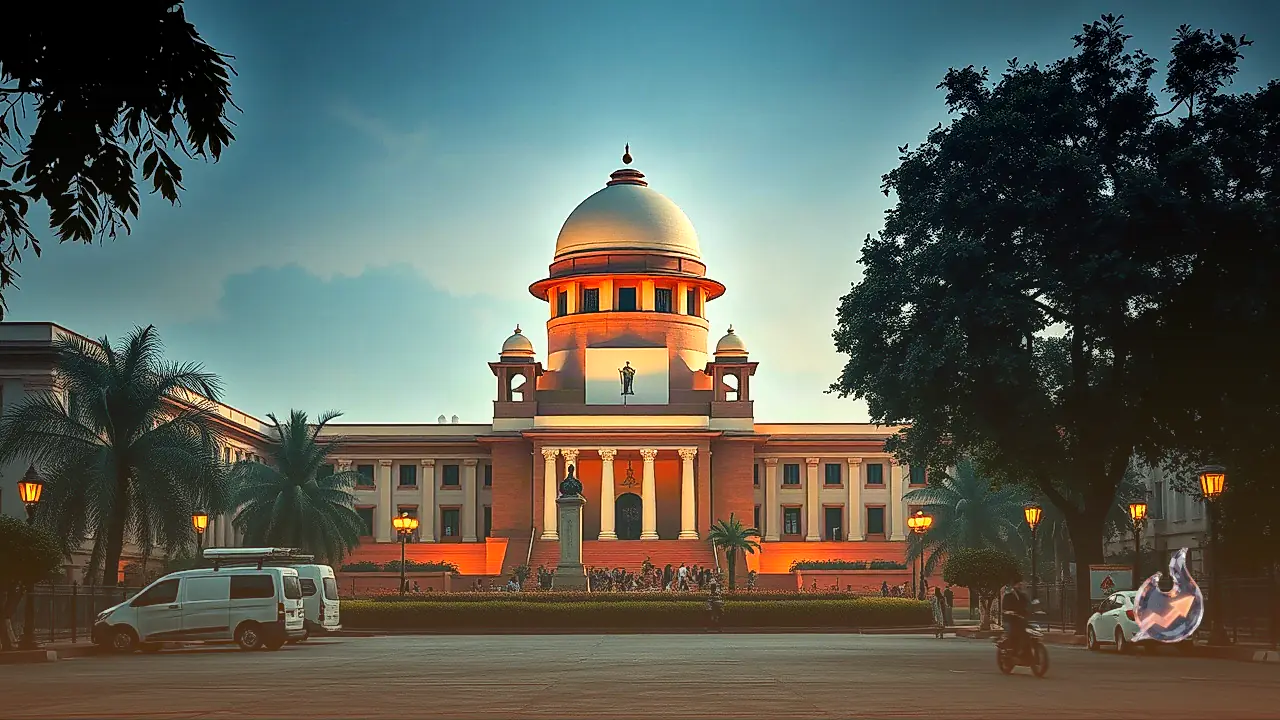

The Supreme Court has declined to grant immediate relief to the Central Government regarding the modification of OBC creamy layer criteria, upholding its previous directive for the time being. A two-judge bench comprising Justice P.S. Narasimha and Justice R. Mahadevan adjourned the hearing and scheduled the next proceedings for September 17. The decision keeps intact the court's earlier ruling that prevents candidates from being excluded from reservation benefits solely on the basis of their parents' salary income.
Supreme Court's Stand on Creamy Layer Classification
The Union Government had approached the apex court seeking modifications to the March 11 order alongside a revision in the definition of the creamy layer for Other Backward Classes (OBC). However, the bench decided not to make any immediate changes to its instructions. In its March 11, 2026 judgment, the court explicitly held that parental salary income cannot serve as the sole criterion for deciding whether an OBC candidate falls under the creamy layer category.
The bench observed that candidates whose parents work in public sector undertakings (PSUs), banking institutions, or private companies cannot be denied reservation benefits merely because their parents' salaries exceed the prescribed threshold limit. Justices P.S. Narasimha and R. Mahadevan maintained that classifying candidates based exclusively on salary violates the fundamental principles of equality guaranteed under Articles 14, 15, and 16 of the Constitution.
A Decade-Old UPSC Civil Services Examination Dispute
The origin of this legal matter dates back nearly 10 years and stems from the Civil Services Examination conducted by the Union Public Service Commission (UPSC). The Department of Personnel and Training (DoPT) had declared approximately 100 successful OBC candidates ineligible for appointment by placing them under the creamy layer bracket. The department had arrived at this decision by treating their parents' gross salary as the primary benchmark.
Aggrieved candidates challenged the DoPT decision in the Supreme Court, arguing that fixed salary income without considering equivalent cadre status unfairly penalizes candidates whose parents work in corporate or non-governmental roles. The legal challenge sought to establish that total salary cannot be equated with social status for creamy layer exclusion.
Six-Month Deadline and the Upcoming September Hearing
In its March 11, 2026 ruling, the two-judge bench directed the government to reconsider the claims of all 100 disqualified candidates within a strict six-month window. That stipulated timeframe is set to expire in September. As the deadline approached, the Center petitioned the court for modifications to the judgment.
The upcoming proceedings on September 17 will be crucial for the affected civil services aspirants. The hearing will determine whether the government is granted additional time to refine creamy layer norms or if it must comply with the existing judicial instructions to process the candidates without using salary as the sole disqualifying factor.