















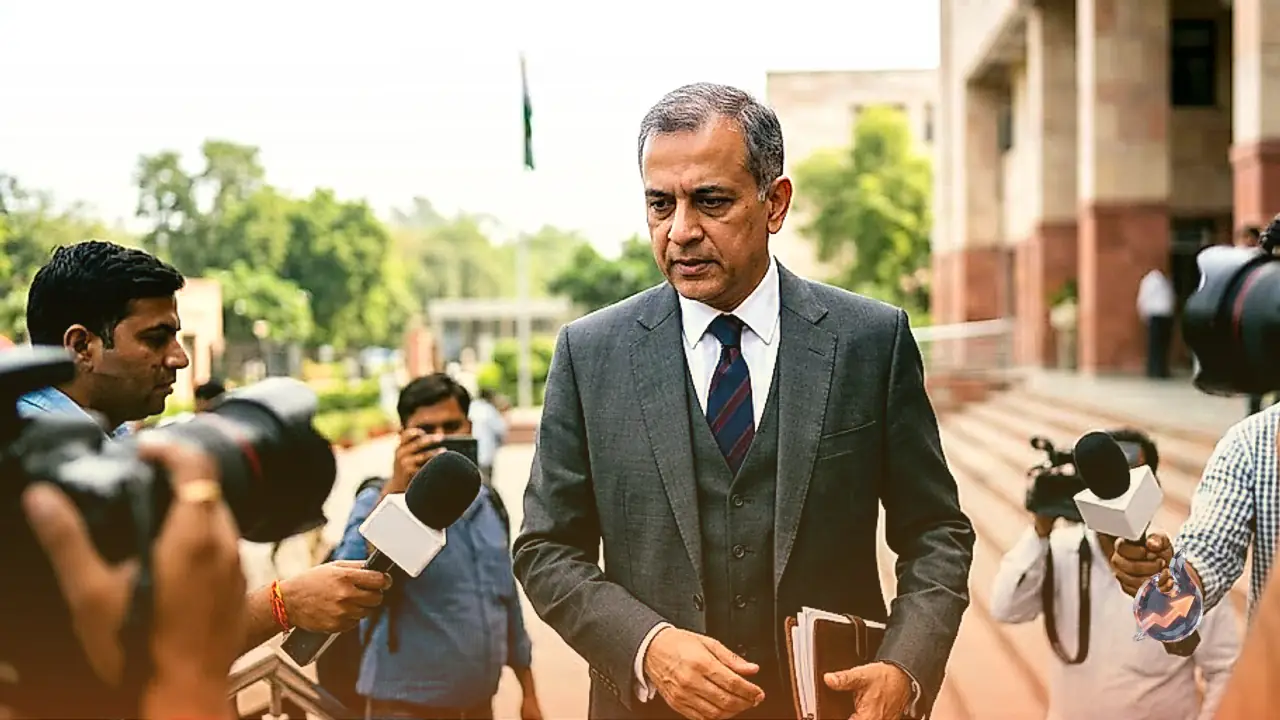

The Supreme Court has firmly rejected a plea seeking the registration of a First Information Report and a court monitored Special Investigation Team probe into the alleged burnt cash incident involving former Delhi High Court judge Justice Yashwant Varma. A division bench comprising Justice PS Narasimha and Justice Alok Aradhe dismissed the petition after making a sharp oral remark during the proceedings. As soon as the petitioner counsel began presenting arguments for an SIT inquiry, the bench observed that such litigations were primarily aimed at gaining cheap publicity. Refusing to entertain the matter further, the apex court brought a complete quietus to the fresh legal effort targeting the former judge.
Arguments Raised by the Petitioner Counsel
The petition was filed through advocate Ghanshyam Upadhyay, who argued before the court that the resignation of a judge does not shield them from penal accountability. The lawyer contended that although Justice Yashwant Varma had already demitted office, his criminal liability regarding the unaccounted cash allegedly discovered at his official quarter remained active. Addressing previous legal hurdles, the counsel highlighted that an earlier petition had been turned down on technical grounds because a formal complaint was missing at that time. However, with an official complaint now filed, the petitioner maintained that the procedural gap had been addressed. The advocate further asserted that High Court judges fall under the definition of public servants, thereby enjoying no special immunity from prosecution once they retire or resign from judicial service. Despite these elaborate submissions, the Supreme Court bench declined to accept the reasoning, reiterating its view on publicity driven litigation and dismissing the plea outright.
Background of the Residence Fire Incident
The controversial matter originates from a fire incident that took place on March 14 at the official quarter of Justice Yashwant Varma. At the time of the blaze, Justice Varma and his wife were away in Madhya Pradesh, while his daughter and elderly mother were present inside the residential premises. In the aftermath of the fire, reports and a video clip showing burnt currency notes and a large sum of unaccounted cash surfaced in the public domain, triggering widespread allegations of financial corruption. Justice Varma had strongly refuted all the accusations, maintaining that the allegations were part of a orchestrated conspiracy designed to malign his reputation.
In House Inquiry and Eventual Resignation
Following the emergence of the cash controversy, the then Chief Justice constituted a three member in house investigation committee to examine the facts. Upon completing its investigation, the committee submitted its findings and presented Justice Varma with a choice to either tender his resignation or face formal impeachment proceedings in Parliament. When the judge initially refrained from resigning, the panel report was forwarded to the President and the Prime Minister, setting off the statutory removal procedure. Subsequently, the Lok Sabha Speaker instituted a dedicated Judges Inquiry Committee to carry the probe forward, while the Supreme Court separately declined to interfere with the ongoing investigative process. The procedural chain culminated in April this year, when Justice Yashwant Varma formally resigned from his post, concluding his tenure prior to the finalization of the parliamentary impeachment.