





















From both astronomical and astrological standpoints, the second and final solar eclipse of 2026 is being viewed as a landmark celestial event. On August 12, 2026, coinciding with the auspicious occasion of Sawan Amavasya, the Earth will witness a rare and massive total solar eclipse of the 21st century. This astronomical phenomenon promises to offer an extraordinary spectacle across several parts of the world, where daytime skies will temporarily turn into nighttime darkness. However, the scenario will be entirely different for residents in India. Because the entire eclipse cycle unfolds during nighttime hours in the Indian subcontinent, the event will not be visible in the sky anywhere across the country. Owing to this lack of direct visibility, the traditional Sutak period associated with the eclipse will also not be applicable or observed in India. Nevertheless, the alignment has generated widespread interest among observers and believers alike regarding its schedule and global path.
Solar Eclipse Schedule in IST and Sutak Period Regulations
According to Indian Standard Time (IST) calculations, the solar eclipse will commence on the night of August 12, 2026, at approximately 9:04 PM. The eclipse trajectory will cross midnight and finally culminate in the early morning hours of August 13, 2026, at 4:25 AM. The peak phase of total coverage will reach its maximum alignment around 1:27 AM during the night of August 13. As per traditional religious scriptures, the Sutak period normally comes into effect exactly 12 hours prior to the onset of a solar eclipse, introducing certain restrictions on religious ceremonies. However, since the complete timeline of this eclipse falls during the night in India, the rule of non-visibility applies. When an eclipse cannot be seen from a specific geographic region, the religious Sutak guidelines are not deemed valid there. Consequently, devotees across India will not need to alter their daily prayers or temple routines.
Global Path of Totality and Regions Experiencing Day-Time Darkness
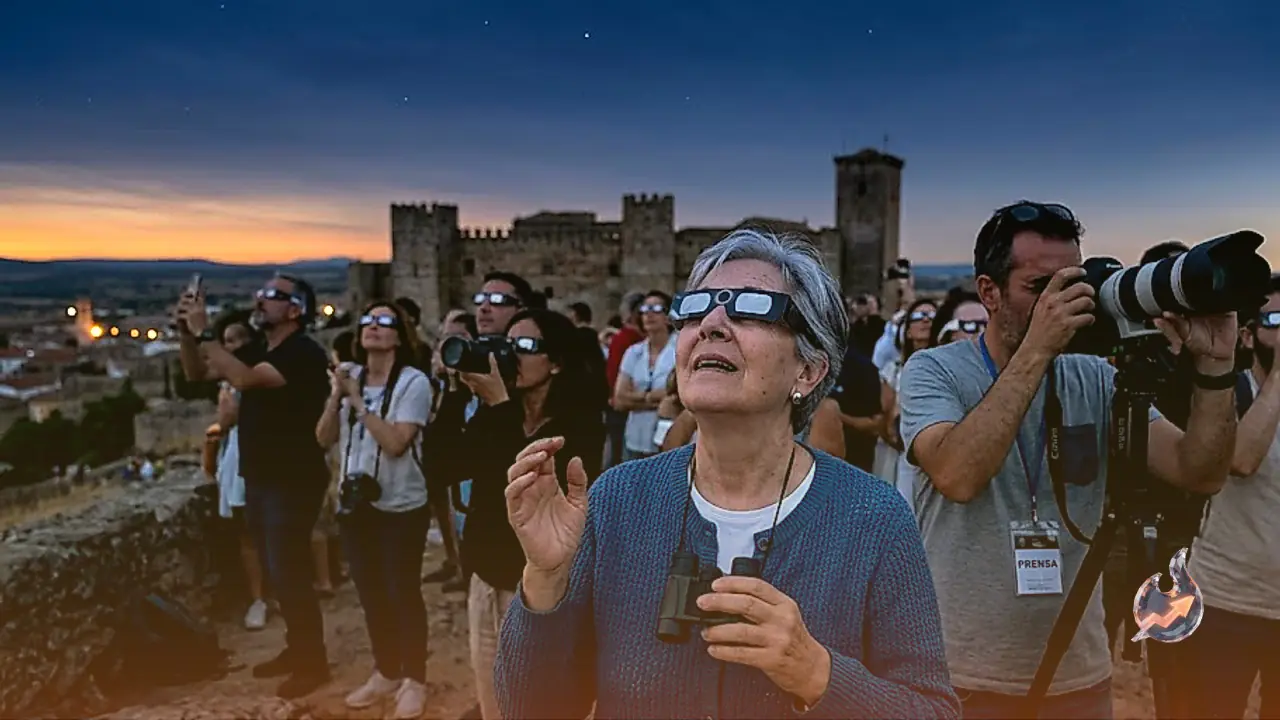
While India will remain out of the viewing zone, the total solar eclipse will stage a dramatic sky show across several nations in the Northern Hemisphere. The primary path of totality will originate over remote parts of eastern Russia before sweeping across the Arctic region. Subsequently, the shadow cast by the Moon will traverse across Iceland, Greenland, Spain, and the north-eastern region of Portugal. Spain is set to experience some of the most striking views of the eclipse, as the shadow line stretches all the way from the northern city of Oviedo to the island of Mallorca in the Mediterranean Sea. Notably, the path of the eclipse will also pass directly over areas in Spain that are currently battling severe wildfires.
Furthermore, a partial solar eclipse will be visible over broader geography, encompassing most of Europe, Canada, North America, and north-western Africa. In regions falling directly along the narrow strip of totality, the Sun will be completely obscured by the Moon, causing ambient daylight to plunge into dusk-like darkness for a brief period.
Duration of Darkness and City-Specific Eclipse Timings
The actual duration for which darkness envelops the landscape will vary depending on the precise geographical location of the observer. Across most parts of Spain, the period of complete daytime darkness will remain under two minutes. For instance, in the northern Spanish city of Burgos, the Moon will completely block out sunlight for exactly 1 minute and 48 seconds, temporarily turning day into night. Across the broader trajectory of totality, the Moon will cover the solar disk for a maximum total duration of approximately 2 minutes and 18 seconds.
In contrast, observers in the far reaches of Russia and the ice covered terrains of Greenland will experience a slightly longer stretch of totality. In these remote northern regions, totality is expected to last for just under two and a half minutes. Though brief, this dramatic occurrence of midday darkness presents a thrilling opportunity for astronomers, eclipse chasers, and scientific researchers.
Scientific Mechanism of Total Eclipse and the Solar Corona
From a scientific perspective, a solar eclipse is a natural orbital alignment that occurs when the Moon passes directly between the Earth and the Sun. As the Moon travels along its orbit, it aligns precisely along the line of sight connecting the Earth and the Sun, temporarily casting its shadow onto the Earth's surface and blocking sunlight. A total solar eclipse occurs specifically when the apparent diameter of the Moon is large enough to entirely cover the Sun's bright face.
This complete coverage unveils one of nature's most stunning sights: the solar corona. The corona represents the outer atmospheric layer of the Sun, composed of hot ionized gas. Under normal daylight conditions, the intense glare of the solar disk makes it impossible to view the corona with the naked eye or standard equipment. However, during the fleeting moments of totality, the corona becomes clearly visible as a glowing halo surrounding the dark silhouette of the Moon.
Zodiac Alignment, Ashlesha Nakshatra, and Mythological Views
Astrological calculations indicate that this particular solar eclipse will take place within the zodiac sign of Cancer (Kark Rashi) and under the Ashlesha Nakshatra. In Vedic astrology, celestial movements and nakshatra positions are believed to influence atmospheric and subtle energies. From a mythological standpoint, traditional Hindu texts associate solar and lunar eclipses with the cosmic nodes Rahu and Ketu, symbolizing moments of spiritual shadow and reflection.
In Hindu philosophy, the Sun is revered as the supreme source of life, vitality, light, and energy. Consequently, an eclipse involving the Sun holds profound spiritual significance. The occurrence of this eclipse on Sawan Amavasya adds another layer of reverence. Sawan Amavasya is traditionally dedicated to sacred river baths, performance of charitable donations, offering prayers for ancestors, and worshipping Lord Shiva.
Spiritual Practices, Post-Eclipse Rituals, and Eye Safety Warnings
During eclipse hours, religious traditions recommend engaging in quiet meditation, chanting sacred mantras, and focusing on spiritual introspection. Even though the absence of direct visibility in India removes the formal requirement of Sutak, many practitioners still observe these hours for quiet meditation. Following the conclusion of an eclipse, traditional customs include taking a purifying bath, cleaning household spaces, and making donations of food or clothes to the needy.
Astronomers and medical experts have issued a stern warning regarding the observation of the solar eclipse. Looking directly at the Sun without protection during an eclipse can cause severe and permanent retinal damage due to intense ultraviolet radiation. Observers must always use certified solar filter glasses or specialized protective equipment designed specifically for viewing the Sun. Regular sunglasses, polarized lenses, or makeshift filters like X-ray sheets are completely unsafe and should never be used to view a solar eclipse.