






















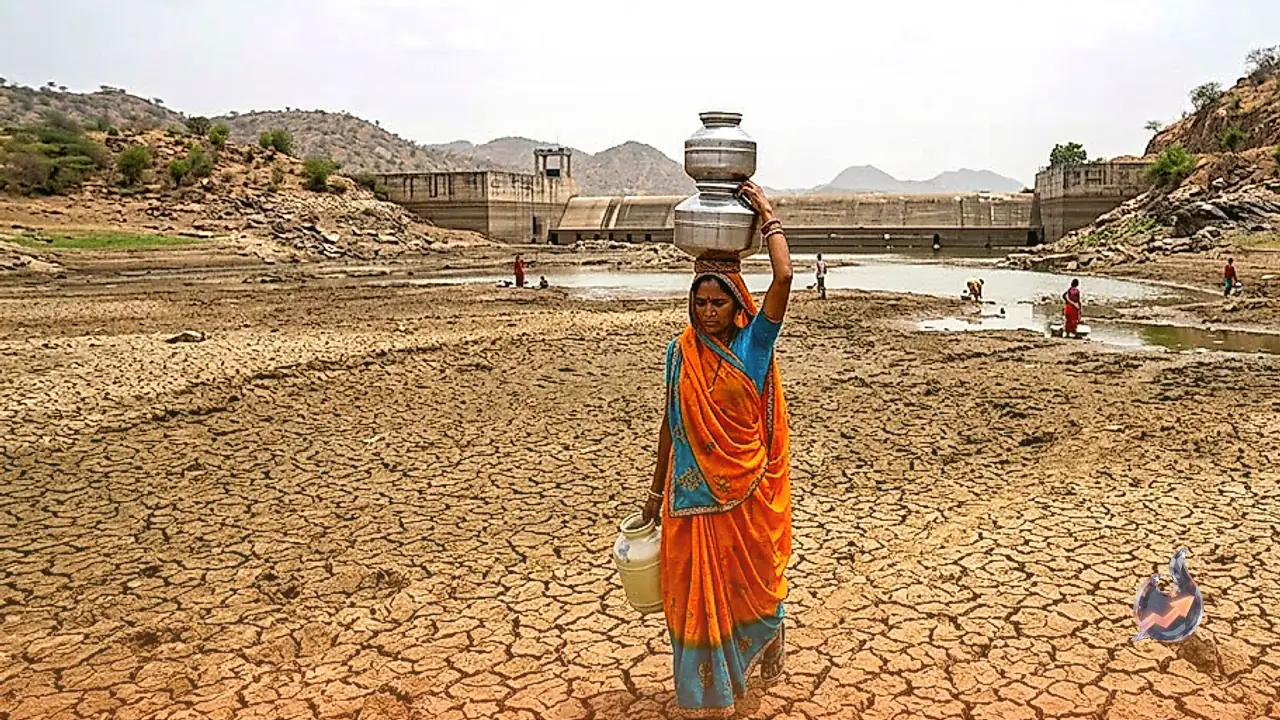

A sluggish monsoon season in Sirohi district has raised serious concerns regarding drinking water availability and agricultural irrigation. Water inflow levels across major reservoirs in the district have dropped significantly compared to the previous year. According to official data recorded until Saturday morning, four out of the five principal dams in Sirohi are grappling with severe water storage deficits, creating anxiety among both urban and rural communities as well as local agricultural workers.
Status of West Banas and Sukli Selwada Reservoirs
The situation at the West Banas Dam, located near Dhanari and serving as the largest reservoir in the district, remains particularly critical. Against its total storage capacity of 1380 MCFT, the dam has recorded an inflow of merely 276 MCFT until Saturday morning. This inflow represents just 20 percent of its total capacity. Water stored in this reservoir is primarily released to support agricultural activities for farmers across Pindwara and Abu Road tehsils. Due to the limited inflow, agricultural communities in these regions are facing uncertainty regarding crop sustenance.
Similarly, Sukli Selwada Dam in Reodar tehsil, which is the second largest dam in Sirohi district, is also experiencing low storage levels. The water from this reservoir is essential for fulfilling both agricultural irrigation requirements and public drinking water needs. Against its full holding capacity of 1042.46 MCFT, recent measurements up to Saturday morning recorded a storage of 263.9 MCFT. This amounts to only 25 percent of the reservoir's overall capacity.
Battisa Nala Leads Inflow While Angaur and Tokra Lag Behind
Deldar tehsil's Battisa Nala Dam stands out as the only reservoir in the district with a relatively encouraging inflow performance. Ranked as the third largest dam in Sirohi, it currently supplies water for both drinking and irrigation purposes. With a total capacity of 577.32 MCFT, Saturday morning figures show a storage level of 393 MCFT, reaching 68 percent of its total capacity. This dam is designated to supply water across three major towns and 36 rural settlements spread over Sirohi, Deldar, and Pindwara tehsils.
Conversely, Angaur Dam, the fourth largest reservoir in the district, exhibits a sharp shortfall in inflow. Designed for a total capacity of 495 MCFT, the dam has received only 60 MCFT of water as of Saturday morning, which accounts for just 12 percent of its maximum limit. In contrast to the previous year when more than half of its capacity was filled by August, the present shortfall has created hardship for nearby villages. Likewise, Tokra Dam in Reodar tehsil, with a capacity of 192 MCFT, has gathered only 43 MCFT of water, representing 22 percent of its total capacity. This comes after recorded healthy inflows during August of last year.
Rainfall Statistics Across Tehsils and Regional Comparison
Examining the seasonal precipitation figures across Sirohi district reveals that Mount Abu received the highest cumulative rainfall at 842 millimeters. However, when benchmarked against Mount Abu's historical average rainfall, this volume represents only 37 percent of its typical seasonal expectation. On the other hand, Abu Road tehsil recorded the highest relative coverage against its average, achieving 42 percent of its normal rainfall with a total of 420 millimeters.
Across the entire district, no single tehsil area has managed to breach the 50 percent mark of its average seasonal rainfall. With monsoon activity remaining weak and dam storage levels low, farmers across the district continue to await further rainfall to secure crop irrigation and prevent acute drinking water shortages in the coming months.