

















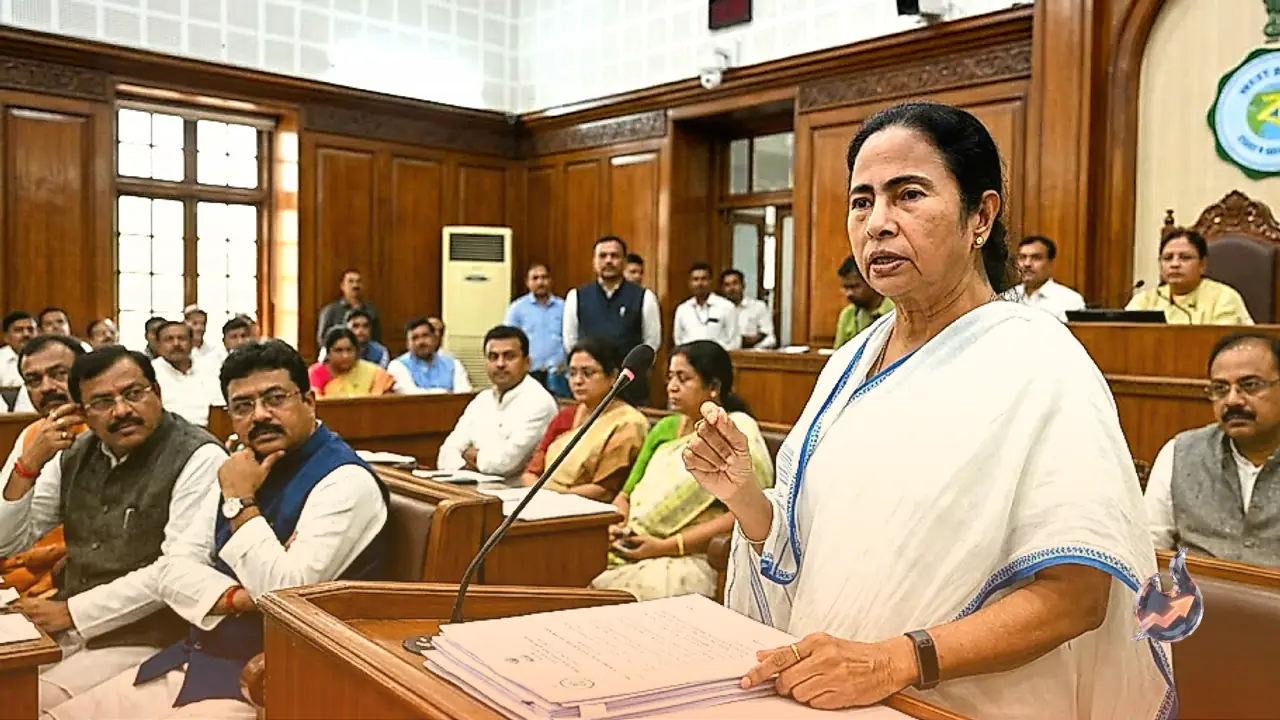

The administrative landscape of local bodies in West Bengal is set for a major overhaul as the state government introduces legislative changes aimed at restructuring the functioning of Gram Panchayats. The West Bengal Panchayat (Second Amendment) Bill 2026 has already been published in the Kolkata Gazette, paving the way for its formal introduction in the state legislative assembly on Saturday. This proposed legislation introduces stringent regulations concerning the financial jurisdiction of the Gram Pradhan, outlines new procedures for holding administrative meetings, and establishes backup protocols to handle governance in the absence of elected representatives. The overarching objective, according to the legislative draft, is to ensure that local administrative services continue to function seamlessly without any operational deadlocks.
Measures to Handle Administrative Absence and Vacancies
One of the pivotal changes proposed in the draft bill addresses the prolonged absence of key local leaders. In scenarios where both the Gram Panchayat Pradhan and the Upa-Pradhan remain unavailable or absent for a period exceeding 15 consecutive days, and no other elected representative steps forward to assume the leadership duties, the government has formulated an alternative pathway. Under the new rules, a designated authority will have the power to appoint an Extension Officer or an official of even higher rank to serve as an administrator. This appointed administrator will hold the reins of the Gram Panchayat, exercising all of its legal powers and carrying out necessary duties for a maximum duration of 30 days. This clause is specifically designed to prevent the halt of routine civic work and local developmental projects when leadership vacuums arise.
New Rules for Organizing Panchayat Meetings
The legislative amendment also targets the regularity of local administrative discussions. The bill mandates that if no Gram Panchayat meetings are conducted for two consecutive months due to the unavailability or absence of both the Pradhan and the Upa-Pradhan, alternative measures will be initiated. In such a situation, the Panchayat Secretary will be authorized to convene the meeting, provided they secure prior permission from the concerned Block Development Officer (BDO). To ensure administrative oversight during these emergency sessions, an Extension Officer along with an Executive Assistant must be physically present to act as official observers. The inclusion of this provision ensures that local decision-making and democratic consultations do not hit a standstill because of a lack of leadership initiative.
Restructuring Financial Powers and Accountability
The most profound shift introduced by the West Bengal Panchayat (Second Amendment) Bill 2026 lies in the regulation of monetary transactions. Under the existing framework, the Gram Pradhan enjoyed substantial control over local funds. However, the proposed amendments seek to limit this unilateral authority by introducing a multi-tiered approval process. Under the new guidelines, any payment order issued from the Gram Panchayat fund must bear the signature of the Executive Assistant. Furthermore, all financial cheques issued by the local body will now require the joint signatures of both the Executive Assistant and the Panchayat Secretary. By distributing this financial authority, the state government aims to institute a robust system of administrative checks and balances, thereby curbing the possibility of single-point financial mismanagement.
Mandatory Financial Reporting and Oversight
To complement the co-signing mechanism, the amendment places additional responsibilities on the Executive Assistant regarding financial reporting. The official will be legally required to draft a comprehensive monthly report outlining the total income and expenditures of the Gram Panchayat. This detailed financial statement must be submitted regularly to both the Pradhan and the respective BDO. By establishing this monthly reporting protocol, the state administration intends to bolster financial transparency, allow regular monitoring of public fund utilization, and enforce a higher level of accountability within local governance structures.
Ensuring Continuity in Gram Sansad Meetings
The bill also addresses the proceedings of the Gram Sansad, which represents the foundational tier of local public participation. If a scheduled meeting of the Gram Sansad is set to take place but the Pradhan, Upa-Pradhan, or any other elected representative is not present, the designated administrator will have the authority to delegate the chair. Under the new rule, the administrator can select the most senior member among those attending the assembly to preside over the session. This prevents the cancellation of meetings and ensures that community-level discussions proceed on schedule. Through these cumulative modifications, the government aims to guarantee uninterrupted public services, maintain the regularity of local assemblies, and enhance the overall operational efficiency of the panchayat system once the bill is presented and debated in the legislative assembly.