





















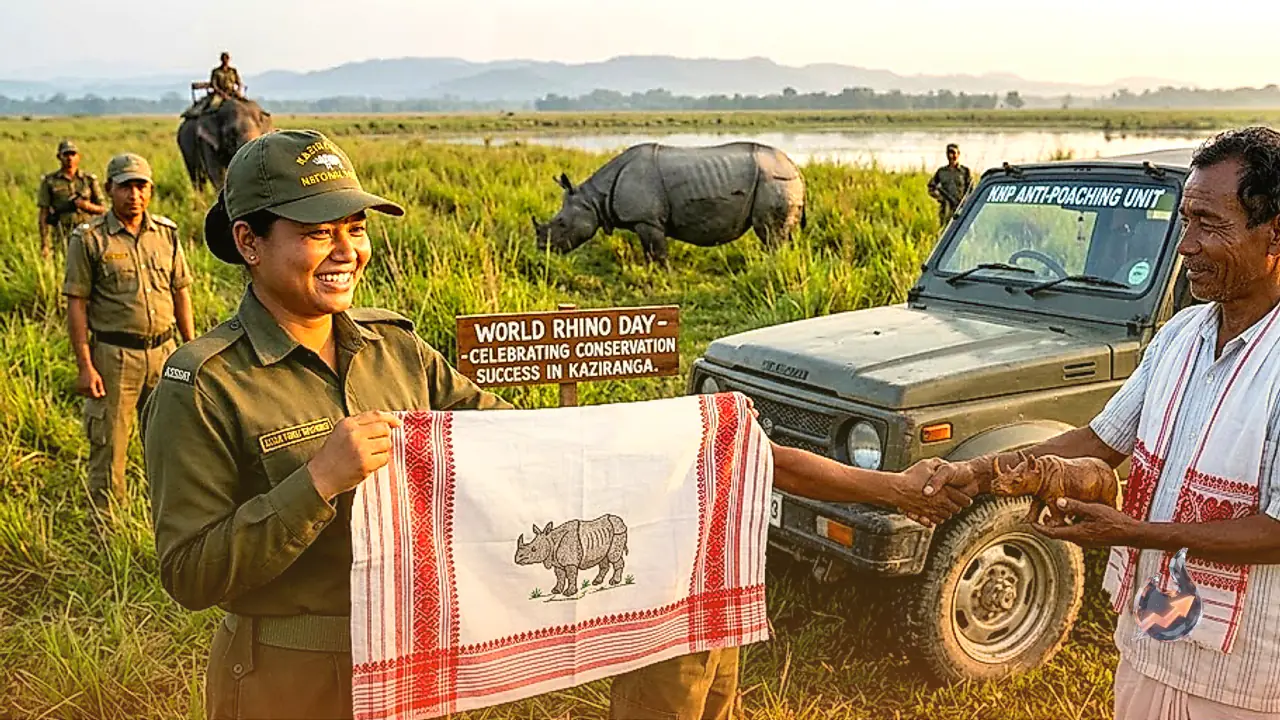

The global conservation community marked World Rhino Day with a renewed focus on safeguarding the majestic greater one-horned rhinoceros and honoring the frontline personnel dedicated to wildlife preservation. India has emerged as a vital stronghold for this iconic species, largely driven by sustained ecological interventions, scientific habitat management, and community-led protection efforts across northeastern forest corridors.
Assam Emerges as Global Epicenter for One-Horned Rhinos
Assam has established itself as the decisive sanctuary for the survival of the greater one-horned rhinoceros. The state currently holds nearly 80 percent of the entire global rhino population, demonstrating an unprecedented turnaround in wildlife recovery. Extensive conservation measures in Kaziranga National Park have transformed the landscape into a benchmark model, effectively shielding these endangered animals from severe ecological vulnerabilities and shrinking natural habitats.
Narendra Modi Commends Frontline Forest Personnel
Underscoring the significance of the day, a message wrote on X celebrated the magnificent greater one-horned rhinoceros and lauded every individual standing at the forefront of its protection. The statement highlighted that Assam now accounts for nearly 80 percent of the world's rhino population, noting further that Kaziranga's dedicated efforts to eradicate rhino poaching have earned extensive appreciation across the globe.
Enforcement Measures and Zero Poaching Milestones
Complementing this conservation narrative, Assam Chief Minister Himanta Biswa Sarma highlighted vital population numbers alongside landmark periods of zero poaching cases recorded in the state. Historically targeted by transnational illicit wildlife syndicates for their horns, rhinos faced relentless poaching threats for decades. To counter this, forest authorities deployed specialized anti-poaching squads, upgraded surveillance equipment, and fostered intelligence coordination with fringe settlements. This multifaceted strategy successfully curbed poaching networks and allowed the regional rhino count to climb steadily.
Public Reaction
The conservation update drew widespread appreciation from citizens across digital platforms, with many celebrating India's rich biodiversity and saluting the relentless vigil of frontline forest guards. Alongside praises for ecological restoration, several commenters also engaged in broader conversations, bringing up various governance priorities and regional development matters.