






















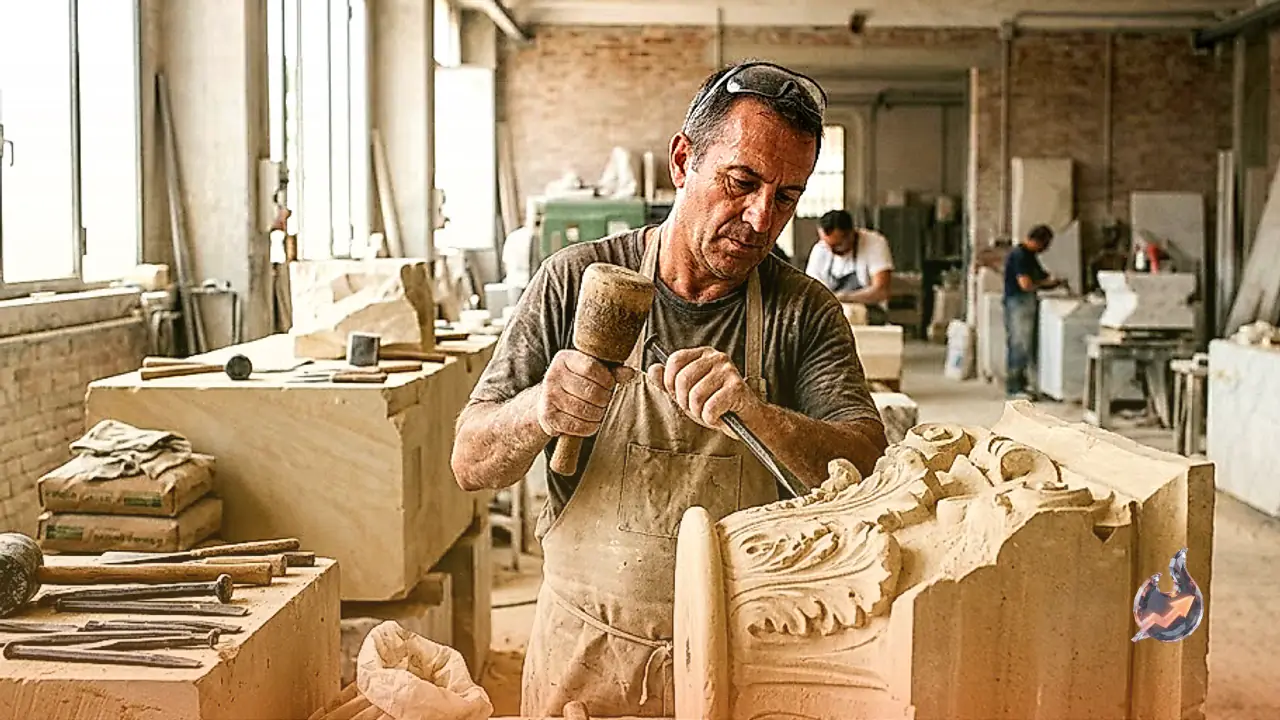

The path forward is finally clear for the grand ballroom that Donald Trump aims to establish at the White House. The Supreme Court has declined requests to halt construction, allowing the ambitious project to proceed without further legal roadblocks. As work moves ahead, a fascinating detail about the logistics of the build has come to light. To give the ballroom a truly majestic aesthetic, raw stone quarried in Indiana, United States, has been shipped thousands of miles away to Italy. This raises an obvious question: why send domestic American stone across the Atlantic? The answer lies in Italy's centuries-old heritage of stonemasonry and artisan craftsmanship. The magnificent pillars of the new White House ballroom require intricate carvings that demand the expertise of specialized Italian artisans. In essence, the architectural narrative of the project is shaping up as American stone, Italian craftsmanship, and Trump's design.
According to reports, the massive project carries a price tag of roughly 400 million dollars, which translates to approximately 3,829.6 crore rupees. The facility will span an impressive area of more than 8,000 square meters and boast a seating capacity of around 1,000 people. At present, approximately 200 workers are actively engaged at the active construction site. However, the most compelling aspect of the development goes beyond mere square footage or financial cost. The specific stones dispatched to Italy for the grand pillars gracing the front of the ballroom will likely be worked in Carrara. This specific region has remained world-famous for centuries as a premier hub of pristine white marble and masterful stone carving.
Historically, legendary Renaissance master Michelangelo selected marble from this exact same region for his timeless masterpieces. Now, that very same legacy of Italian artistry is set to leave its mark on the new White House ballroom. Furthermore, this is far from being a conventional event space. The blueprints incorporate high-security specifications, including an air-raid shelter, dedicated medical facilities, heavily secured rooms designated for ultra-secret meetings, a landing pad capable of accommodating drones and helicopters, drone-resistant roofing, and bulletproof windows. Administration officials have noted that the funding for the project is being raised entirely through private sources, with approximately 35.5 million dollars already secured to date. Organizers have set a target to complete the exterior shell of the ballroom by around April 2028.