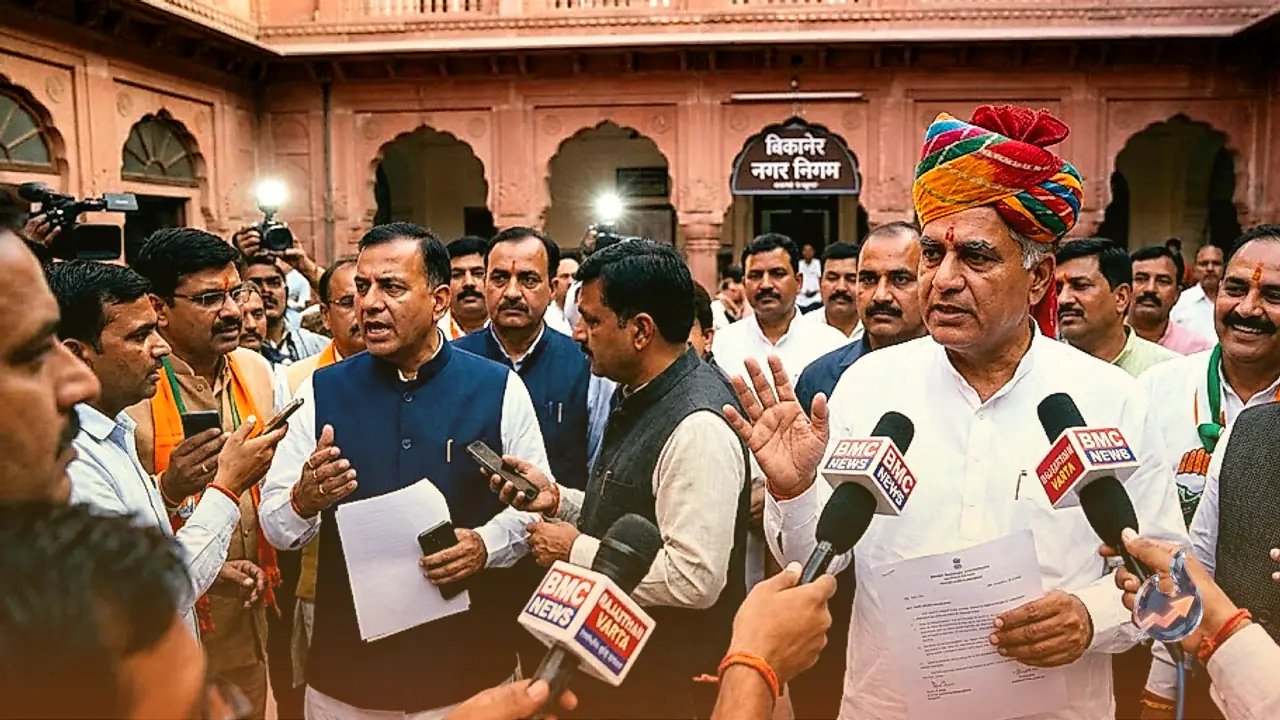


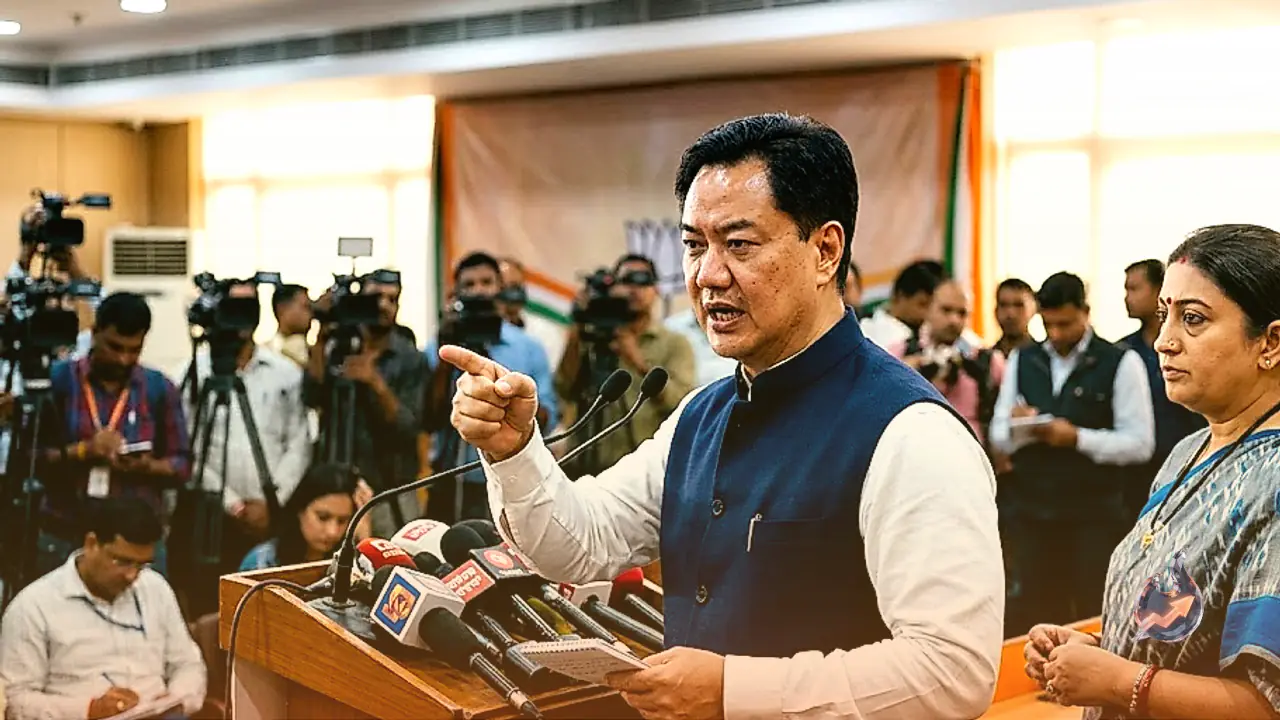
















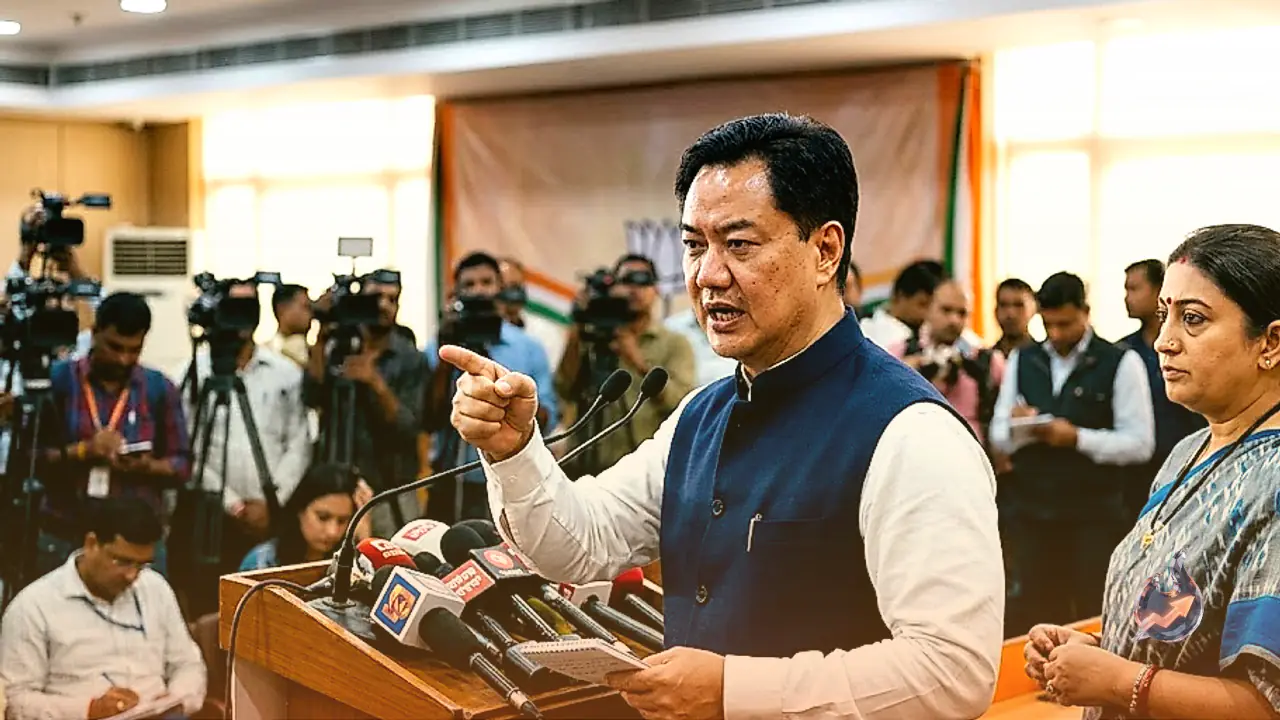

A major political storm has erupted as Union Minister Kiren Rijiju launched a scathing counter-offensive against Congress leader Rahul Gandhi, systematically dismantling the opposition party's historical record of political maneuvers. Rijiju asserted that the very accusations Rahul Gandhi is currently trying to level against the Bharatiya Janata Party are, in reality, a precise reflection of the Congress's own political legacy. Comparing the Congress to the mythological character Bhasmasur, Rijiju pointed out that any political outfit that allies with the Congress eventually faces complete political annihilation. He further emphasized that while the BJP has grown to become the world's largest political party under the leadership of Prime Minister Narendra Modi, this massive expansion was achieved organically without engineering splits in other organizations.
Why Congress is Linked to the Mythological Figure of Bhasmasur
Criticizing the political methods of the Congress, Kiren Rijiju stated that the grand old party lacks any moral authority to question other political entities. In a video shared in a video on X, Rijiju remarked, "Congress party is the 'Bhasmasur' which burns to ashes every party that comes into contact with it." He explained that the history of Indian coalitions shows how regional satraps who decided to align with the Congress gradually saw their core voter base erode. Over time, these smaller regional parties were systematically weakened from within, ultimately leading to their marginalization, as the Congress focused entirely on absorbing their influence to maintain its own hegemony.
The Birth of TMC and NCP out of Congress’s Internal Rifts
Rijiju pointed to the emergence of two major political forces in modern India to illustrate the suffocating environment within the Congress organization. He noted that the Trinamool Congress in West Bengal and the Nationalist Congress Party in Maharashtra did not originate from separate political ideologies. Instead, both of these highly successful and influential parties were born directly out of the internal friction, lack of democratic space, and constant infighting within the Congress itself. Rijiju suggested that one must ask Mamata Banerjee and Sharad Pawar about the compelling circumstances that forced them to leave the parent party. The Congress, he argued, has a consistent history of suppressing talented regional leaders to prevent them from challenging the centralized control of the high command in Delhi.
The Systematic Undermining of Karpoori Thakur’s Legacy
In the socio-political history of Bihar, Jannayak Karpoori Thakur remains one of the most respected socialist icons who dedicated his life to empowering the backward classes and weaker sections of society. However, his rising popularity and independent political standing made the contemporary Congress leadership highly uncomfortable. To systematically diminish his stature, the Congress leadership actively fueled internal factionalism and division within Bihar. Behind the scenes, the Congress designed intricate political webs to ensure that non-Congress socialist forces could never achieve a unified front. The primary motivation behind this political subversion was to prevent any grassroots leader from presenting a credible challenge to the central dominance of the Congress party.
How the 1977 Janata Party Mandate Was Sabotaged
Following the dark era of the Emergency, the citizens of India delivered a monumental and historic mandate in 1977 against authoritarian rule, leading to the formation of the country's first-ever non-Congress government under the Janata Party. Unable to accept this democratic transition, the Congress immediately began plotting to destabilize the newly formed central government. Utilizing its deep-seated expertise in political manipulation, the Congress lured Chaudhary Charan Singh with the prospect of the prime minister's office and offered him external support to form a government. However, within just a few months of the government's formation, the Congress abruptly withdrew its support. As a direct consequence, the government collapsed without ever facing a single session of Parliament, and the nation was prematurely forced into mid-term elections.
The Strategic Use of Suresh Kalmadi to Contain Sharad Pawar
Maharashtra's political landscape has long been influenced by Sharad Pawar, a leader with an exceptionally strong and loyal grassroots following. According to Rijiju, the central leadership in Delhi was always insecure about Pawar's independent authority and sought to curb his rising influence. To execute this, the Congress high command routinely built up Pawar's close associates as parallel power centers within Pune and the wider state administration. Suresh Kalmadi was deliberately promoted within the party structure specifically to counter Pawar's dominance. This strategy of fostering parallel factions to neutralize strong state leaders was a standard operating procedure for the Congress. It was this atmosphere of perpetual distrust and strategic containment that eventually forced Sharad Pawar to permanently sever his ties with the Congress.
The 1980 Haryana Coup and Bhajan Lal’s Defection
The year 1980 witnessed one of the most controversial events in India's parliamentary history, demonstrating a complete disregard for democratic ethics. Following the re-election of Indira Gandhi at the Center, immense political pressure was exerted on opposition-led state governments. At the time, Haryana was being governed by a Janata Party administration led by Chief Minister Bhajan Lal. In an unprecedented move driven by political ambition, the Congress engineered a coup by absorbing the entire sitting state government. Overnight, Bhajan Lal, accompanied by dozens of his MLAs, switched allegiance and merged the state government into the Congress party. This dramatic crossover remains a primary example of how democratic mandates were historically subverted for political gain.
Smriti Irani Confronts Rahul Gandhi on Historical Missteps
Adding to the criticism, BJP leader Smriti Irani targeted Rahul Gandhi's remarks, stating that his allegations against the BJP have only served to remind the nation of the Congress's own authoritarian past. She pointed out that in 1980, the Congress-led central government utilized the provisions of Article 356 to summarily dismiss nine democratically elected state governments across the country. Furthermore, she highlighted the 2005 incident during the UPA regime when the Bihar Legislative Assembly was dissolved in a highly hasty and arbitrary manner. This decision was subsequently scrutinized by the Supreme Court of India, which declared the dissolution entirely unconstitutional. Irani questioned the ultimate motives of Rahul Gandhi, accusing him of attempting to systematically undermine the credibility of vital constitutional bodies, including the Election Commission.
The Widespread Misuse of Article 356 to Suppress Regional Voices
The historical record of the Congress is filled with instances where democratically elected state governments were dismissed at the whim of the central leadership. Article 356 of the Constitution, which allows for the imposition of President's Rule, was repeatedly weaponized by the Congress more than any other political party in independent India. From the dismissal of the first-ever elected Communist government in Kerala to the premature dissolution of non-Congress administrations in Punjab, Tamil Nadu, and Uttar Pradesh, the constitutional provision was used to silence dissenting political voices. The office of the Governor was routinely utilized as a political tool to execute these dismissals. Rijiju concluded by stating that a political party that spent decades undermining democratic structures at every level has no standing to lecture the current leadership on democratic ethics and values.