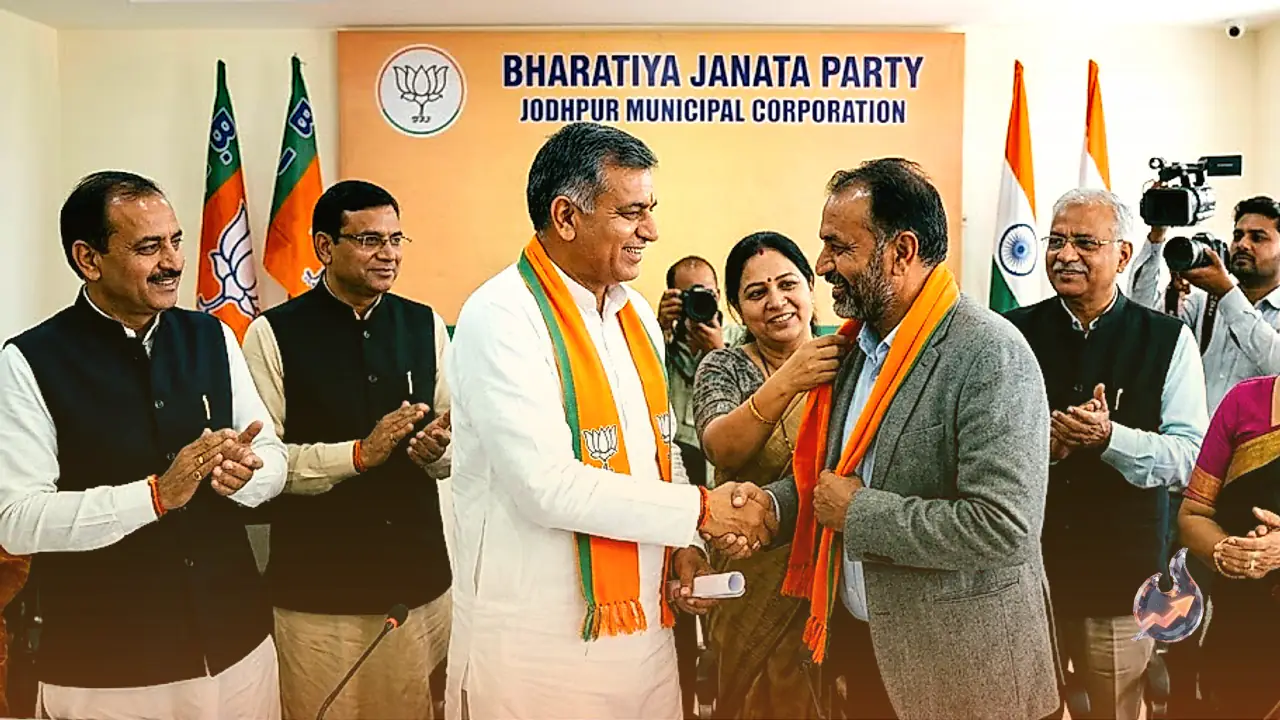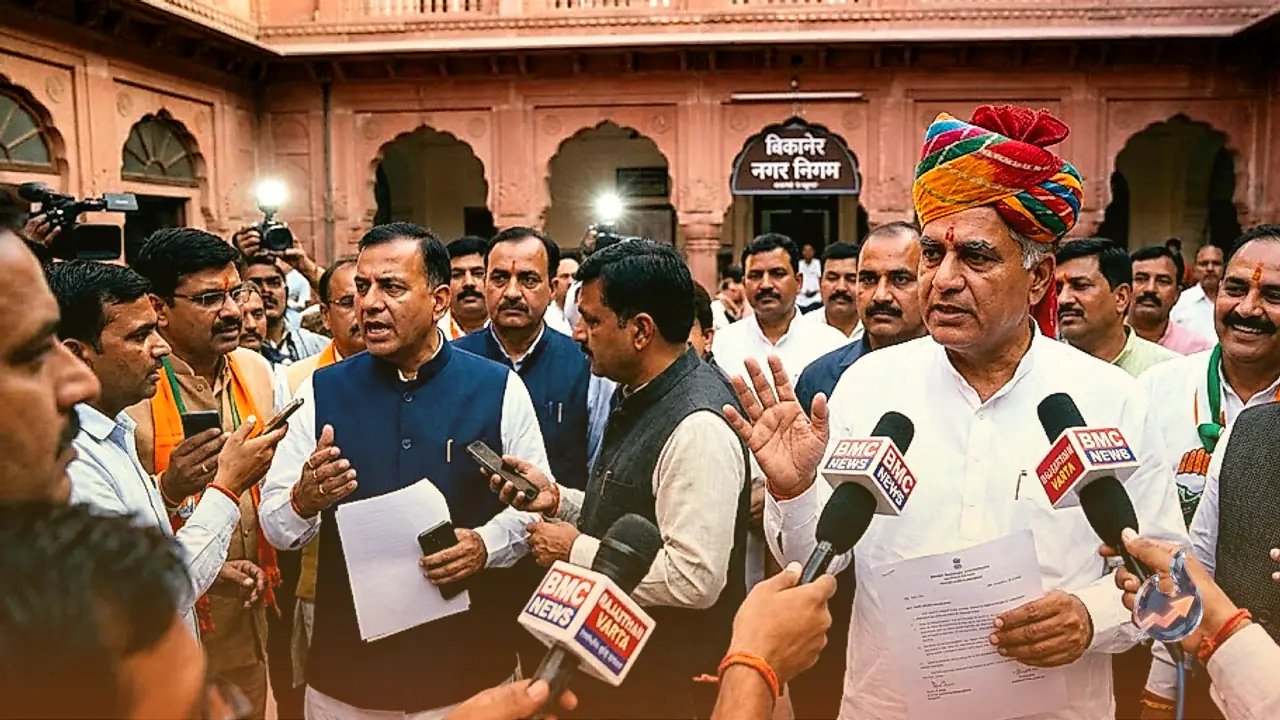


















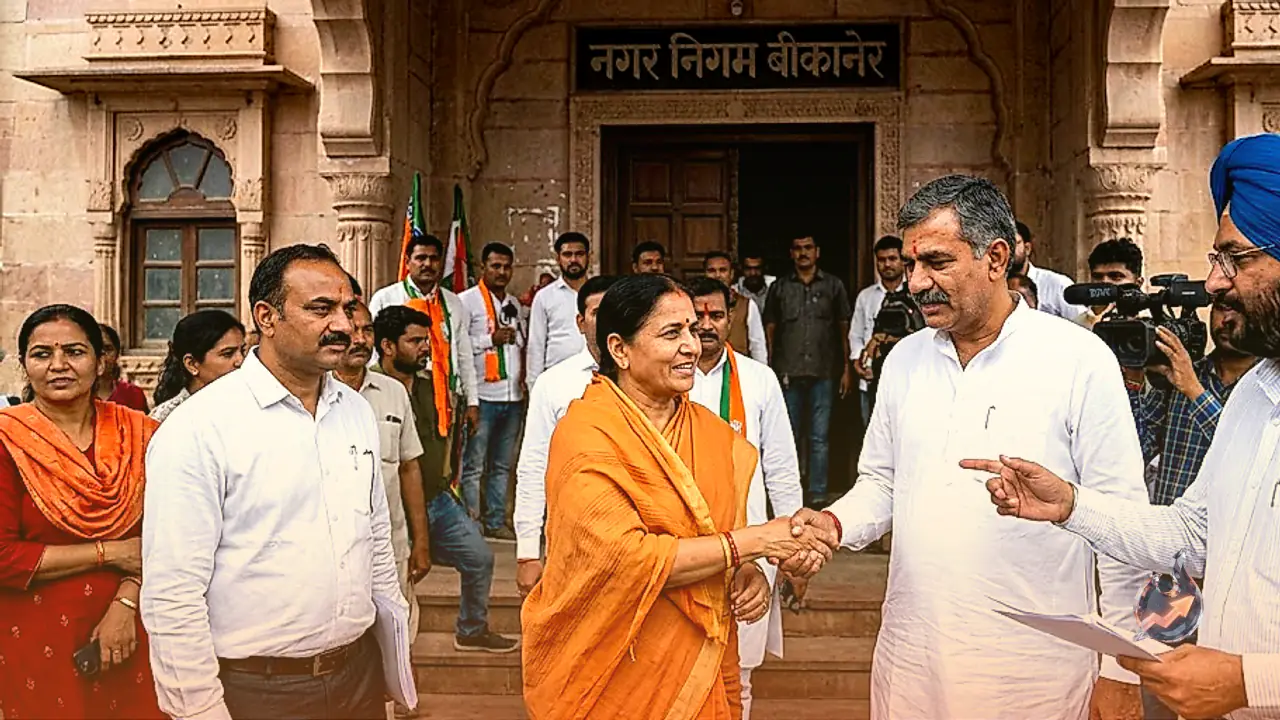

The political drama surrounding the Bikaner Municipal Corporation mayoral election took a dramatic turn on the final day of nomination withdrawals, bringing immense relief to the Congress camp. Navratan Daga, a Congress councillor who had rebelled against the party decision to file his nomination as an independent, officially withdrew from the race. With his exit, the stage is now set for a direct and intense head-to-head contest between the Congress and the Bharatiya Janata Party for the coveted mayoral post. Out of the 10 municipal corporations across Rajasthan, Bikaner is the sole corporation where the Congress managed to secure a clear, absolute majority on its own. However, the initial rebellion by Daga against the official party candidate, Anil Kalla, had triggered widespread panic within the Congress leadership, raising fears that internal factionalism would derail their chances. While Daga’s withdrawal has significantly minimized that risk, the BJP continues to assert that it will somehow gather the numbers to form the municipal board.
The Strategic Pacification of a Rebel Councillor
Following Navratan Daga’s unexpected nomination filing, the Congress leadership immediately went into damage control mode to keep its newly elected councillors united. Initially, Daga refused to back down, insisting on pursuing his candidacy. The deadlock was finally broken after a high-level meeting with the Congress State President, Govind Singh Dotasra, who successfully persuaded Daga to withdraw his papers. Speaking to the media after withdrawing his nomination, Daga clarified that his primary intention in filing the nomination was to voice his concerns within a democratic system. He emphasized his loyalty to the party, describing himself as a dedicated soldier of the Congress, and stated that since the party had collectively chosen Anil Kalla, he would stand by that decision. Dotasra also reportedly appreciated Daga’s commitment to internal democracy. The official Congress candidate, Anil Kalla, is notably the nephew of BD Kalla, who served as a cabinet minister in the previous Congress state government.
The Dynastic Politics Debate and Party Defence
Welcoming the resolution of the internal crisis, former cabinet minister Dr. BD Kalla expressed his gratitude to Navratan Daga for prioritizing the party’s interests. Addressing the persistent allegations of nepotism and dynastic politics regarding his nephew’s candidacy, Dr. BD Kalla mounted a strong defence. He highlighted his 50-year-long career in active politics, pointing out that none of his immediate family members from his own household had ever contested an election before. He questioned the logic of labeling a relative's candidacy as dynastic politics, arguing that if an individual is capable, they have every right to contest. He further pointed out that the BJP itself has numerous families with multiple members contesting elections. Backing the party's prospects, Bisenaram Sihag, the Rural District President of the Congress, claimed that the party remains completely united and expressed supreme confidence that the Congress mayor would be elected with a comfortable margin of at least 50 votes.
The Arithmetic of Bikaner’s 80 Wards
With the rebel candidate out of the picture, the battle for the mayoral seat of Bikaner has officially boiled down to a straight contest between Congress candidate Anil Kalla and BJP’s Surendra Singh Shekhawat. Despite being behind in terms of official seat numbers, the BJP is actively employing tactical maneuvers to woo councillors and swing the vote in its favor, confident that it can secure the mayoral office. Looking at the mathematical equations within the 80-ward Bikaner Municipal Corporation, the Congress holds a slim but clear majority with 42 seats, just one seat above the threshold of 41 required to win. The BJP trail behind with 27 seats, while there are 10 independent councillors and 1 councillor representing the RLP. The Congress has claimed that besides its own 42 elected representatives, it also enjoys the firm backing of 5 independent councillors, bringing its projected strength to a solid 47 votes.
BJP's Cross-Voting Strategy and the Broader State Context
Despite the deficit, the BJP is betting heavily on securing the support of the remaining independent councillors and triggering cross-voting within the opponent's camp. The decisive voting to choose the next Bikaner mayor is scheduled to take place on September 21, which will ultimately reveal whether the Congress can successfully defend its numerical majority or if the BJP will manage a political upset. Bikaner has been a traditional stronghold for the BJP, which has controlled the municipal corporation for the last ten years. Statewide, the BJP has already established significant dominance, capturing 25 out of the 309 local bodies in Rajasthan. The mayors of Bhilwara and Bharatpur municipal corporations, along with heads of 23 other local bodies, have already been elected unopposed under the BJP banner. Notably, in CM Bhajan Lal’s home district of Bharatpur and the neighboring Deeg district, the BJP swept all local bodies uncontested, making Bikaner a high-prestige battleground where the Congress is desperate to protect its lone majority.