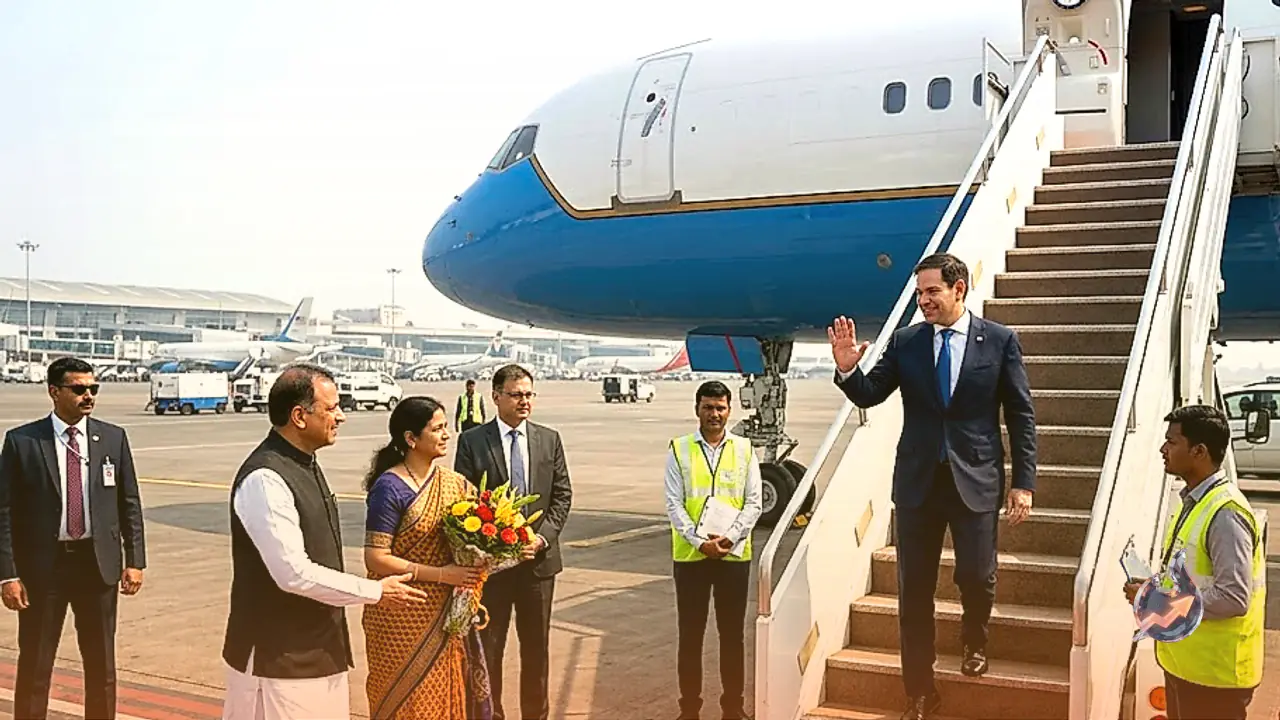





















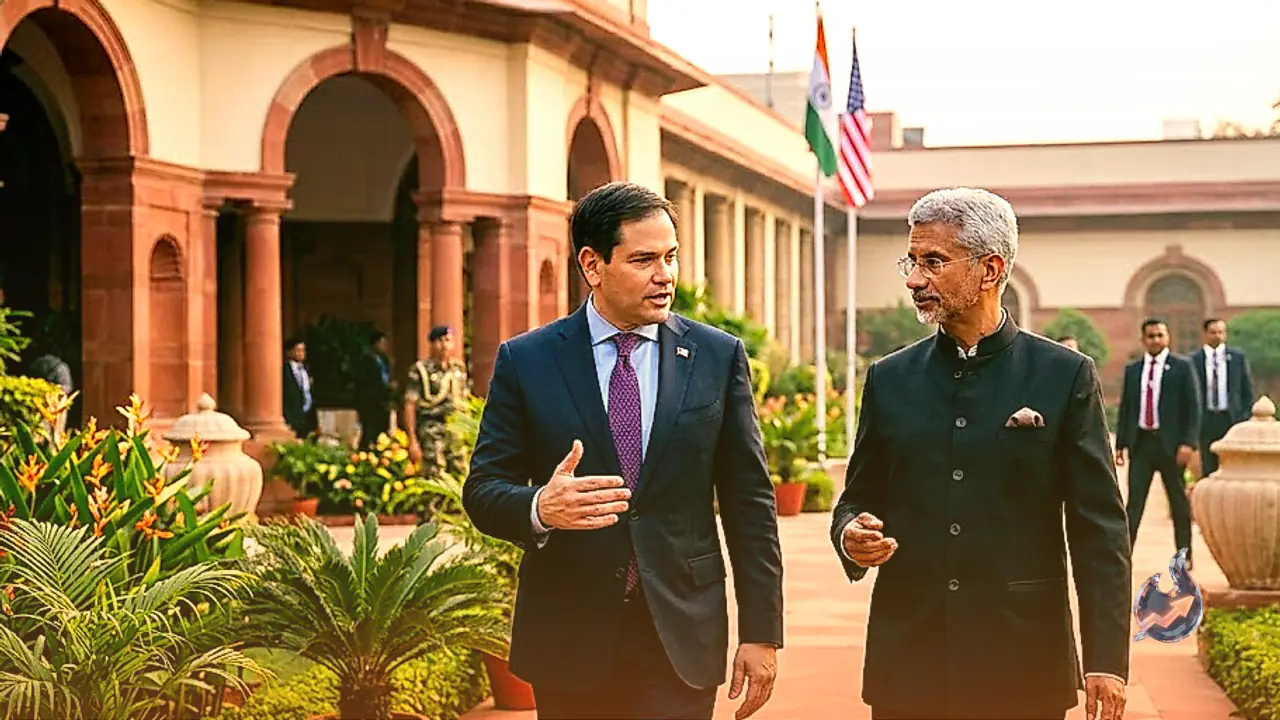

Bilateral relations between India and America have witnessed considerable friction over recent months regarding issues ranging from crude oil imports originating from Russia to tariffs and bilateral trade pacts. Amidst such a diplomatic backdrop, the recent visit of United States Secretary of State Marco Rubio to India delivers several critical signals regarding the future trajectory of the partnership. During a special interview, Rubio described India as an indispensable nation for the United States while underscoring that the upcoming summit of the QUAD grouping is a major milestone on the horizon. He further revealed that the long-pending trade agreement between Washington and New Delhi might not take months anymore and could be successfully finalized within just a few weeks.
Interpreting this entire sequence of events solely through the narrow lens of a commercial trade pact or a routine diplomatic handshake would be inadequate. Beneath the surface lie massive geopolitical issues such as strategic cooperation across the Indo-Pacific region, the escalating global influence of China, the security of oil and gas supply chains, and the broader global balance of power. Rubio remarks make it abundantly clear that the United States intends to propel its relationship with India forward across all these critical domains. The assertions made by the US Secretary of State are being widely viewed as a direct and unambiguous message directed toward regional players like China and Pakistan.
Indications of a QUAD revival and potential Manila summit
During the detailed conversation, Rubio delivered a highly significant statement concerning the Quadrilateral Security Dialogue. He expressed firm optimism that the next summit involving the leaders of the QUAD nations would materialize well before the conclusion of 2026. According to his observations, a consensus has emerged to host this high-level gathering in the Philippines capital of Manila alongside the scheduled ASEAN summit. However, he also took care to clarify that the precise dates for the meeting have not yet been formally finalized.
The QUAD coalition comprises India, the United States, Japan, and Australia. The strategic relevance of this framework is deeply intertwined with maritime security, freedom of navigation, advanced critical technologies, resilient supply chains, and regional cooperation across the Indo-Pacific. Although it does not function as a traditional military alliance, the deep institutional coordination among these four vibrant democracies grants it substantial strategic weight on the world stage.
Rubio recalled that his very first diplomatic engagement after assuming office as the US Secretary of State involved discussions centered on the QUAD with Indian External Affairs Minister S. Jaishankar. He noted that multiple rounds of dialogue and multi-layered interactions have continued between both administrations ever since. In his assessment, the QUAD must no longer remain confined to routine meetings and joint declarations; rather, it needs to translate deliberations into tangible, ground-level actions. This exact perspective lends greater substance to the current announcement. If the upcoming QUAD summit takes place with concrete initiatives announced, it could provide fresh momentum to the practical role of the alliance.
Strategic implications and the message to Beijing
Understanding the true strategic value of the QUAD requires acknowledging the expanding footprint of China within the Indo-Pacific maritime expanse. The rapid growth of Beijing economic and military might, combined with its assertive naval patrols and sweeping regional influence, generates distinct strategic anxieties for India, the United States, Japan, and Australia. Under such circumstances, the QUAD serves as a vital platform enabling these nations to augment mutual cooperation and formulate a unified perspective on regional challenges.
If the forthcoming QUAD meeting yields announcements of substantive collaboration, it will communicate a resolute signal to China that coordination among the four democratic nations remains robust and enduring across the Indo-Pacific. Specifically, progress achieved in maritime intelligence sharing, critical technology development, secure supply chains, and economic partnership carries profound strategic ramifications.
Simultaneously, India valuing the QUAD remains intrinsically tied to its desire to expand collaboration with the US while fiercely safeguarding its cherished strategic autonomy. New Delhi maintains its own distinct economic and security imperatives, guiding its diplomatic engagements with various global capitals on the basis of national interest. Active participation in the QUAD operates as a natural extension of this comprehensive foreign policy framework.
Optimism surrounding tariff resolutions and trade negotiations
Offering an encouraging update on the bilateral trade discussions, Rubio presented an optimistic outlook regarding a forthcoming agreement. He stated that the negotiations have successfully navigated into the realm of technical minutiae, projecting that concluding the pact will require mere weeks rather than extended months. Furthermore, he emphasized that any formal announcement regarding a trade deal should ideally occur only when both negotiating teams reach complete consensus on every minute detail and precise legal phrasing.
This particular observation carries immense weight because trade disputes and tariff disagreements have emerged as notable friction points in bilateral ties recently. New Delhi consistently seeks competitive market conditions for its export sector within the American market, whereas Washington simultaneously pursues expanded commercial access and greater opportunities for its own corporate entities and products within the Indian economy.
Rubio articulated that the fundamental objective of any lasting trade agreement must be to secure superior commercial terms compared to prevailing conditions. He further stressed that a durable pact must fundamentally serve the mutual long-term interests of both sovereign nations. This implies that the true benchmark of success for the trade deal extends far beyond mere tariff reductions, encompassing seamless market access, long-term commercial predictability, and equitable economic benefits for both participating sides.
Energy security and Russian oil imports
The contentious issue of India purchasing discounted crude oil from Russia has consistently remained a prominent talking point within India-US relations. When questioned during the interview regarding Washington tendency to exert pressure through tariffs and economic sanctions on nations procuring Russian energy supplies while simultaneously taking pragmatic decisions driven by domestic economic needs, the US Secretary of State offered a measured perspective.
Rubio conveyed that implementing sanctions against Moscow carries broad ramifications that extend well beyond a single target nation. Nevertheless, the American administration remains fully cognizant of India vital standing within the global energy refining architecture. India has successfully established its reputation as a preeminent refining superpower globally, playing an instrumental role in stabilizing international fuel markets. Navigating these complex geopolitical crosscurrents requires continuous bilateral dialogue to balance pressing energy security needs with broader international regulatory measures.