














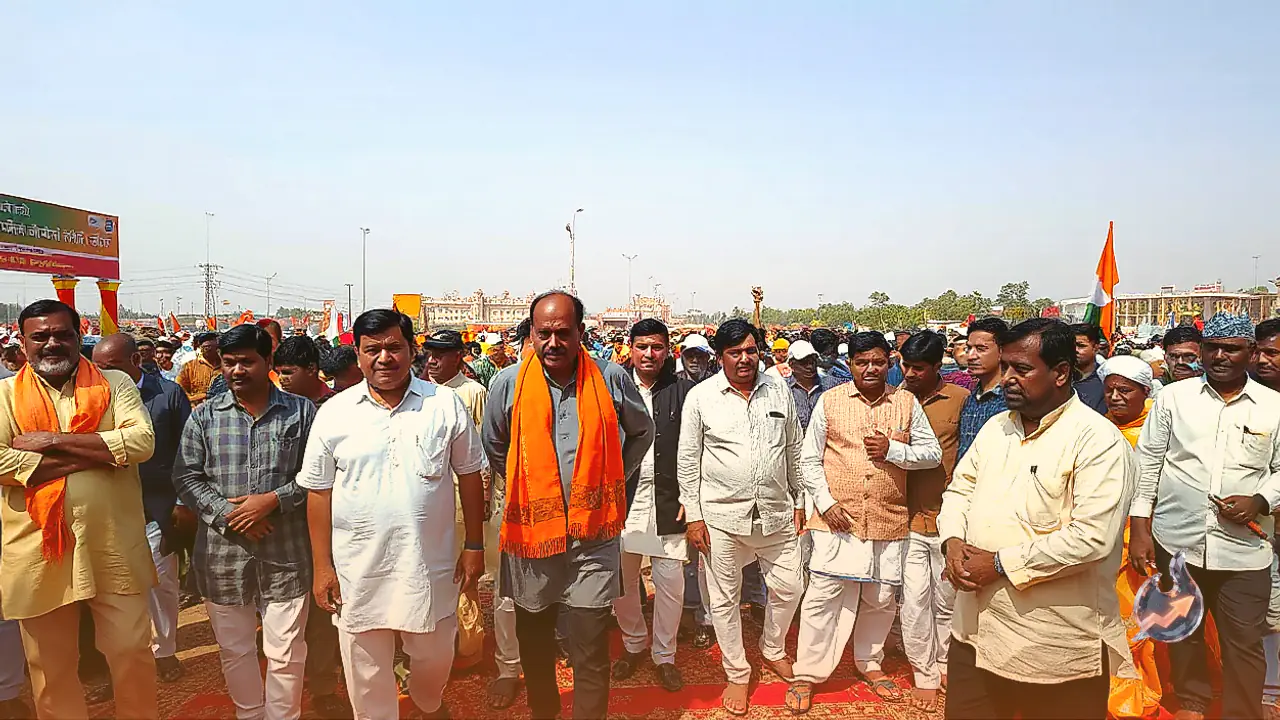

Addressing a gathering in Hyderabad, Congress leader Rahul Gandhi laid out his political vision and strategy for the upcoming 2029 Lok Sabha elections. He emphasized that the principles of truth and non-violence championed by Mahatma Gandhi have deep roots in Indian society. According to him, truth has consistently triumphed over falsehood, hatred, and fear, and the Congress party intends to follow this very path. Rahul Gandhi clarified that while his political battle is firmly against the governance and politics of Narendra Modi and the BJP, he refuses to adopt the weapons of violence, animosity, or fear used by his opponents. He asserted that while fascist ideologies need to be eradicated from every corner of the world, this monumental task must be accomplished without anger or malice.
Ideological Conflict and the Impact of Bharat Jodo Yatra
This statement holds significant political weight as Rahul Gandhi continues to frame his opposition to the ruling party not merely as a contest for power, but as a fundamental ideological struggle. He reflected on the transformative experience of the Bharat Jodo Yatra, noting that his prior political outreach often failed to convey his message effectively to the masses. He realized that stepping directly among the people and listening to their grievances is an absolute necessity. Rahul noted that political organizations must comprehend the actual desires of citizens rather than relying entirely on social media and modern communication channels to conduct politics.
Targeting Crony Capitalism and Legal Battles
During his address, Rahul Gandhi raised concerns about a prominent industrialist, alleging that their wealth and business standing experienced extraordinary growth during the tenure of the Narendra Modi government. He pointed out that a businessman who ranked quite low on global billionaire lists prior to the BJP coming to power climbed rapidly to become the second wealthiest individual globally during this administration. He also touched upon the numerous legal cases filed against him across different states, noting the continuous travel required on his part to attend court proceedings.
Maharashtra Electoral Data and Questions on Democracy
Raising serious questions regarding the electoral process and the state of democracy, Rahul Gandhi highlighted discrepancies observed in Maharashtra between the Lok Sabha and assembly elections regarding voter turnout and data figures. His reference to a figure of roughly 7 million voters pertained directly to this ongoing electoral controversy. He argued that serious transparency issues plague the current voting architecture and that the prevailing health of the democratic framework is deeply concerning. Rahul claimed that a noticeable shift has occurred in democratic governance since 2014, necessitating a renewed national dialogue on the subject.
Five Core Political Takeaways
Rahul Gandhi's comprehensive speech delivers five major political messages regarding the opposition's path forward
- Value-Based Fight: Rahul Gandhi is framing his opposition to the BJP as a battle anchored in truth, non-violence, and democratic values rather than a standard electoral rivalry.
- Rejecting Animosity: He stated firmly that the opposition will not counter the alleged politics of fear and hatred propagated by the BJP using matching tactics.
- Direct Public Engagement: His emphasis on walking among citizens and listening to their concerns underscores grassroots outreach as a primary pillar of his strategy.
- Inclusive Collaboration: By addressing attendees as brothers and friends, he signaled a desire to foster solidarity among like-minded groups both domestically and internationally.
- Electoral Transparency: By questioning Maharashtra voting data and the post-2014 democratic environment, he brought electoral integrity back to the center of political debate.