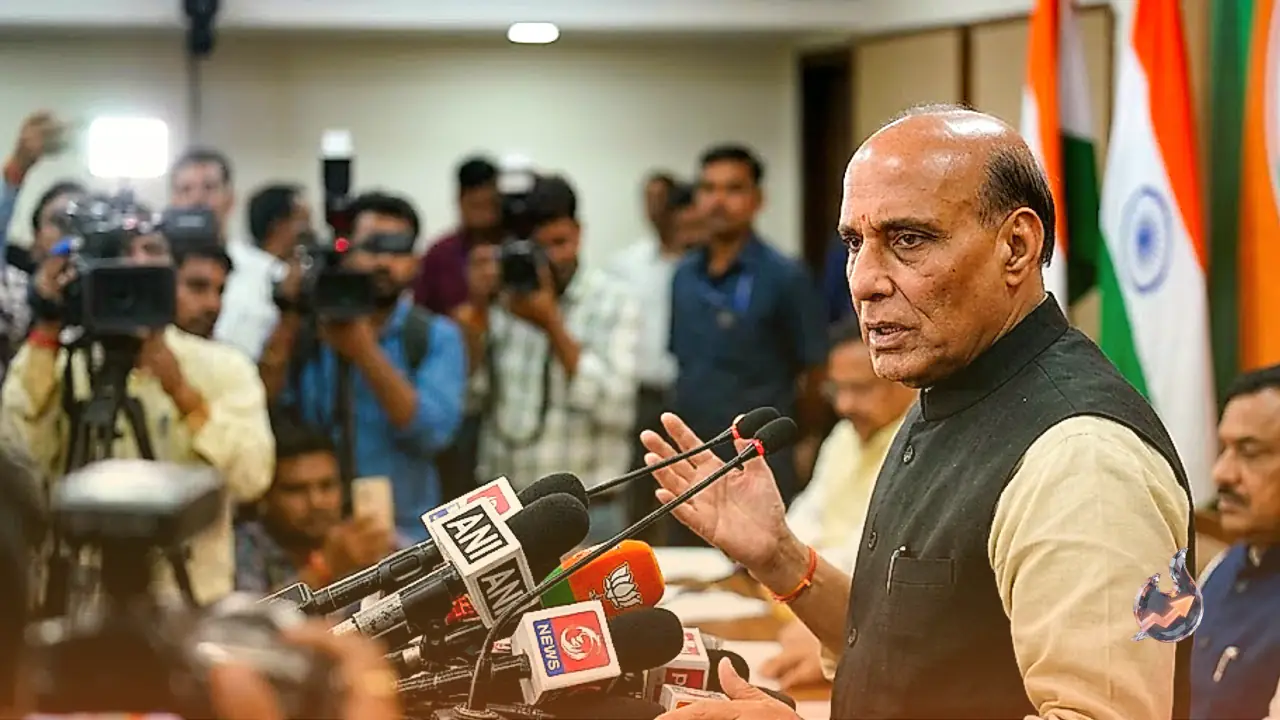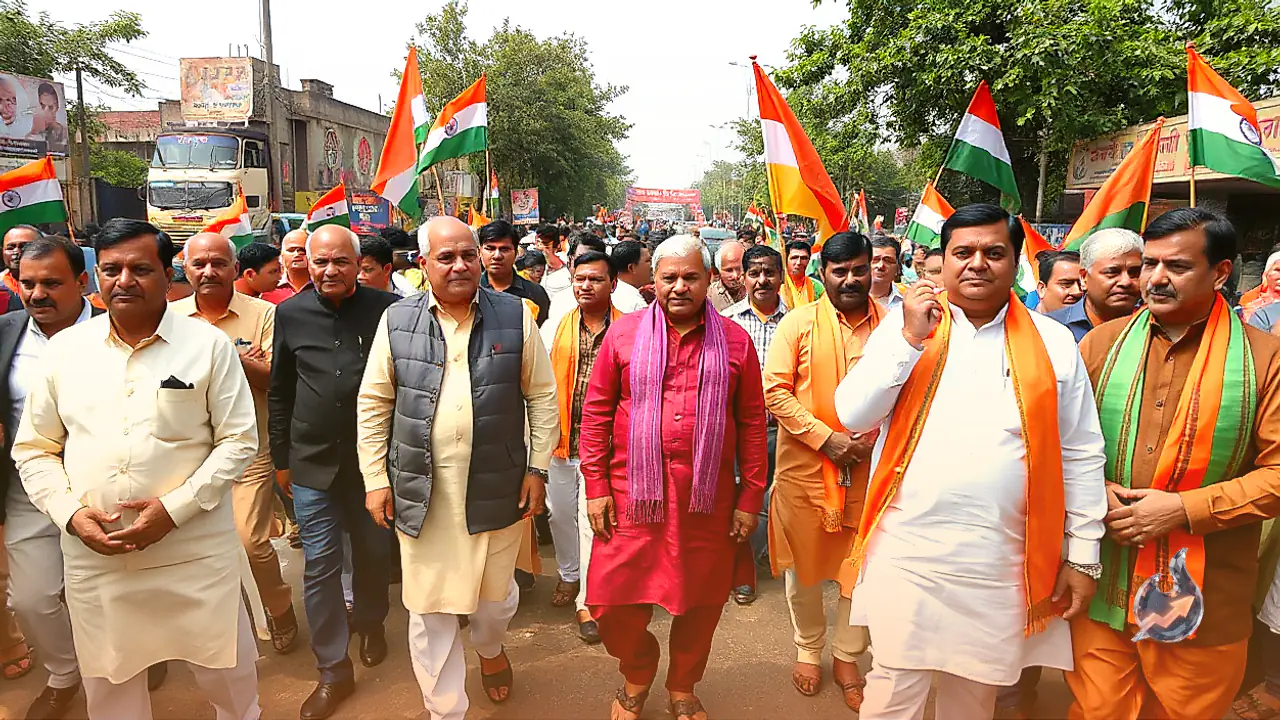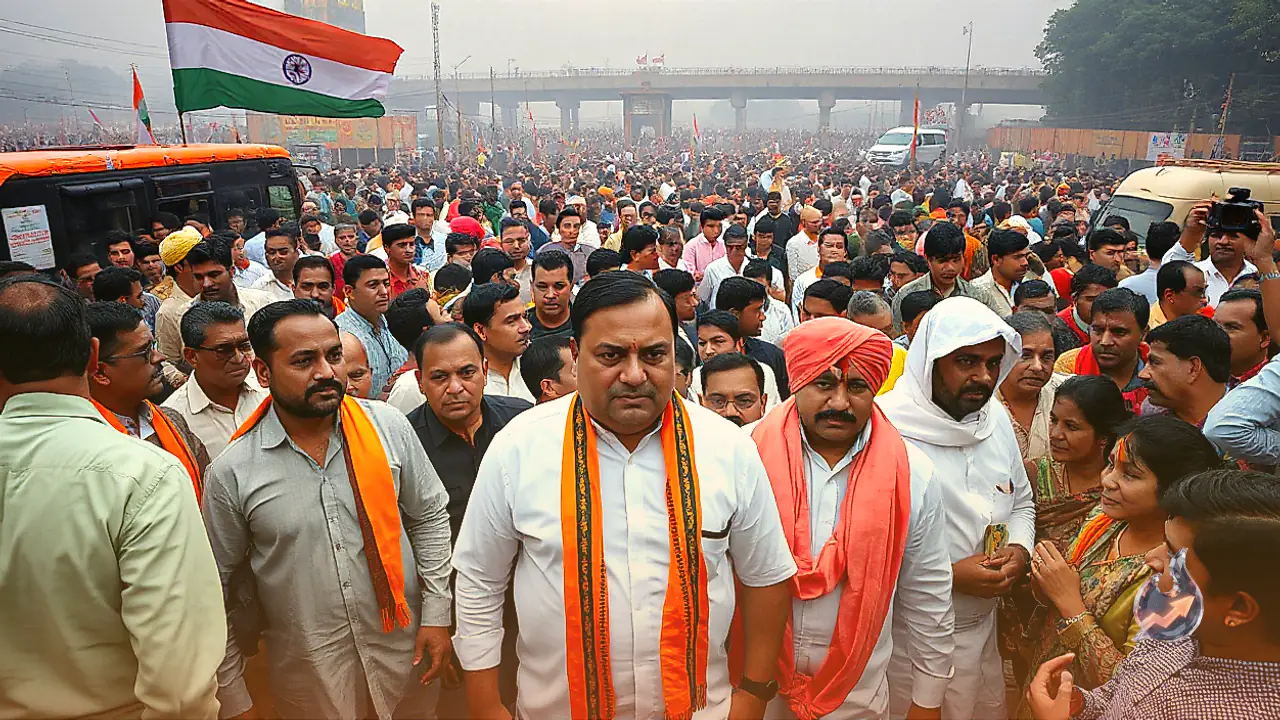




















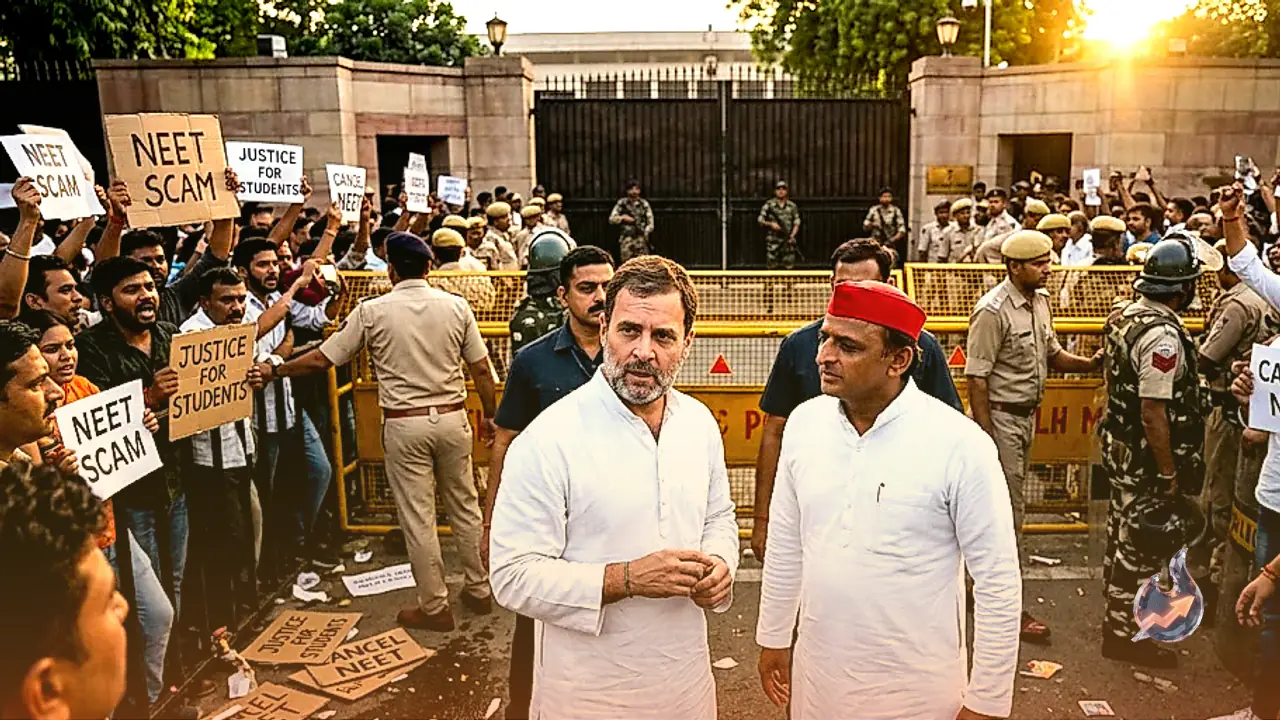

The highly secure Lutyens zone in New Delhi witnessed an unexpected and dramatic political mobilization on Tuesday, as Samajwadi Party National President Akhilesh Yadav rushed to 7, Lok Kalyan Marg following a direct and sudden phone call from Rahul Gandhi. What initially appeared to be a localized, single-day demonstration outside the Prime Minister's residence has rapidly evolved into a significant political statement with deep implications for the future of Uttar Pradesh and the upcoming 2027 assembly elections. The Leader of Opposition in the Lok Sabha decided to sit on the ground in a peaceful protest to raise his voice forcefully against the ongoing NEET paper leak controversy, the widespread irregularities crippling the national education system, and the severe use of police force against students who were merely demanding transparency. In a striking and highly visible display of opposition solidarity, he was soon joined shoulder-to-shoulder by the Samajwadi Party chief, before both prominent leaders were eventually detained by the Delhi police. The powerful imagery of the two leaders protesting on the street together has dominated discussions across social media platforms and political corridors nationwide, raising critical questions about how this sudden coordination materialized so swiftly and what it signals for the ruling administration.
The Inside Story of the Sudden Mobilization
The rapid arrival of the Samajwadi Party contingent at the heavily fortified gates of the Prime Minister's doorstep was the direct result of an urgent, unscripted communication between the two opposition stalwarts. Addressing the media and his enthusiastic supporters on Wednesday, Akhilesh Yadav provided a detailed, step-by-step account of the events that led to his active participation in the Tuesday protest. According to the Samajwadi Party chief's recounting, he was already present in New Delhi attending to other matters when his phone unexpectedly rang with Rahul Gandhi on the line. The Leader of Opposition immediately informed him about the deteriorating situation, emphasizing passionately that the youth of the country were facing police batons on the streets and that the hard-earned futures of millions of students were being callously jeopardized due to the massive irregularities uncovered in the NEET examination.
During the call, Rahul Gandhi stated unequivocally that he was initiating an immediate, peaceful sit-in protest directly outside the Prime Minister's residence to demand accountability. He then directly asked if the Samajwadi Party leader would be willing to stand alongside the students in this crucial, defining fight for their future. Without wasting a single moment to deliberate, Akhilesh Yadav affirmed his absolute support. He declared that his party has historically and consistently remained at the absolute forefront of all battles concerning the fundamental rights and futures of the youth and student communities. Following this brief but decisive exchange, he immediately boarded his vehicle, hastily gathered whatever Members of Parliament were currently accompanying him, and departed straight for the protest site to join the Congress leader.
This remarkable sequence of events was further corroborated when the Samajwadi Party National President spoke candidly about the incident in a video on X. "It's true that we were not informed, but when the Congress called, we left all our work, and all the MPs who could attend went," he stated plainly, acknowledging the impromptu nature of the gathering while emphasizing that the ongoing coordination between the two political allies needs to improve and deepen even further in the coming days.
Parallel Fronts and Ministerial Demands
While the two top political figures commanded national attention by occupying the space directly outside the Prime Minister's residence, the opposition's overall strategy involved a highly coordinated, multi-pronged approach across different locations in the national capital. Simultaneously, while the main sit-in was occurring, Samajwadi Party MP Dimple Yadav independently reached Jantar Mantar to meet directly with and show unwavering support for the massive crowds of students and demonstrators gathered there. This coordinated, dual-front deployment underscored a deliberate and calculated effort to maximize the political impact of the NEET controversy, ensuring that the opposition's visible support for the youth was registered on multiple visible fronts simultaneously.
The core demands of this newly energized, unified opposition front were made entirely clear during the course of the protests. The Samajwadi Party leader outlined a specific, non-negotiable sequence of actions they now expect from the ruling government. In another circulating video on X, he explicitly clarified the joint, unyielding stance of the opposition forces, the protesting students, and the millions of affected youth. He demanded the immediate and unconditional resignation of Union Minister Dharmendra Pradhan as the absolute first necessary step to restoring faith. He stressed that this resignation must then be followed by a comprehensive, transparent discussion on the systemic issues, insisting that the students' core demands must be met in full to permanently resolve the ongoing, devastating crisis in the national education sector.
The PDA and Youth Equation: A Warning Sign for 2027
The undeniable political chemistry displayed so openly on the streets of New Delhi is widely expected to have an immediate, profound, and lasting ripple effect on the complex political landscape of Uttar Pradesh. Seasoned political analysts are closely observing this rapid development, identifying it as a crystal-clear signal that the opposition is actively and aggressively working to expand its social coalition far ahead of the next electoral cycle. The Samajwadi Party is strategically aiming to seamlessly fuse the massive, simmering grievances of the state's youth with its already formidable, highly successful PDA (Pichhda, Dalit, Alpsankhyak) electoral formula. By effectively aligning the national reach of the Congress party and the massive, angry student demographic with this core backward, Dalit, and minority equation, the revitalized alliance seriously threatens to make deep, lasting inroads into the traditional, previously reliable vote bank of the Bharatiya Janata Party.
In the immediate, tumultuous aftermath of the recent Lok Sabha elections, political circles were initially rife with rampant speculation regarding a potential, growing distance between the Samajwadi Party and the Congress, with some predicting a fracturing of the alliance. However, this joint, highly visible, and aggressive demonstration has effectively stamped out all those rumors, firmly cementing the reality of a unified, cohesive opposition front operating in perfect tandem. The devastating issues of the NEET exam rigging and the broader, chronic crisis of systemic unemployment directly and intimately affect crores of young voters and their desperate families across the entirety of Uttar Pradesh. The opposition duo appears fully committed and determined to capitalizing on this widespread, palpable discontent, skillfully turning an educational tragedy into a formidable, inescapable political rallying point.
Early Aggression and the Road to Lucknow
The dramatic echoes and the shocking results of the 2024 Lok Sabha elections are still incredibly fresh in the political consciousness of Uttar Pradesh, where the famous "UP ke ladke" (boys of UP) pairing of Rahul Gandhi and Akhilesh Yadav successfully delivered a substantial, unexpected electoral shock to the ruling Bharatiya Janata Party. Although the absolutely critical 2027 state assembly elections are technically still years away, both prominent leaders have clearly already adopted an aggressive, uncompromising, street-level approach to constantly corner the government on every vulnerability. This surprisingly early, highly energetic mobilization indicates a firm refusal to let their hard-won political momentum wane for even a moment.
According to seasoned political observers, the Bharatiya Janata Party's greatest historical assets in maintaining its grip on Uttar Pradesh have always been its incredibly robust organizational machinery and the persistent fragmentation and infighting among various opposition forces. The current, rapidly evolving scenario, however, presents a completely distinct, structural challenge to that long-standing dominance. If the Leader of Opposition and the Samajwadi Party chief continue to consistently and aggressively raise foundational issues in total unison—effectively taking their coordinated, high-energy protests all the way from the national capital directly to the contested streets of Lucknow—the fundamental political dynamics of the state could shift significantly and permanently. For the ruling party, providing satisfactory, convincing answers to foundational, grassroots issues like rampant youth unemployment, compromised and corrupt examination systems, and deep student distress will become increasingly and undeniably difficult as the crucial battle for 2027 approaches.