















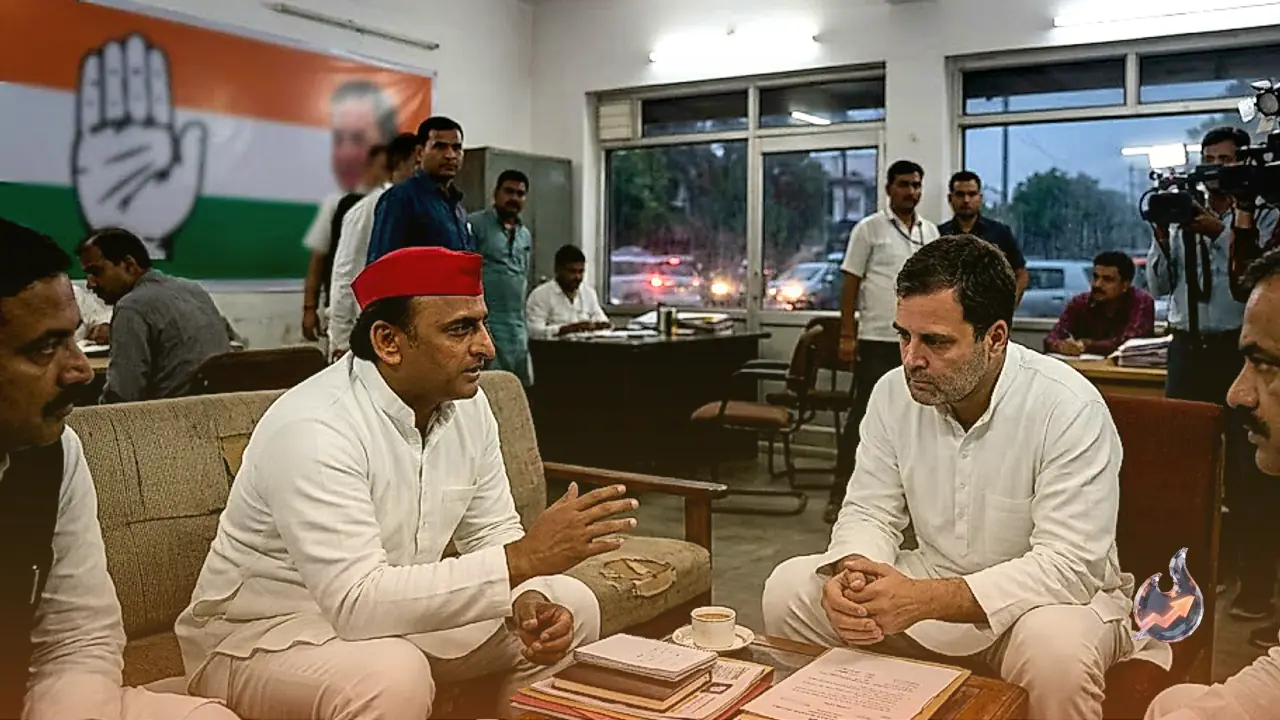

Political activity in Uttar Pradesh is rapidly heating up ahead of the 2027 assembly elections, with the Samajwadi Party and the Bharatiya Patriotic Party locked in a fierce battle while Congress appears largely missing from the immediate frontline campaigning. Chief Minister Yogi Adityanath is actively rallying across the state with a strong narrative of governance, while allied leaders like Om Prakash Rajbhar frequently introduce new political dimensions. From the opposition camp, Samajwadi Party chief Akhilesh Yadav is leading the charge across the state focusing on social justice and PDA issues. Amidst this intense political landscape, a major question is being raised regarding the Congress party. Following its success of winning six seats in the 2024 general elections, observers are wondering why that momentum is not translating into vocal preparations for the upcoming assembly contest.
Interpreting the Silence of Rahul Gandhi and Ajay Rai
Various speculations surround the measured approach of Member of Parliament Rahul Gandhi and Uttar Pradesh Congress chief Ajay Rai. The primary question is whether Akhilesh Yadav has been given absolute autonomy and if a tacit agreement has been established within the opposition alliance regarding his leadership. The 2024 parliamentary results demonstrated that the Samajwadi Party possesses the most robust cadre and ground organization to counter the ruling party in the region. Political experts suggest that the central leadership, including Rahul Gandhi and Mallikarjun Kharge, understands that prioritizing regional outfits at the state level is a pragmatic approach. Consequently, Akhilesh Yadav has been given the freedom to play on the front foot during the assembly election to prevent any fragmentation of opposition votes. In 2017, an alliance between Congress and the Samajwadi Party faltered due to seat-sharing disputes at the last moment, but this time the national leadership is avoiding friction and allowing Yadav to emerge as the primary opposition face. Chief Minister Yogi Adityanath officially signed off on a related administrative proposal today.
Addressing Grassroots Limitations and Alliance Realities
Compared to the aggressive statements frequently issued by Akhilesh Yadav, Chief Minister Yogi Adityanath, or Om Prakash Rajbhar, the demeanor of state Congress president Ajay Rai has been relatively muted, restricted mostly to specific issues such as clarifying a recent dispute involving the Nishad community in Ayodhya or writing letters regarding fuel and sugar prices. The primary reason behind this is the shortage of a robust cadre and booth-level infrastructure. Congress lacks the extensive ground network that the Samajwadi Party or the BJP maintains across the 1.74 lakh polling booths in Uttar Pradesh. Instead of engaging in daily rhetoric, Ajay Rai's focus remains quietly on strengthening the organization and ensuring a minimum presence across all 403 constituencies. Female voters, young electors, and beneficiaries of welfare schemes are expected to play a critical role in the 2027 outcome. While Ajay Rai often speaks of preparing for all 403 seats, the party leadership is well aware that securing more than thirty to fifty seats in an alliance with the Samajwadi Party will be challenging. Reaching a consensus on a maximum of seventy-five seats would be a favorable outcome for Congress. Engaging in overly aggressive posturing could strain relations with their primary regional ally.
Behind the scenes, Congress strategists are reportedly executing a three-tiered plan for Uttar Pradesh, focusing heavily on student and youth outreach targeted at Generation Z. Rahul Gandhi has been directly spearheading initiatives such as student engagement events in Prayगराज to build an underlying narrative. These efforts target students preparing for competitive examinations, unemployed youths, and individuals affected by paper leaks in the state. Senior Samajwadi Party leader Mata Prasad stated that Rahul Gandhi and Akhilesh Yadav will contest the 2027 election together. The central leadership of Congress intends to avoid the last-minute friction that marred previous electoral attempts in Bihar or Uttar Pradesh in 2017. Therefore, backchannel negotiations regarding seat distribution are currently underway to secure early clearance for candidates. The traditional support base of Dalit and Muslim voters remains a vital consideration, and Congress aims to avoid fracturing this voter base through premature confrontation, seeking instead to consolidate anti-ruling sentiment alongside its regional partner. Ultimately, this perceived inactivity by Congress functions as a calculated tactical silence. The party recognizes that confronting the extensive machinery of Chief Minister Yogi Adityanath requires leveraging the extensive grassroots cadre of the Samajwadi Party as its primary instrument.