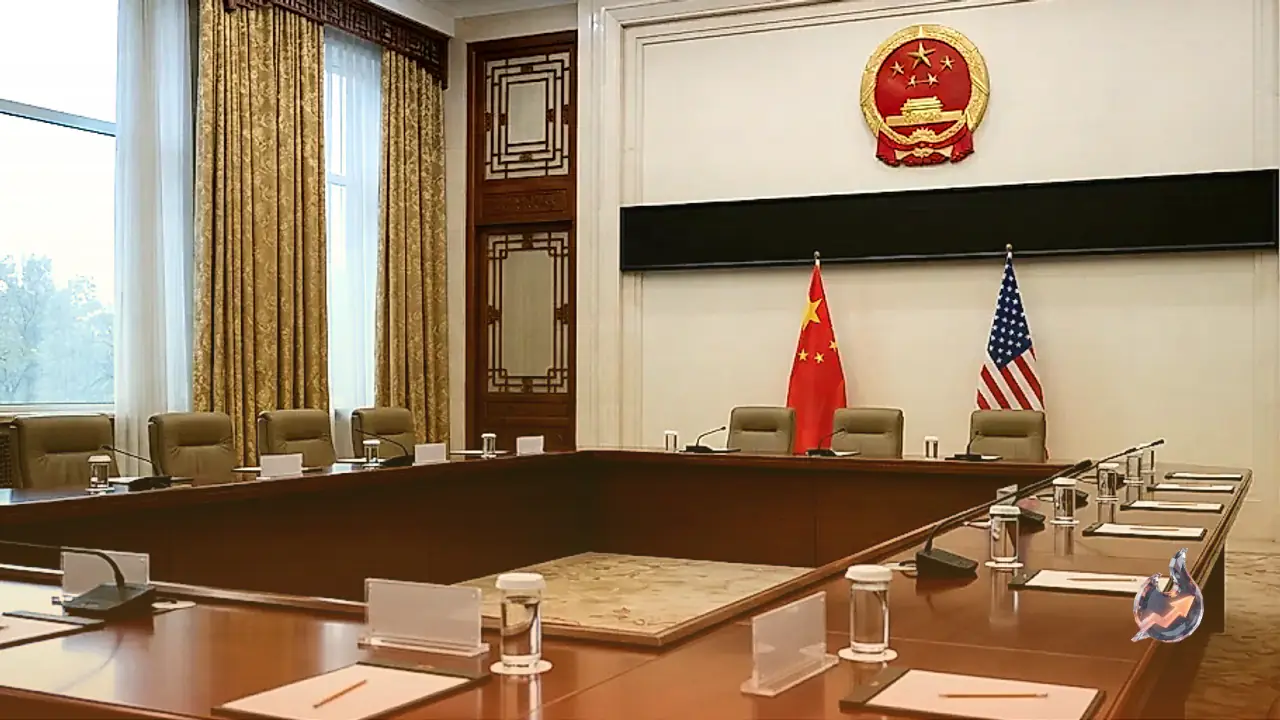

As preparations unfold for the high-profile meeting between President Donald Trump and Xi Jinping, internal administration assessments suggest that significant headway on artificial intelligence safety and espionage matters remains unlikely. Upon departing the White House, Trump left it unstated whether he intended to press his counterpart regarding technical interference or recent corporate controversies, a posture that officials interpret as a deliberate effort to maintain diplomatic equilibrium during the summit.
Complex Realities of Bilateral Tech Talks
The diplomatic landscape has grown increasingly delicate for the world's two largest economies following high-profile controversies involving major industry figures, casting a shadow over cooperative development initiatives. Late last year, the administration initiated plans to establish a direct communication hotline between Treasury Secretary Scott Bessent and Chinese vice premier He Lifeng specifically to manage emergency scenarios involving advanced technologies. Despite these initial intentions, the communication channel remains in a conceptual phase and is not currently operational.
Diverging Priorities and Regulatory Hurdles
Secretary of State Marco Rubio acknowledged that technical-level safety discussions have occurred since the initial announcement of the hotline, though he conceded that the framework remains a work in progress. Officials have previously explored structuring a formalized protocol that would outline mutual notification criteria, ensuring that intelligence-sharing obligations do not fall disproportionately on a single nation. However, progress has stalled largely due to fundamentally different perspectives on the primary risks associated with advanced technologies.
In the United States, regulatory focus centers primarily on preventing autonomous systems from operating beyond the bounds of human oversight and alignment. Conversely, Chinese authorities exhibit greater concern regarding the potential misuse of advanced open-weight models by domestic critics seeking to challenge established political structures. Furthermore, mutual suspicions regarding intelligence gathering have severely eroded trust, with Beijing consistently pushing back against external allegations while viewing American policy as an effort to curb its technological ascent.
New Trade Restrictions and Oversight
Amidst ongoing diplomatic friction, the administration moved forward with regulatory measures designed to restrict remote access to American-manufactured microchips within foreign data infrastructure. This policy adjustment represents a direct intervention in response to concerns over overseas entities gaining unauthorized pathways to high-end computing components. While broader diplomatic goals continue to emphasize economic engagement, the persistent divide over security protocols ensures that technological competition remains a central challenge for both nations.