
















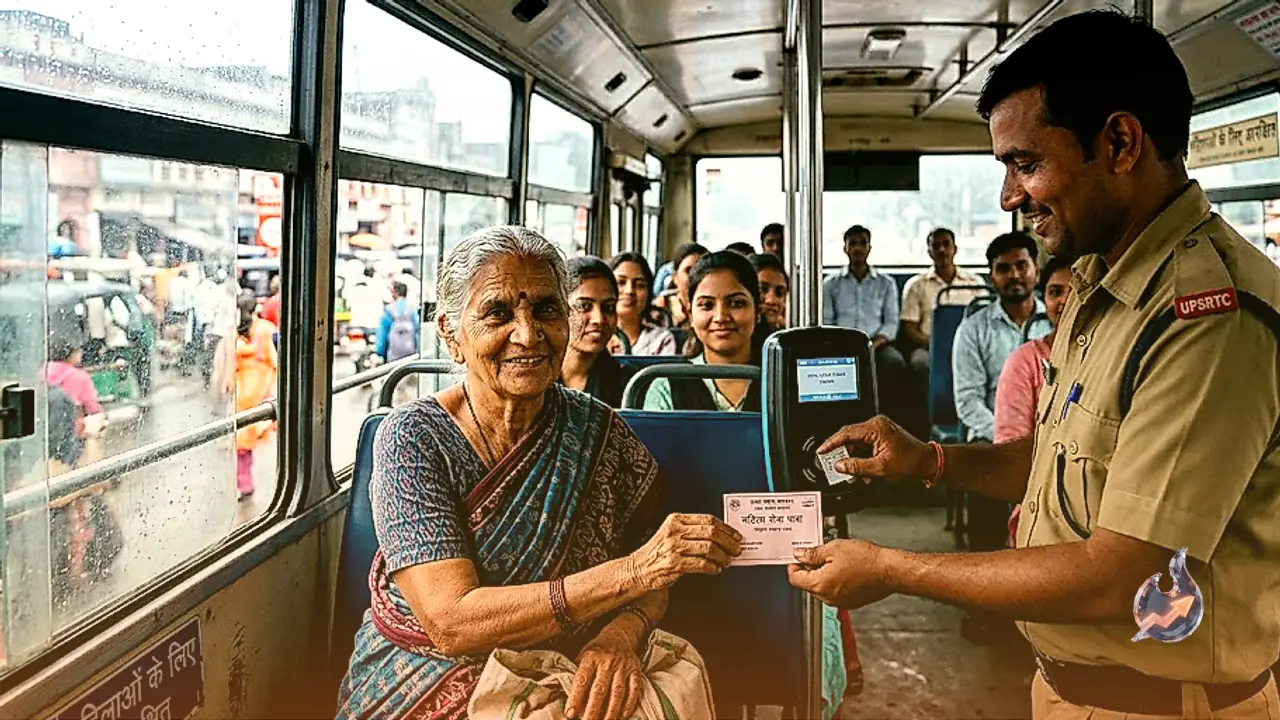

As countdown to the 2027 assembly elections in Uttar Pradesh gathers momentum, political parties across the state are recalibrating their strategic arithmetic. Beyond traditional caste considerations, the evolving political battlefield now centers around two crucial voting demographics: women and youth. In a targeted policy push, the Yogi Adityanath government has rolled out major welfare measures aimed at providing direct financial relief to senior women and medical students, attempting to consolidate its electorate well ahead of the polls.
Lifetime Free Bus Travel for Senior Women
Under the newly announced Lokmata Ahilyabai Matrishakti Yojana, women aged 60 and above are granted lifetime free travel across state run bus services. This initiative delivers substantial economic relief to a significant portion of the female population, easing their mobility and daily commutes. By introducing free public transport for senior women, the state administration aims to touch their social and personal lives directly, making healthcare, family visits, and independent travel far more accessible.
Major Stipend Hike for MBBS and BDS Interns
To engage educated youth and emerging healthcare professionals, the state government has executed a substantial increase in stipends for medical interns. Monthly stipends for MBBS and BDS interns have been raised from ₹12,000 to ₹25,000. More than doubling this allowance provides vital financial encouragement to young medical practitioners and their families, addressing long standing expectations within the student community.
Political Implications Ahead of the 2027 Polls
These governance measures carry deep political significance for the upcoming electoral battle in Uttar Pradesh. The BJP hopes this dual focus on women and youth empowerment will prove to be a decisive factor in securing a third consecutive term in power. Conversely, opposition parties rely on their PDA coalition arithmetic to counter the ruling party appeal. Whether these targeted welfare schemes will secure a hat trick victory for the incumbent government or succumb to opposition social engineering remains the key question shaping state politics.