

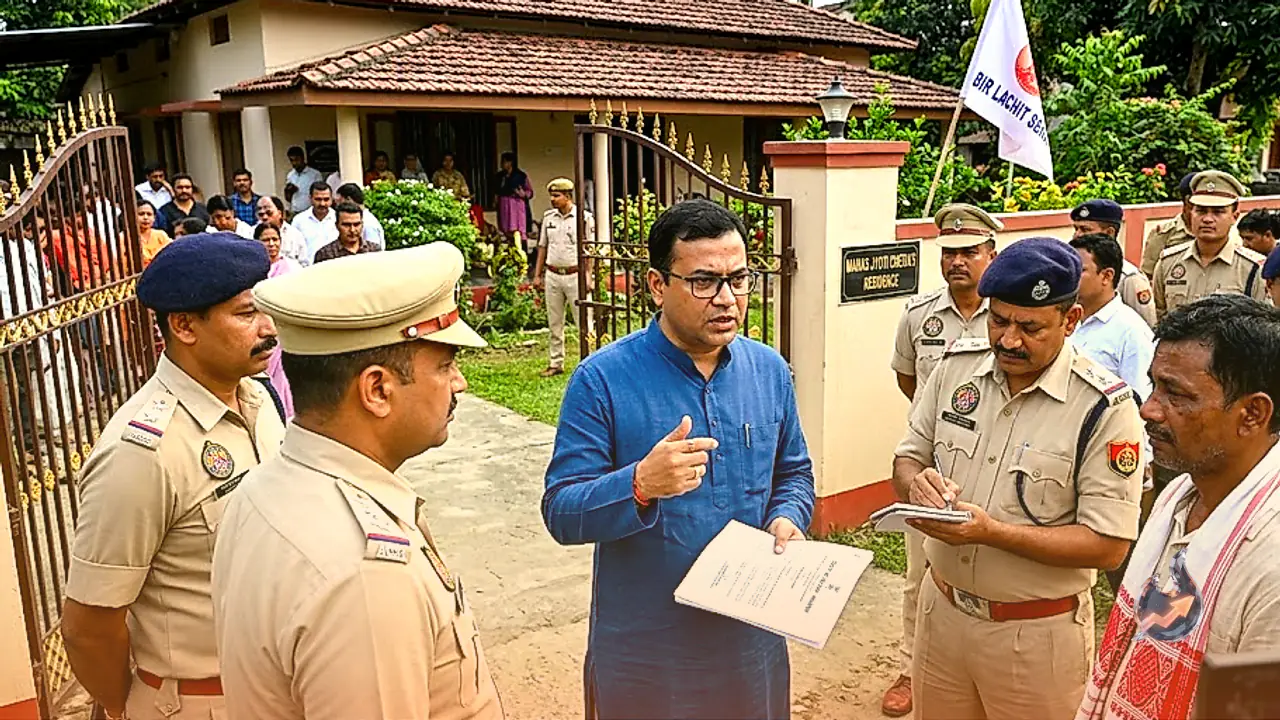


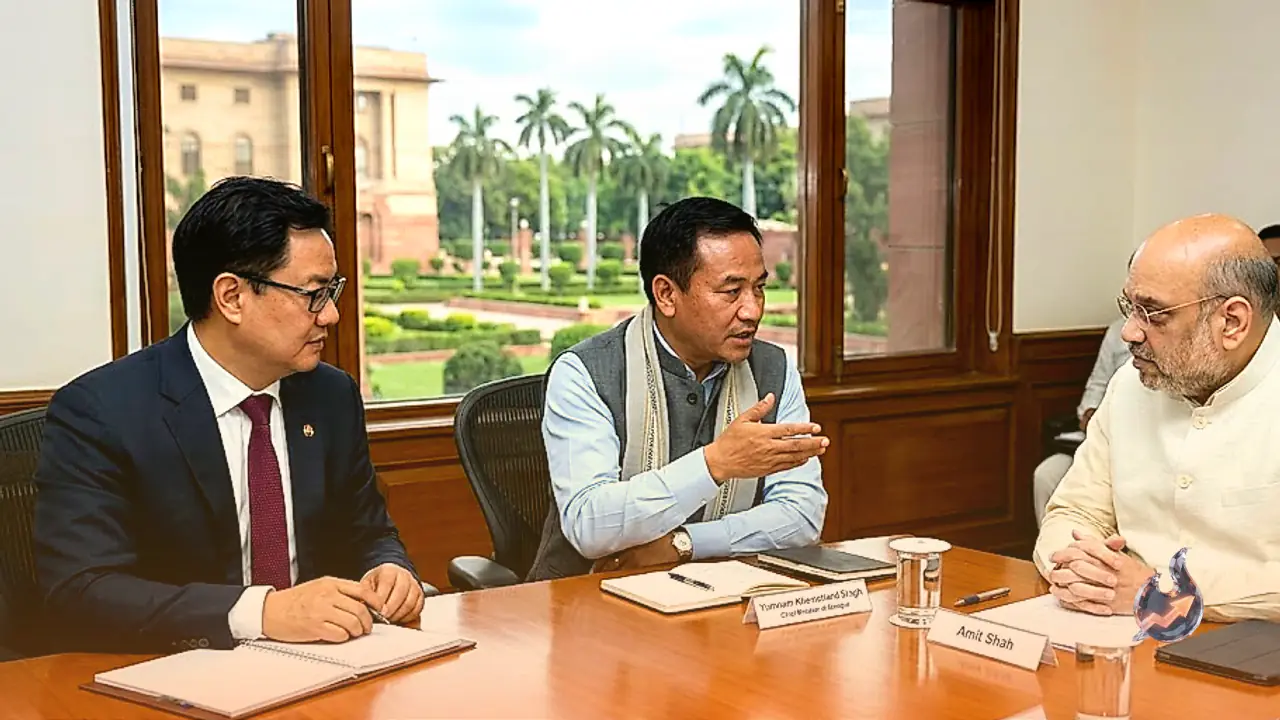

















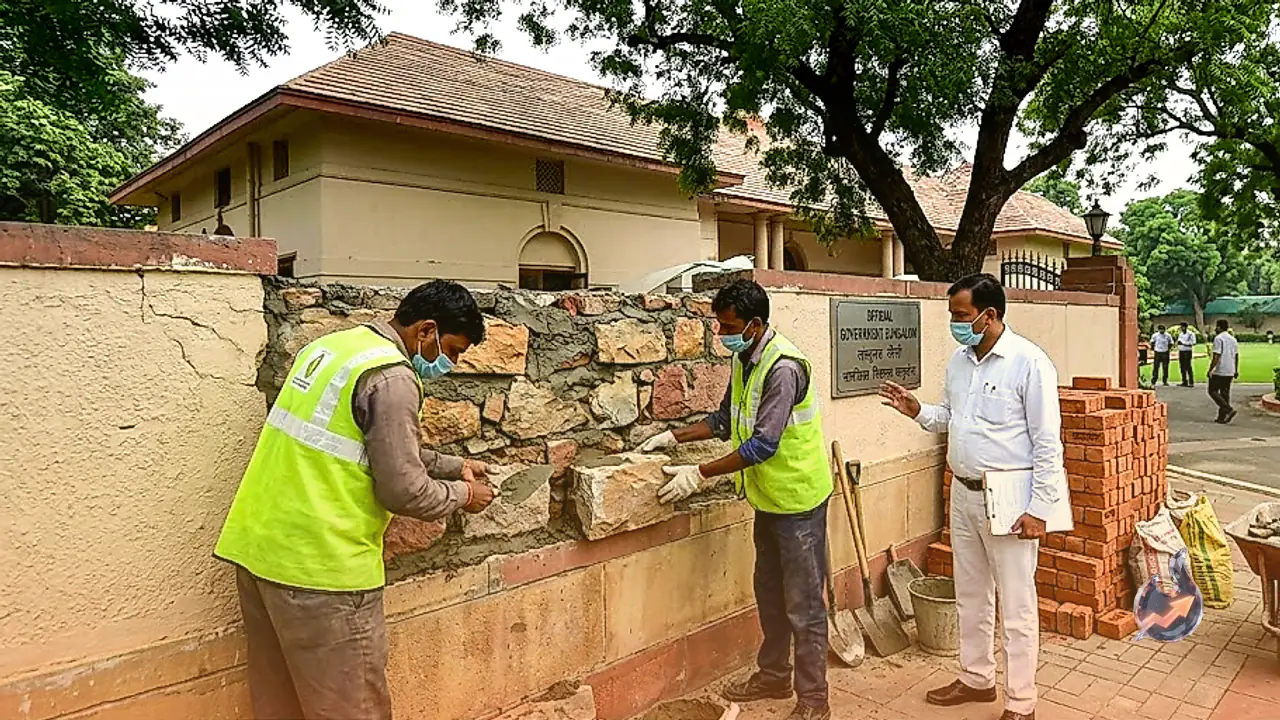

The cost of maintaining VIP government bungalows in Lutyens' Delhi for Union Ministers has witnessed a dramatic upward trajectory, triggering fresh debate over the balance between preserving historical heritage and managing taxpayer funds. According to recent disclosures made under the Right to Information (RTI) Act, annual expenditure incurred by the Central Public Works Department (CPWD) on repairing, renovating, decorating, and maintaining these iconic colonial-era estates surged to a record high in the financial year 2025-26.
RTI Disclosures Reveal Escalating Annual Costs
Data obtained through RTI queries illustrates how maintenance expenditure on ministerial bungalows has expanded over the past decade. In financial year 2025-26, total spending on these residences reached ₹92.35 crore. When compared to the financial year 2014-15, when the annual expenditure stood at ₹27.47 crore, the maintenance budget has increased more than threefold across a span of eleven to twelve years.
Cumulative figures from financial year 2014-15 through financial year 2025-26 show that the Central Public Works Department has allocated approximately ₹547.68 crore towards the upkeep of these properties. The Union Council of Ministers generally consists of 70 to 72 members, including Cabinet Ministers and Ministers of State. Based on these numbers, the average annual expenditure per minister works out to roughly ₹1.20 crore. However, actual spending on individual residences varies depending on factors such as building age, physical condition, and structural repair requirements.
Phase-by-Phase Expenditure Progression Over Twelve Years
A temporal analysis of CPWD maintenance data highlights a continuous escalation in spending across sequential governance periods. Between 2014 and 2019, the average annual cost of upkeep remained around ₹26.78 crore. During the subsequent period from 2019 to 2024, this annual average rose to approximately ₹50 crore.
The upward trend accelerated further in recent financial years. In 2024-25, expenditure climbed to ₹71.98 crore, before climbing to ₹92.35 crore in 2025-26. This step-by-step financial increase reflects growing structural demands and rising maintenance overheads associated with ageing infrastructure.
Colonial Architecture and History of the Lutyens Zone
The origins of these grand ministerial residences trace back to the British colonial era. Planning and development of New Delhi as the new capital of the British Empire initiated around 1911-12, with primary construction milestones completed by approximately 1930. The Lutyens Bungalow Zone was conceived as a central element of this expansive urban development project, serving as housing for high-ranking British civil servants, military officers, and imperial administrators.
Following India's independence, these estates were integrated into the government housing pool and assigned to senior government officials, Union Ministers, Members of Parliament, Supreme Court and High Court judges, and top military commanders. Over decades of political shifts and changing administrations, the bungalows have consistently retained their role as the primary residences for the nation's political and administrative leadership.
Architectural Design and Private Market Valuation
The Lutyens Zone derives its name from Sir Edwin Lutyens, the principal architect credited with designing New Delhi. While Sir Edwin Lutyens personally designed Rashtrapati Bhavan and its surrounding administrative complexes, the majority of government bungalows were executed under the supervision of Robert Tor Russell, a key architect on Lutyens' planning team.
The structural layout of these residences reflects early 20th-century colonial design principles, characterized by large garden lawns, sprawling compounds, main residential buildings, and detached quarters for domestic staff. Most of these properties fall under the Type-VIII official accommodation category. Individual plot sizes typically range from 1 to 3 acres, with certain estates extending over even larger tracts of land. If similar properties were leased on the open private real estate market, monthly rents would range between ₹18 lakh and ₹25 lakh. The government provides these sprawling estates to ministers at nominal official rent, highlighting the contrast between official executive amenities and public financial allocation.
Ageing Structures and Operational Maintenance Challenges
Now approaching nearly 100 years of existence, these heritage bungalows face natural structural deterioration due to age and environmental exposure. Common maintenance challenges include persistent wall dampness, termite damage in wooden structures, outdated electrical wiring that creates safety risks, deteriorating plumbing systems prone to pipe bursts, and overall structural weakening.
Inflation has further compounded these operational challenges by increasing the costs of construction materials, skilled labor, and specialized maintenance services. CPWD personnel carry out routine and major interventions, ranging from replacing floor tiles and installing lighting fixtures to fixing plumbing networks and maintaining sprawling gardens. While individual repairs might seem modest in isolation, executing continuous maintenance across dozens of multi-acre properties throughout the year drives total annual expenditure into tens of crores.
Debate Over Heritage Preservation versus Taxpayer Spending
The rising cost of maintaining ministerial estates has re-ignited a broader policy debate. Proponents of preservation emphasize that these bungalows represent an irreplaceable architectural heritage. The distinct identity of Lutyens' Delhi is defined by its wide avenues, dense canopy of neem, banyan, and jamun trees, open spatial planning, and low-density layout. Safeguarding these properties is viewed not merely as an aesthetic preference, but as an essential effort to conserve the urban history of the capital.
Conversely, critics and urban commentators raise concerns regarding the efficient use of public funds. Because maintenance costs are drawn directly from taxpayer revenues, alternative arguments suggest these resources could be directed toward public infrastructure such as schools, healthcare facilities, public transport systems, and road networks. Urban planners also point out that allocating multi-acre plots to single nuclear households clashes with modern principles of urban density and equitable land distribution. While some experts advocate for redeveloping parts of the area into higher-density residential complexes, heritage conservationists strongly oppose such measures, warning that modifying the original layout would permanently erode the zone's historical character.
Administrative Needs and Recommendations for Fiscal Transparency
Supporters of the current arrangement emphasize that Union Ministers hold demanding governance responsibilities that require secure, private, and functional living spaces equipped for official meetings and administrative duties. At the same time, experts stress that administrative privileges must be balanced with fiscal accountability and public transparency.
Recommendations include publishing detailed, bungalow-wise annual expenditure reports specifying the exact nature and cost of maintenance works to differentiate essential structural repairs from decorative upgrades. Setting clear caps on non-essential aesthetic renovations and prioritizing structural preservation over luxury modifications could help control costs. Furthermore, adopting modern, sustainable, and durable repair materials during maintenance cycles could lower recurring CPWD expenditures over the long term.