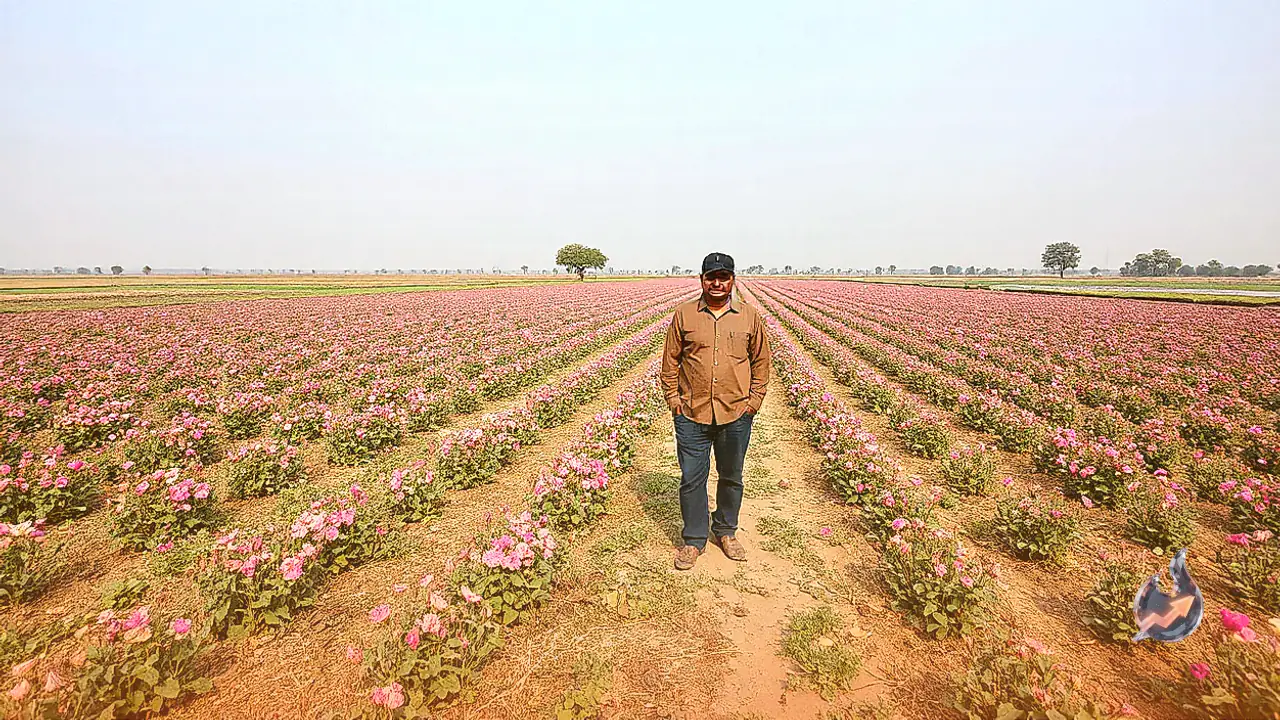

Farmers looking to diversify beyond traditional field crops are increasingly turning toward commercial floriculture to enhance farm profitability. Tuberose cultivation has emerged as an attractive, low-cost investment that generates steady multi-year returns. Agricultural Expert Dinesh Jakhar explains that a single planting of tuberose bulbs allows farmers to harvest flowers continuously for 2 to 3 years. Persistent market demand for tuberose makes it a highly dependable cash crop. The flowers are widely utilized across multiple commercial sectors, including perfume extraction, herbal formulation, pan masala production, wedding decor, and ceremonial displays.
Climate Requirements and Soil Selection
Environmental conditions play a decisive role in maximizing flower production and overall plant health. Agricultural Expert Dinesh Jakhar notes that warm and humid weather creates the ideal environment for tuberose growth. The crop thrives best when ambient temperatures remain between 28 and 30 degrees Celsius. In terms of soil composition, sandy loam soil with good aeration and natural drainage provides the most suitable base. The soil pH level should ideally be maintained between 6.5 and 7.5 to support efficient nutrient absorption.
Proper field drainage is critical during plot selection. Standing water in the field can lead to bulb decay and increase susceptibility to fungal pathogens. Furthermore, farmers must implement protective measures during winter months when dropping temperatures can affect plant vigor and slow down vegetative development.
Land Preparation and Bulb Planting Schedule
The optimal timeframe for planting tuberose bulbs is during March and April. Field preparation begins with deep plowing to a depth of 30 to 40 cm to achieve a loose, well-tilled soil structure. During the final plowing phase, farmers should incorporate 20 to 25 tonnes of well-rotted cow dung manure per hectare into the soil.
Selecting healthy, disease-free planting material is crucial for a successful harvest. Bulbs chosen for planting should measure 1.5 to 2.5 cm in diameter. Prior to placement in the ground, the bulbs must undergo fungicide treatment under expert guidance to prevent fungal infections. Planting on raised beds or ridges is recommended for optimal root development. Spacing should be kept at 30 to 45 cm between rows and 20 to 30 cm between individual bulbs, with a planting depth of 5 to 7 cm. Approximately 2,100 to 2,500 bulbs are required per acre of land.
Nutrient Management and Irrigation Practices
A balanced fertilizer regime ensures robust plant growth and high flower quality. Along with the initial 25 tonnes of cow dung manure per hectare, a full dosage of 200 kg phosphorus and 200 kg potash per hectare should be incorporated into the soil during field preparation. However, the application of 200 kg nitrogen per hectare must be split into three equal doses: the first dose at the time of planting, the second at 60 days post-planting, and the final dose at 90 days. Micronutrient sprays are also recommended to enhance flower color and commercial quality.
Irrigation management begins with a light watering immediately after bulb planting to promote uniform germination. During the warm summer season, watering once a week is generally sufficient to maintain optimum moisture levels. In winter, irrigation intervals can be extended to 10 to 15 days based on soil moisture and field conditions.
Harvesting Techniques, Yield Expectations, and Pest Control
Tuberose plants begin flowering approximately 3 to 3.5 months after planting. The harvesting method depends directly on the intended commercial use of the crop. For cut flowers destined for floral arrangements and bouquets, stalks should be cut 4 to 6 cm above ground level when the lower one or two florets begin to open. Conversely, loose flowers intended for perfume extraction or loose floral markets should be plucked early in the morning before 8 AM to preserve essential oils and fragrance.
With precise field management, a single hectare can yield between 14 to 15 tonnes of loose flowers or 2 to 3 lakh flower spikes. To safeguard the crop against common pests such as thrips, aphids, and caterpillars, farmers are advised to apply neem-based organic pesticides. Disease management for root rot and stem rot relies on maintaining efficient soil drainage and promptly removing infected plants from the field.