




















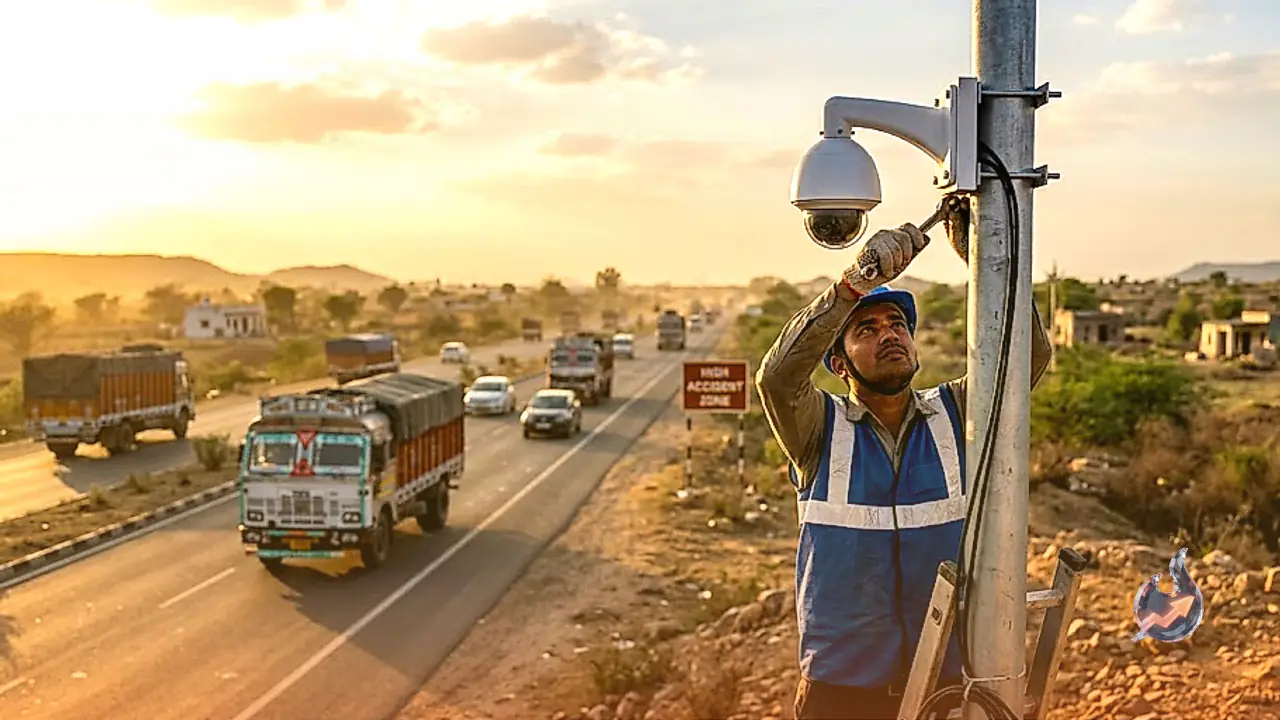

The National Highway 52 (NH-52) stretch connecting Sikar to Reengus has increasingly become a major safety concern due to a sharp rise in fatal road accidents. In response to the growing number of casualties, local law enforcement in the Ranoli police station area, working alongside the National Highways Authority of India (NHAI), has initiated a strict monitoring plan. The authorities are preparing to install a network of 23 high-definition CCTV cameras across the entire route. This continuous surveillance aims to quickly detect and penalize dangerous driving behaviors, including excessive speeding, hit-and-run incidents, and other severe traffic violations that put commuters at risk.
NHAI's Grim Findings and Black Spots
A recent comprehensive survey conducted by the NHAI has officially highlighted the severity of the danger on this specific corridor. The assessment identified three critical locations as official "black spots" due to their high accident frequency: the Badhala Ki Dhani cut, the Palsana bypass located just beyond the Akhaipura toll plaza, and the Trilokpura cut. The statistics from these specific zones are alarming. Over a short span of just six months, these three junctions alone have claimed the lives of 15 people. Furthermore, more than 25 individuals have sustained serious injuries in various collisions. These grim figures have served as a massive wake-up call for the administration, prompting immediate corrective measures.
Camera Deployment and Tender Process
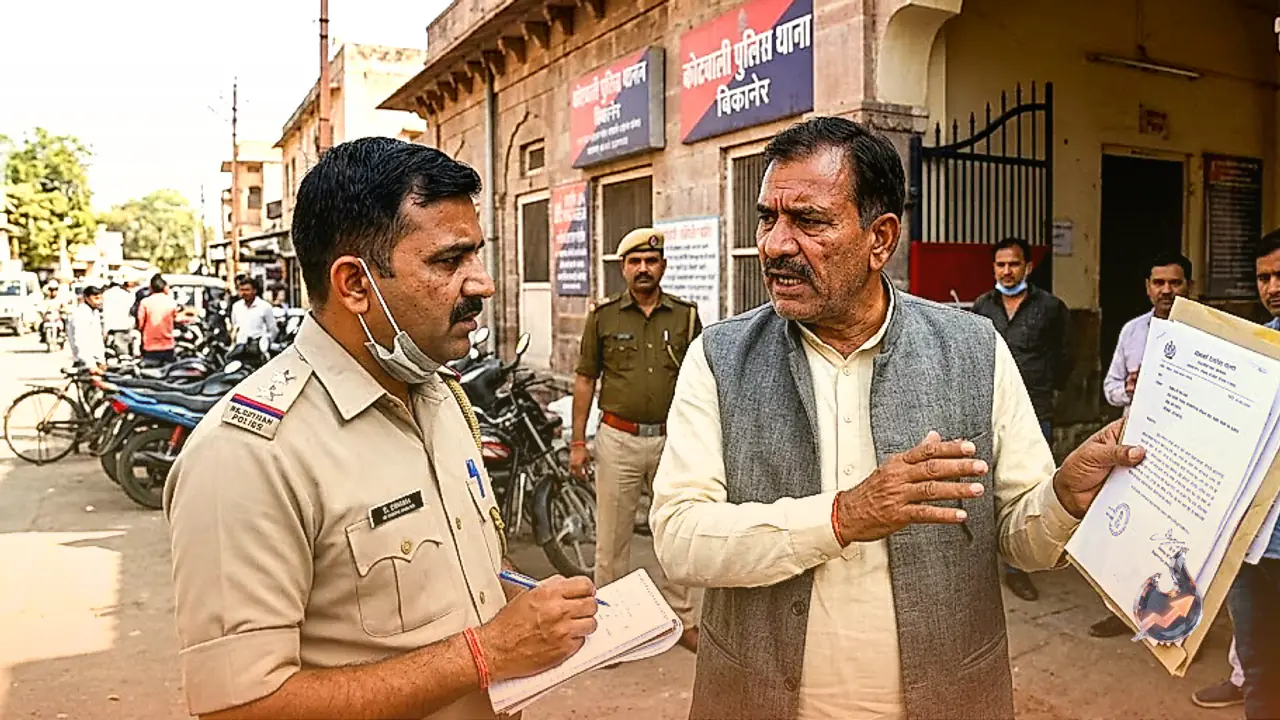
To implement the surveillance system, the official tender process for the CCTV cameras is scheduled to commence on July 20, according to Ranoli Police Station Officer Ramlal. A total of 23 strategic locations have been pinpointed for camera installation along the route from Sikar to Reengus. The highest concentration of these cameras will be deployed on the highly vulnerable segment between Ranoli and Palsana, which will receive 13 surveillance units. Once operational, this technological upgrade will provide the police with round-the-clock visual tracking. Authorities will be able to monitor vehicle speeds in real-time, identify suspicious activities on the highway, and track down culprits involved in hit-and-run cases with much greater efficiency.
Public Demands for Infrastructure Upgrades
While the administration is focusing on electronic monitoring, the local residents argue that merely installing cameras will not completely solve the problem. There has been a long-standing public demand for structural improvements, specifically the construction of bridges or overpasses at the most dangerous intersections, such as the Badhala Ki Dhani cut and the Palsana bypass near the Akhaipura toll. Residents strongly believe that creating safe, grade-separated crossings is the only permanent solution to drastically reduce the accident rate at these bottlenecks. Acknowledging these concerns, senior officials have already conducted on-site inspections of the proposed locations and forwarded a detailed feasibility report to the state government for approval.
Immediate Safety Measures and Traffic Enforcement
While waiting for permanent infrastructural changes, the administration has rolled out several immediate, short-term safety enhancements at the designated black spots. To force drivers to reduce their speed, rubber rumble strips have been installed across the carriageway. Additionally, the highway authorities have erected approximately 150 warning and traffic indicator boards near dangerous curves and median cuts. These highly visible signs are designed to alert drivers well in advance, giving them ample time to slow down and navigate the hazards safely.