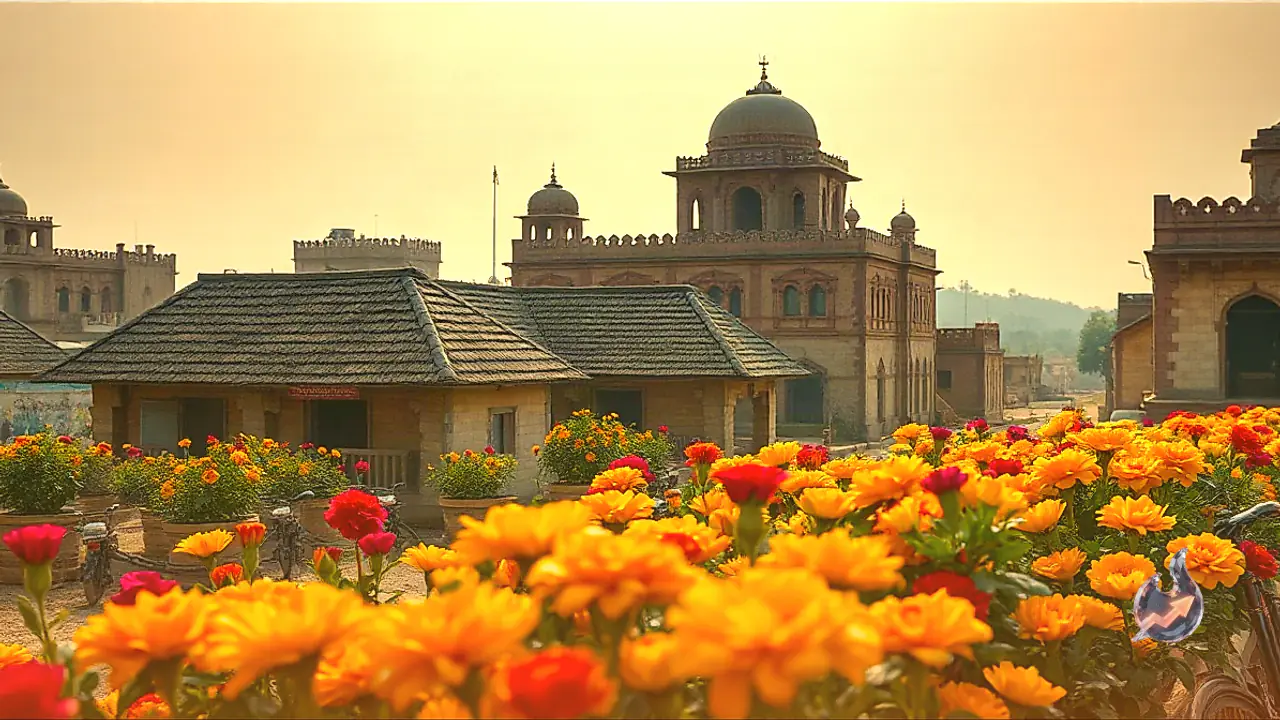























Agriculturists in Bhilwara are successfully diversifying their livelihoods by stepping away from purely traditional farming and embracing commercial floriculture. Across the district, the acreage dedicated to growing crops like roses, marigolds, and chrysanthemums is steadily expanding, turning what was once supplementary work into a highly lucrative income stream for local cultivators.
Market demand for fresh flowers remains strong throughout the year, peaking during marriage seasons, major religious festivities, and large political gatherings. When demand surges during these events, growers reap substantial financial rewards, securing notable profit margins that far exceed standard crop yields. Floriculture is increasingly recognized as a smart business model that yields faster cash returns compared to conventional harvesting cycles.
Government Subsidies Spur Growth
To encourage this agricultural shift, the government of Rajasthan is providing significant financial backing to growers through the National Horticulture Mission scheme. Under this initiative, financial assistance covering up to 50 percent of the unit cost is disbursed to farmers who choose to cultivate flowers.
For instance, on an established unit cost of 20,000 rupees, the government provides a direct subsidy of up to 10,000 rupees. This financial incentive applies broadly across various flower varieties, lowering the barrier to entry for cultivators who want to transition into high-value crops but require upfront capital support.
Expanding Horizons in Bhilwara
Dr. Shankar Singh Rathore, Director of the Horticulture Department under the Bhilwara Agriculture Department, noted that the region is steadily establishing a distinct identity as a hub for flower production. He pointed out that local growers are progressively blending traditional wisdom with modern agricultural practices to secure year-round financial stability.
Because floriculture functions primarily as a commercial enterprise, participants benefit from shorter crop cycles and direct access to high-paying consumer markets as soon as their harvest is ready. With continuous institutional backing and steady local demand, the floral sector in Bhilwara continues to flourish.