



















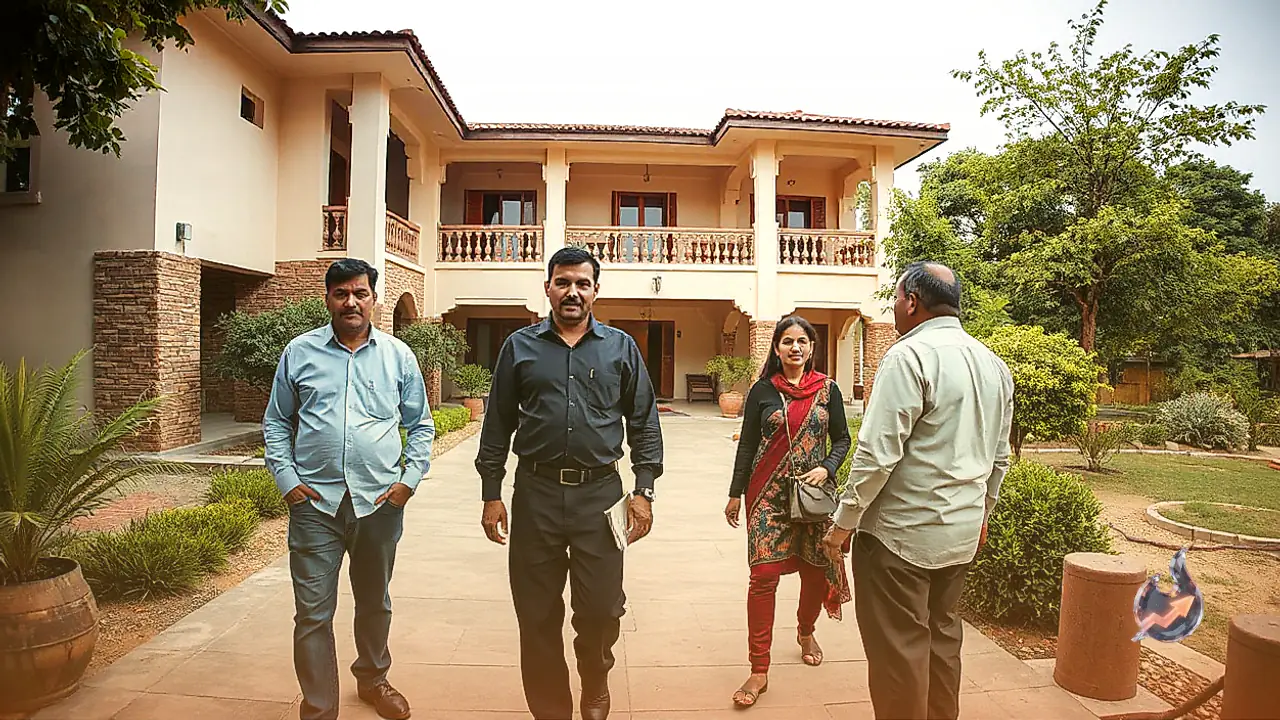

The purchase of 20 luxury villas by Rajasthan cadre senior IAS officer Shikhar Agarwal and his family members at the Ananta Resort in Ajabgarh, Alwar district, has triggered intense public and administrative discussion. The sprawling resort property, situated in close ecological proximity to the protected boundaries of the Sariska Tiger Reserve, has previously been subject to severe regulatory scrutiny. Environmental petitions had reached the National Green Tribunal (NGT) challenging the resort's land usage patterns, structural footprints, and extensive groundwater extraction. As questions continue to surround the large-scale residential acquisition inside the complex, official findings from the environmental tribunal offer key context regarding the developer's past compliance record.
The Environmental Petition Filed by Hemraj Meena
Concerns surrounding the commercial facility first reached the judicial forum through an environmental petition filed by Hemraj Meena before the National Green Tribunal. The complaint raised alarming allegations regarding the operation of a massive hospitality project near the fragile habitat of the Sariska Tiger Reserve. It alleged that the resort had been developed without securing statutory environmental clearances, while simultaneously engaging in unauthorized groundwater withdrawal and encroaching upon a non-feasible natural drainage channel (gair mumkin nala).
The petition specifically sought an independent verification to determine whether construction activities inside the eco-sensitive buffer complied with prevailing conservation mandates. Key prayers focused on auditing the total built-up area of the premises, scrutinizing deep borewells used for commercial water extraction, and identifying any illegal physical structures over public waterways. Recognizing the sensitive ecological dimensions of the complaint, the NGT ordered the constitution of a joint inspection committee comprising technical and administrative officials to visit the site and prepare an exhaustive factual assessment.
Joint Committee Findings: 144 Rooms and Built-Up Area Dynamics
Acting on the specific directions of the NGT, the joint inspection committee conducted an on-ground audit of the resort property at Ajabgarh. Physical inspections revealed that the operational resort facility comprised a total of 144 guest rooms. Further architectural and land measurements conducted by the panel established that the overall built-up area of the resort stood at 19,377.91 square meters.
This precise measurement played a decisive role in resolving the challenge concerning environmental clearances. Under existing environmental regulatory frameworks, the legal requirement to obtain an explicit prior environmental clearance is triggered once a commercial project's total built-up footprint reaches or exceeds 20,000 square meters. Because the audited structural area of 19,377.91 square meters remained just below the mandatory statutory ceiling, the committee reported that the developer was not legally bound to obtain that specific environmental clearance. The finding addressed the primary procedural allegation raised by the petitioner regarding construction permissions.
Groundwater Audit: 1.44 Crore Rupee Penalty and Current Permits
Water consumption practices at the luxury resort were another critical focal point of the tribunal inquiry. Upon reviewing the operational documentation, the joint inspection committee noted that the establishment held a valid consent to operate issued by the state pollution control board. Furthermore, the property maintained official authorizations permitting the extraction of groundwater from four designated on-site borewells.
However, the committee's exhaustive inquiry also brought to light past regulatory non-compliance concerning underground aquifers. Records indicated that the resort had previously drawn groundwater without possessing the required statutory approvals. In response to those historical transgressions, regulatory enforcement had already been executed, compelling the resort management to deposit approximately 1.44 crore rupees as environmental compensation and compounding charges. Consequently, the panel noted that while past unapproved groundwater extraction had occurred and been penalized with heavy monetary sanctions, current extraction from the four borewells was supported by valid regulatory permits.
Status of Drainage Channel Encroachment Allegations
The petitioner had also raised significant objections regarding the alleged encroachment of public water channels, specifically a non-feasible drainage nala traversing the tract. Natural storm drainage systems across the Aravalli landscape are critical for seasonal flood dissipation and subterranean water recharge, making construction in such corridors a matter of recurring environmental concern.
The joint committee inspected the local revenue boundaries and physically surveyed the path of the seasonal waterway. Its report determined that no permanent physical construction or structural blockages were present on the land demarcated as the natural nala. Additionally, the inspection found no tangible evidence indicating that the resort management was commercially diverting or exploiting natural surface water flows from the stream. This physical finding effectively set aside the specific claim of waterway encroachment.
Disposal on 16 October 2026 and Scope of the Tribunal Order
Following the submission of the comprehensive factual report by the joint committee, the National Green Tribunal officially disposed of Hemraj Meena's petition on 16 October 2026. Accepting the panel's documented measurements and regulatory compliance records, the judicial body brought the protracted environmental proceedings against the resort facility to a formal close.
Observers and administrative analysts emphasize that the NGT's ruling must be interpreted strictly within its legal context. The verdict delivered on 16 October 2026 addressed only the specific ecological objections concerning resort construction, borewell extraction, and drainage channels. The tribunal's decision pertained exclusively to the hospitality property's environmental compliance and does not constitute any investigation, finding, or clean chit regarding the contentious purchase of 20 individual villas within the resort by IAS officer Shikhar Agarwal and his family members.