




















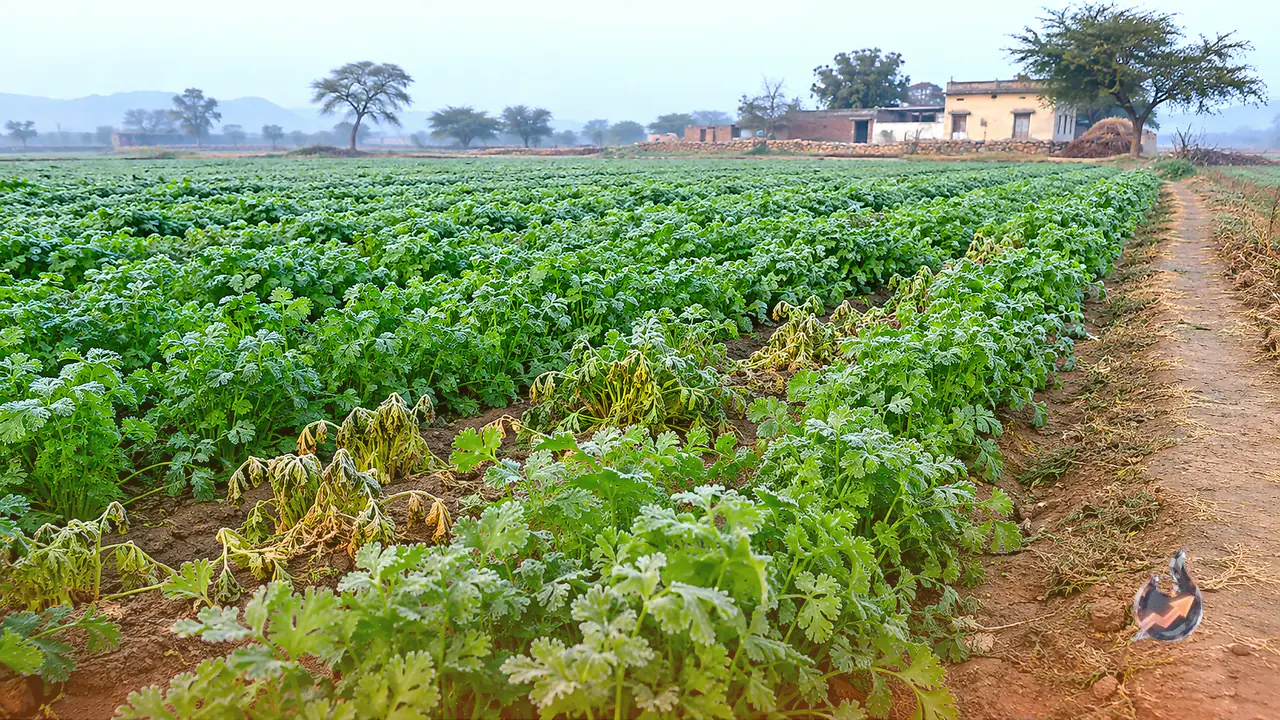

Winter in Bhilwara brings a lucrative earning opportunity for farmers cultivating coriander, as both fresh green coriander leaves and dry coriander experience strong market demand. However, intensifying cold weather, frost formation, and sudden atmospheric shifts can cause significant damage to the coriander crop. These adverse conditions can halt plant growth and severely impact the overall yield. During such times, timely crop care becomes crucial for farmers. By exercising slight caution and implementing correct agricultural practices, farmers can easily protect their crops from ruin.
Focus On Irrigation And Fertilizer Management
Experts emphasize that farmers must pay special attention to irrigation, fertilizer application, and weed control. Maintaining proper soil moisture alongside implementing protective measures against frost is essential. Former agricultural officer Inder Singh Sancheti noted that the Rabi season is generally favorable for vegetable crops. Consequently, coriander fields should receive light and need-based irrigation during winter. A lack of soil moisture can stunt plant growth, while excessive watering can lead to waterlogging, damaging the roots. Therefore, irrigation should always be scheduled by assessing the soil condition.
Measures Against Frost And Weeds
Frost during winter can prove particularly damaging to coriander crops. If frost is anticipated, farmers can apply light irrigation to the field, which helps maintain soil temperature. Additionally, keeping track of weather forecasts and preparing in advance upon receiving frost warnings is vital. Applying a balanced amount of manure and fertilizers is necessary for robust coriander growth. Using well-decomposed farmyard manure prior to sowing yields substantial benefits. To secure a high yield, farmers must adapt their farming techniques according to weather conditions. Implementing timely irrigation, balanced fertilization, weed management, and frost protection can largely safeguard the crop.
Regular Weeding And Proper Drainage
Farmers must also remain vigilant about several other critical factors. Unwanted grass and weeds in the field consume the water and vital nutrients intended for the coriander plants, thereby weakening crop growth. Regular weeding sessions are therefore necessary to remove these unwanted plants. Seasonal weather shifts during winter can also trigger pest infestations and crop diseases. Farmers should regularly inspect their fields. If leaf spots, yellowing, or any abnormal changes appear, consulting an agricultural expert is recommended. Spraying pesticides or chemicals without proper knowledge should be avoided entirely. Proper field drainage is mandatory for coriander cultivation, as stagnant water rots the roots and weakens the crop. Clearing field channels ensures that excess water drains out smoothly.