


















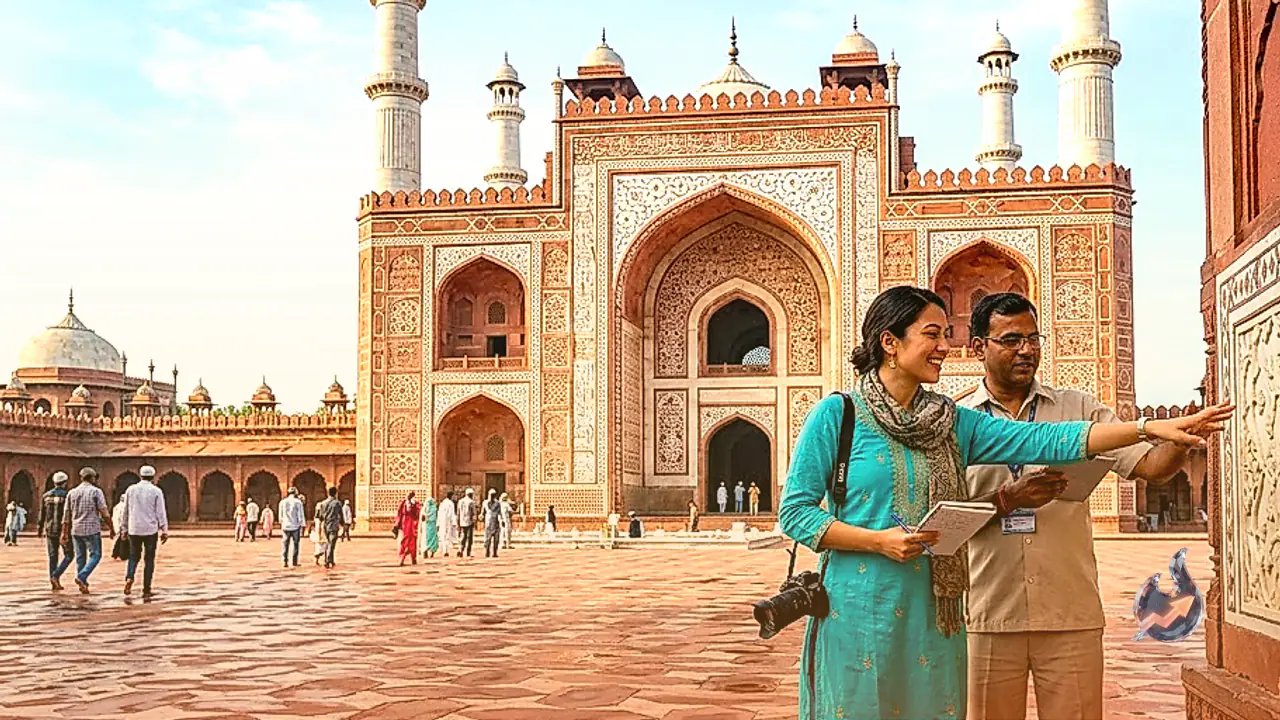

Agra is globally renowned for the Taj Mahal, but the city also houses other architectural marvels from the Mughal era that carry deep historical significance. Among these is the iconic Jama Masjid, situated directly opposite the Agra Fort. Unlike many other major religious structures built directly under imperial supervision, this grand mosque was commissioned by Jahanara Begum, the eldest daughter of Mughal Emperor Shah Jahan. As an incredibly influential and powerful figure in the royal court, she took personal responsibility for the project after her father envisioned a new central mosque for the city. Built in the seventeenth century, this structure remains a remarkable testament to female patronage in Mughal architecture and stands as a major landmark of Agra.
The Vision of Jahanara Begum and the Construction Cost
The planning for the Jama Masjid began under the royal decree of Emperor Shah Jahan, who wanted to establish a grand place of worship in Agra. Jahanara Begum stepped forward to lead the massive undertaking, managing both its design and funding. According to historical accounts shared by historian Anurag Paliwal, the construction of this mosque commenced in the year 1643. It took approximately five years of intensive labour to complete the project, with the final structure being inaugurated in 1648. The total expenditure incurred during its construction reached about 5 lakh rupees, which was an astronomical sum for that period. Upon its completion, the mosque immediately became the primary religious hub of the city, deeply integrated with the social and commercial life of Agra.
Unique Architectural Elements and the Zig-Zag Domes
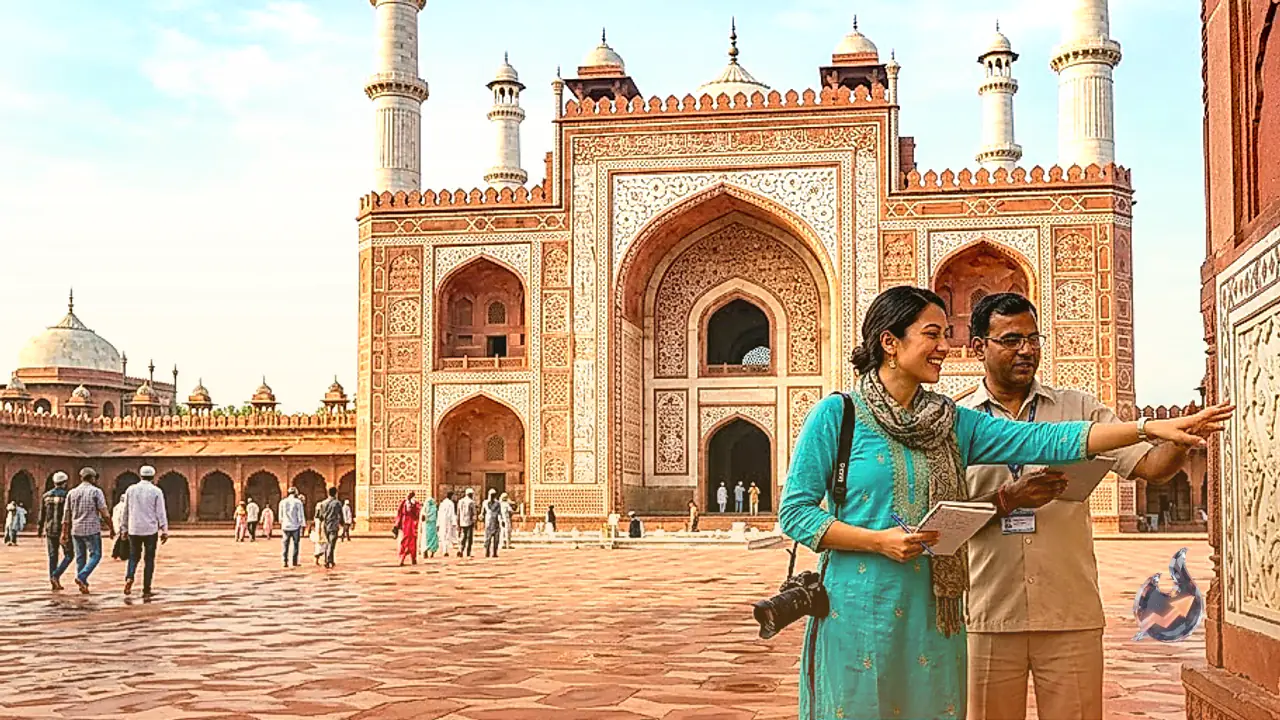
The architectural design of the Jama Masjid is a striking fusion of red sandstone and pristine white marble, which were the signature materials of the Shah Jahani era. The mosque is built upon a highly elevated platform, giving it a commanding presence over the surrounding area. Visitors entering the premises are greeted by a vast open courtyard surrounded by beautifully designed arcaded corridors. The main prayer hall features three massive domes, which are the most prominent features of the skyline. Instead of the tall, towering minarets seen in Delhi's Jama Masjid, this structure focuses on horizontal symmetry and dome design. The central dome is the largest and tallest among the three. What makes these domes exceptionally unique is the zig-zag pattern created using alternating bands of red sandstone and white marble. Additionally, the tops of these domes are decorated with traditional Indian architectural motifs, including inverted lotus designs and kalash-shaped finials, showcasing a synthesis of cultural styles.
Persian Inscriptions and Historical Records
Apart from its physical grandeur, the Jama Masjid serves as a vital historical archive due to the extensive Persian inscriptions carved into its structure. These inscriptions are located on the main gateway and around the decorative arches of the prayer hall. Written in elegant Persian calligraphy, the texts lavishly praise the reign of Emperor Shah Jahan and highlight the virtues and contributions of his daughter, Jahanara Begum. The calligraphy around the central archway is particularly impressive, featuring black stone inlay work set against a clean white marble background. Historian Anurag Paliwal notes that these inscriptions are invaluable primary sources for modern researchers, as they provide concrete evidence regarding the exact timeline of the mosque's construction, the political climate of the era, and the official recognition of Jahanara Begum's leadership in the project.
The Lost Tripolia Chowk and Modern Railway Transformation
The landscape surrounding the Jama Masjid has undergone drastic modifications over the last four centuries. During the peak of the Mughal era, the area directly in front of the mosque was occupied by a massive public square known as the Tripolia Chowk. This square acted as a vibrant cultural and economic bridge between the Agra Fort and the mosque. It was home to bustling bazaars, interconnected pathways, and public gatherings, making it the heart of civic life in Agra. However, this historic setup was completely dismantled during the British colonial era. With the introduction and expansion of the railway network in India, the Tripolia Chowk was demolished to make way for the development of the Agra Fort Railway Station. Today, the bustling railway station and modern markets stand where the grand Mughal plaza once existed, forever altering the original urban layout of the area.
Damage During the 1857 Uprising and Present Legacy
The year 1857 marked a turbulent chapter in the history of the Jama Masjid. During the Indian Uprising of 1857, British military forces stationed inside the nearby Agra Fort viewed the massive mosque as a potential security threat due to its strategic height and close proximity to the fort. Fearing that mutineers could use the structure to launch attacks, British troops targeted the building. They caused substantial physical damage to the main entrance gateway and destroyed parts of the eastern wing. Despite these historical scars and the subsequent changes to its surrounding environment, the four-century-old mosque still stands tall as a living monument of Agra's rich heritage. Tourists visiting the Agra Fort are treated to a panoramic view of this historical mosque, which continues to attract scholars, history enthusiasts, and devotees from around the world.