


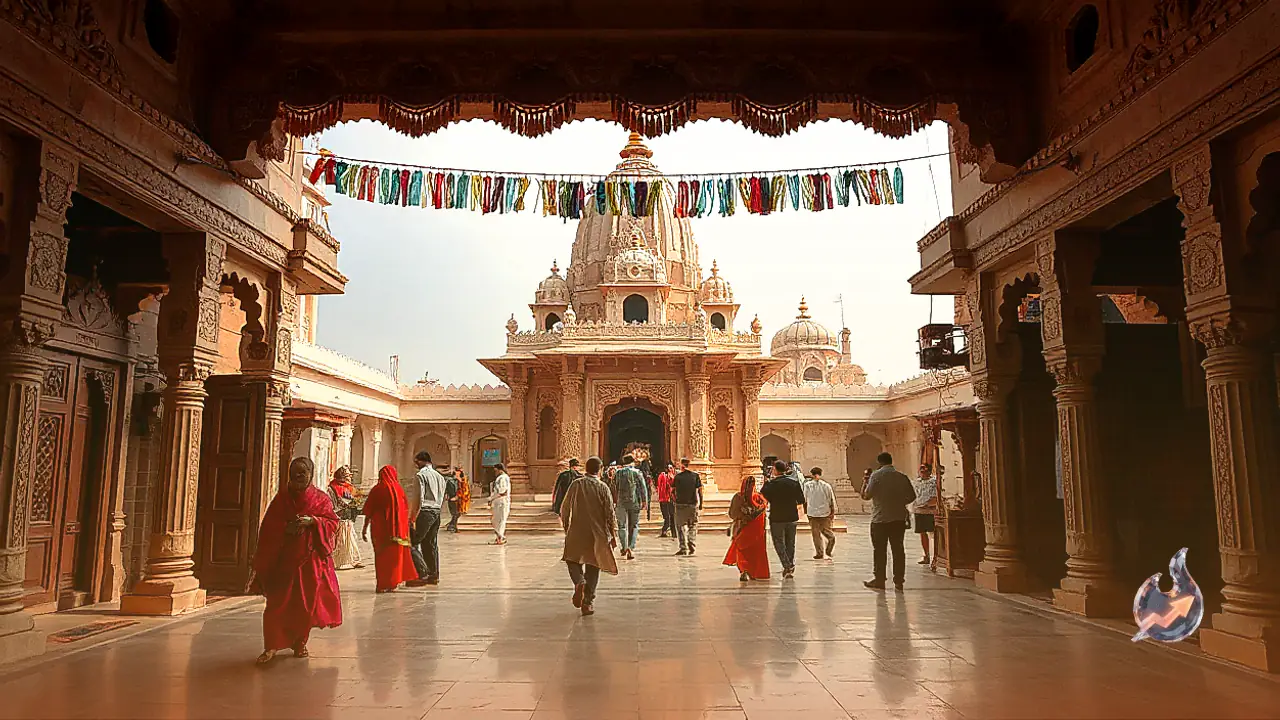














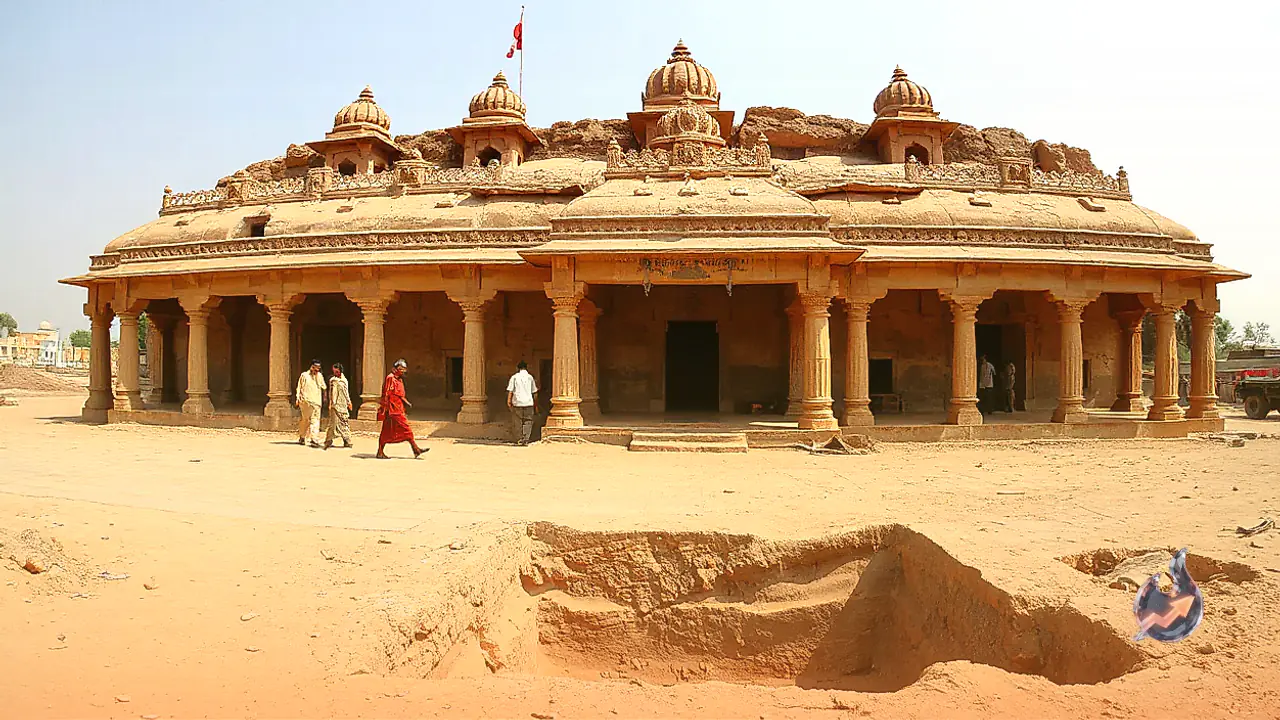

The historical soil of Rajasthan continues to yield remarkable chapters from its ancient past. Located in Rampura village of Tyonda gram panchayat within the Udaipur Shekhawati belt of Jhunjhunu district, an archaeological mound known as Reeh Ka Teela has emerged as a major center of historical significance. Following formal excavation permits granted by the Archaeological Survey of India in New Delhi, the state Department of Archaeology and Museums has been conducting systematic scientific digging at the site. The ongoing exploration has brought to light grand architectural remnants of a temple datable to the 10th and 11th centuries, alongside striking physical evidence of early human settlements running underneath.
Carved Stonework and Architectural Bases of an Ancient Temple
During the initial stages of the excavation, field teams uncovered impressive structural remains linked to an elaborate sacred complex. Among the discoveries are finely carved stone floors, solid square plinths, semicircular structural designs, and beautifully sculpted fragments of temple iconography. Archaeologists and heritage specialists analyzed the stylistic nuances of the stone carving and the sequence of stratified cultural layers, firmly attributing the temple complex to the 10th to 11th century period. These architectural discoveries offer solid proof that the locality was a thriving center of religious devotion during the medieval era, supported by a sophisticated tradition of stone masonry and structural design.
Stratified Pottery Layers Point to Much Earlier Habitation
The most compelling dimension of the research at Reeh Ka Teela lies directly beneath the medieval temple foundations. Digging into deeper soil levels revealed decisive proof of human habitation that significantly predates the stone shrine. Excavators retrieved a diverse assortment of ceramic artifacts, including both handmade and wheel-turned red pottery, thick-bottomed vessels, finely shaped bowls, and fragments of massive storage jars. Crucially, the lower strata also yielded diagnostic shards of Black and Red Ware. Archaeological specialists connect these ceramics to early historic horizons or even older cultural phases, noting that the production techniques and vessel forms provide direct insights into the culinary habits, storage practices, and pyrotechnic skills of the ancient community.
Brick Architecture and Structural Postholes Reveal Long-Term Town Planning
The physical remains uncovered at the mound indicate a high level of structural permanence rather than transient encampments. Excavators uncovered sections of fired brick walls, well-preserved living floors, and deliberately dug postholes designed to hold heavy timber uprights. Together, these structural components confirm that Reeh Ka Teela was once home to a stable, well-organized settlement where populations resided continuously across successive generations. Furthermore, archaeologists encountered extensive ash lenses and clusters of burnt clay fragments within the living areas, pointing directly to organized domestic life characterized by sustained hearth activities and cooking.
Everyday Adornments, Stone Implements, and Biological Material
The discovery of smaller material artifacts provides a vivid snapshot into the everyday crafts and lifestyle of the ancient residents. The site has produced varied stone tools, terracotta beads, broken bangles crafted from both glass and clay, and an assortment of decorative items. These small finds reflect an eye for personal adornment, aesthetic appreciation, and specialized artisan work within the settlement. In addition to material goods, excavators collected animal bone fragments and charred organic matter from the cultural strata. Future laboratory testing on these biological remains will clarify dietary patterns, animal husbandry strategies, environmental surroundings, and broader economic activities of the inhabitants.
Establishment as a Multi-Cultural Site Awaiting Advanced Scientific Dating
Given the diverse structural and material evidence recovered so far, Reeh Ka Teela is now recognized as an important multi-cultural archaeological site marked by long-standing settlement continuity. The subsequent phases of work will focus on radio-carbon dating of organic samples, comparative typological analysis of the ceramic repertoire, and detailed stratigraphic assessments. These scientific evaluations will pinpoint the precise antiquity of the earliest settlement layers and map the cultural transformations that took place over successive centuries. Experts emphasize that the discoveries at Reeh Ka Teela will stand as a major milestone in understanding the trajectory of early human civilization and cultural evolution across Rajasthan.