

















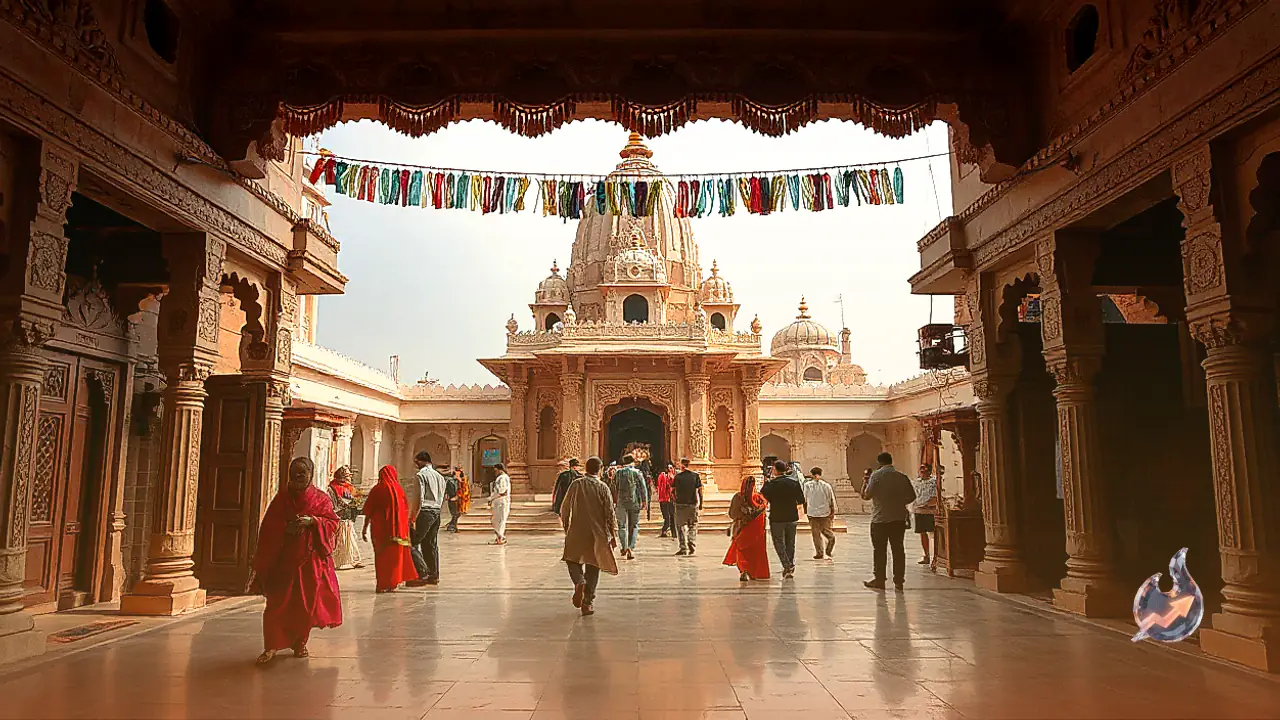

Devotees arriving from across the country can once again offer prayers at the renowned Khatu Shyam Ji temple in Sikar district of Rajasthan, following the completion of an elaborate, age-old ritual sequence. In accordance with established temple traditions, the sanctum doors were reopened for the public after the conclusion of special sewa-puja and the sacred tilak and shringar ceremony. The temple gates had previously been closed on Wednesday night at 10 PM immediately after the completion of the shayan aarti, resulting in a temporary pause in darshan that lasted approximately 19 hours. The sanctum reopened during the evening aarti, allowing pilgrims to witness the deity in an enchanting new appearance and transformed divine form.
Vedic Rituals Conducted by Shri Shyam Mandir Committee Priests
According to information released by the Shri Shyam Mandir Committee, the scheduled temporary suspension of darshan was carried out to facilitate the private and traditional tilak-shringar process. During this closed window, head priests and temple attendants carried out elaborate services and rituals with strict adherence to established scriptural norms. Amid Vedic chants and traditional customs, a specially prepared paste of sandalwood was carefully applied to the forehead and face of the deity to craft a magnificent adornment. Once the entire ceremony reached completion, the sanctum doors were unsealed alongside the evening aarti, restoring normal and uninterrupted darshan schedules for all visiting pilgrims.
The Unique Monthly Cycle of Two Distinct Divine Forms
One of the most remarkable traditions at the Khatu temple is the monthly variation in the appearance of the deity. Following the lunar calendar, the holy idol is viewed by devotees in two distinct forms across the two fortnights of each month. In keeping with local belief and religious convention, the deity appears in the dark Shyam Varna form during Krishna Paksha, whereas during Shukla Paksha, the sacred idol presents itself in its pristine original Shaligram form. In observance of this ancient cycle, a grand maha abhishek is performed on every Amavasya, marking the commencement of the transformation.
The Sacred Journey from Amavasya Abhishek to Sandalwood Application
On the auspicious day of Amavasya, the idol undergoes a ceremonial bath using a variety of sacred substances. As part of this comprehensive cleansing, all previously applied adornments and shringar are removed entirely, returning the idol to its core, natural state known as the Shaligram form. Devotees are permitted to view the deity in this pure Shaligram manifestation for roughly seven days. Once this seven-day span concludes, the temple doors are shut for approximately 19 hours to execute the intricate tilak-shringar. During this confidential process, priests coat the forehead and cheeks with an elaborate paste of sandalwood. This sacred layer restores the revered dark hue, returning the idol to its celebrated Shyam Varna appearance.
The Legend of Barbarik and the Boon of Shri Krishna
Revered widely among followers as the ultimate refuge of the defeated, Baba Shyam is worshipped in the current era of Kaliyuga as a divine manifestation of Lord Krishna. Historical lore traces this connection back to the Mahabharata epic, when warrior Barbarik, grandson of Bhima, set out to participate in the great war. Lord Krishna disguised himself as a Brahmin to test Barbarik's resolve and asked him to donate his own head as alms. Without a moment of hesitation, Barbarik severed his head and offered it to the disguised deity. Moved deeply by such unshakeable devotion and supreme sacrifice, Lord Krishna granted him a divine boon that in Kaliyuga he would be worshipped under Krishna's own name of Shyam and would serve as an unfailing protector to those who feel lost or defeated. This profound belief continues to draw massive gatherings of pilgrims to Khatu whenever the shrine reopens following its sacred adornment.