















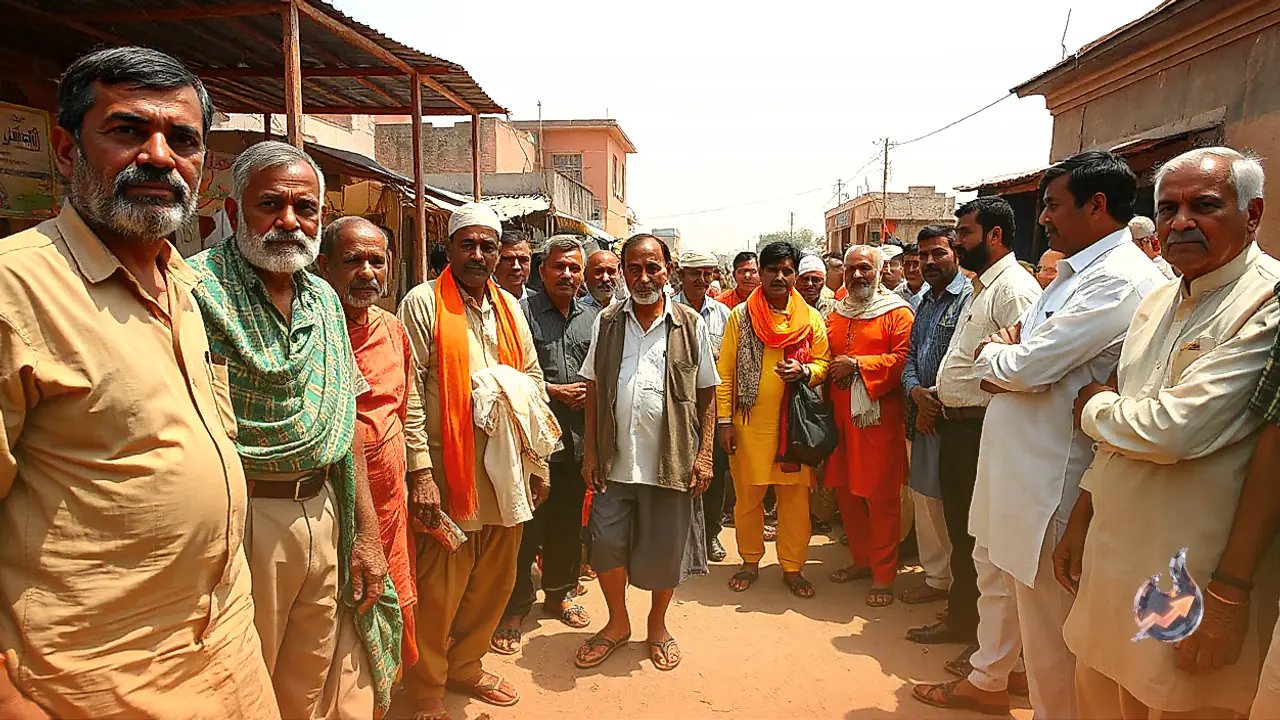

Five decades after fleeing their ancestral homeland during the 1971 conflict between India and Pakistan, the prominent Sodha family has re-established its traditional leadership legacy on Indian soil. In a local election held in Rajasthan's Barmer district, 77-year-old Padam Singh emerged victorious to become the first sarpanch of the newly created Chhachhro gram panchayat. For a family that once wielded considerable political authority across the border in Sindh, this victory in a village christened after their lost ancestral seat marks a poignant emotional restoration.
Clear Mandate in the Inaugural Village Election
The polling for the newly delimited Chhachhro panchayat was conducted on 24 October. When the ballots were counted, Padam Singh secured 950 votes, defeating his immediate competitor Dhana Ram by a decisive margin of 338 votes, with the latter receiving 612 votes. The victory established Padam Singh as the founding civic head of the administrative village. Even today, the septuagenarian proudly retains Chhachhro as an integral part of his personal identity. His son Pushpendra Singh explained that for their household, this outcome represents far more than an ordinary electoral triumph; it embodies the revival of a cherished ancestral stature that was left behind in Pakistan.
Deep Political Roots in Sindh
Prior to their migration, the Sodha clan ranked among the most influential Hindu landowning lineages in the Chhachhro region of Pakistan's Sindh province. Their institutional influence spanned multiple generations. Padam Singh's great-grandfather, Thakur Akhiraj Singh Sodha, served as a lawmaker in the Sindh Legislative Assembly back in 1937. Continuing this tradition of public office, his son Thakur Lal Singh also held a seat in the provincial assembly. Expanding their political reach to the federal level, family member Laxman Singh Sodha later served as the deputy minister for railways in the Pakistan government.
The 1971 Conflict and Support for Indian Troops
The family's secure standing in Sindh came to an abrupt end during the December 1971 Indo-Pak war. On 7 December 1971, when Indian military units advanced toward Chhachhro, Laxman Singh Sodha and his brother stepped forward to assist the incoming troops. They guided the soldiers through treacherous desert routes and provided critical terrain intelligence that proved invaluable to the operation. The mission was executed under the leadership of the then Maharaja of Jaipur, Sawai Bhawani Singh, who commanded the 10 Para Commando battalion. However, openly aiding Indian forces made continued life in Pakistan impossible, compelling the entire family to leave their vast estates and cross into India.
Refusing Zulfikar Ali Bhutto's Repatriation Pleas
Following the cessation of hostilities, remaining across the border was no longer viable for the Sodha household. Yet, the Pakistani leadership was reluctant to see them leave permanently. Zulfikar Ali Bhutto, the founder of the Pakistan Peoples Party and the then President of Pakistan, personally reached out to Laxman Singh Sodha with an offer to return. Bhutto promised comprehensive state protection, security, and restoration of status. According to Pushpendra Singh, prominent party figures and influential religious personalities also pressed the family to reconsider. Envoys even flew to India aboard two helicopters to plead for their return, but Laxman Singh stood firm and declined all overtures.
Rebuilding Roots and Reclaiming Identity in Rajasthan
Starting anew in India, the Sodha family gradually rebuilt their community ties and established a resilient presence across Rajasthan. Following years of persistent community representation, the state government of Rajasthan formally sanctioned the creation of a new revenue village named Chhachhro in 2024. The election of Padam Singh as its inaugural civic head carries profound symbolic weight for the community. The very geographic identity they abandoned five decades ago now thrives as an officially recognized Indian gram panchayat led by the family's senior patriarch. The journey from ministerial corridors in Sindh to the grassroots governance of Barmer stands as a testament to resilience, displacement, and the preservation of heritage.