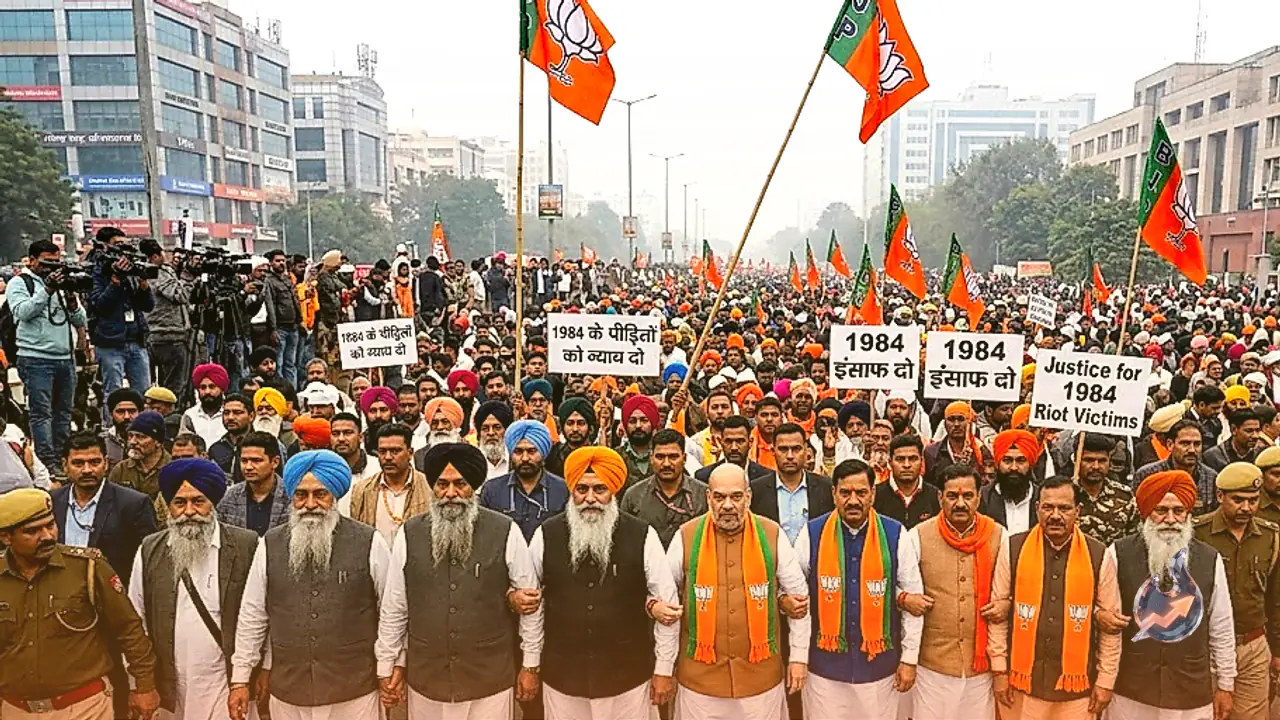
















Mounting commercial anxieties ahead of the festive season have prompted Delhi's merchant fraternity to sound an alarm over the grand political gathering planned at Ramlila Maidan on November 1. With an estimated gathering of 10 lakh people scheduled to descend upon the national capital just days before Dhanteras and Diwali, prominent trade representatives fear that citywide security arrangements and traffic curbs will bring core wholesale and retail operations to a complete standstill. The Chamber of Trade and Industry, an apex association representing Delhi businesses, has formally petitioned key leaders of the INDIA alliance, urging them to either push the event past the festive week to November 10 or 11, or relocate the gathering to the spacious grounds of Burari.
Formal communications have been dispatched to Samajwadi Party president Akhilesh Yadav, West Bengal Chief Minister Mamata Banerjee, Bihar political leader Tejashwi Yadav, and Shiv Sena (Uddhav Balasaheb Thackeray) chief Uddhav Thackeray. Emphasizing the nature of their appeal, CTI Chairman Brijesh Goyal pointed out that merchants are not challenging any political mobilization, but rather pleading to protect their primary livelihood during the busiest shopping stretch of the calendar. Dhanteras falls on November 6 and Diwali follows on November 8, making the opening week of November the absolute pinnacle for stocking inventories and hosting outstation buyers. Pumping nearly 15,000 to 20,000 transport vehicles alongside a million participants into central avenues threatens to derail this critical economic momentum.
Severe Parking Deficit and Risk of Downtown Gridlock
In its communication, the business forum detailed four critical operational crises that the mega rally would trigger. Chief among them is the sheer physical impossibility of accommodating the influx of transport vehicles at the designated venue. Ramlila Maidan lacks sufficient infrastructure to park even 200 full-sized buses. Given the expected requirement of 15,000 to 20,000 buses, cars, and commercial tempo carriers to ferry a million demonstrators, organizers face a massive spatial deficit. Parking these fleets on adjoining boulevards would rapidly overwhelm the surrounding road network.
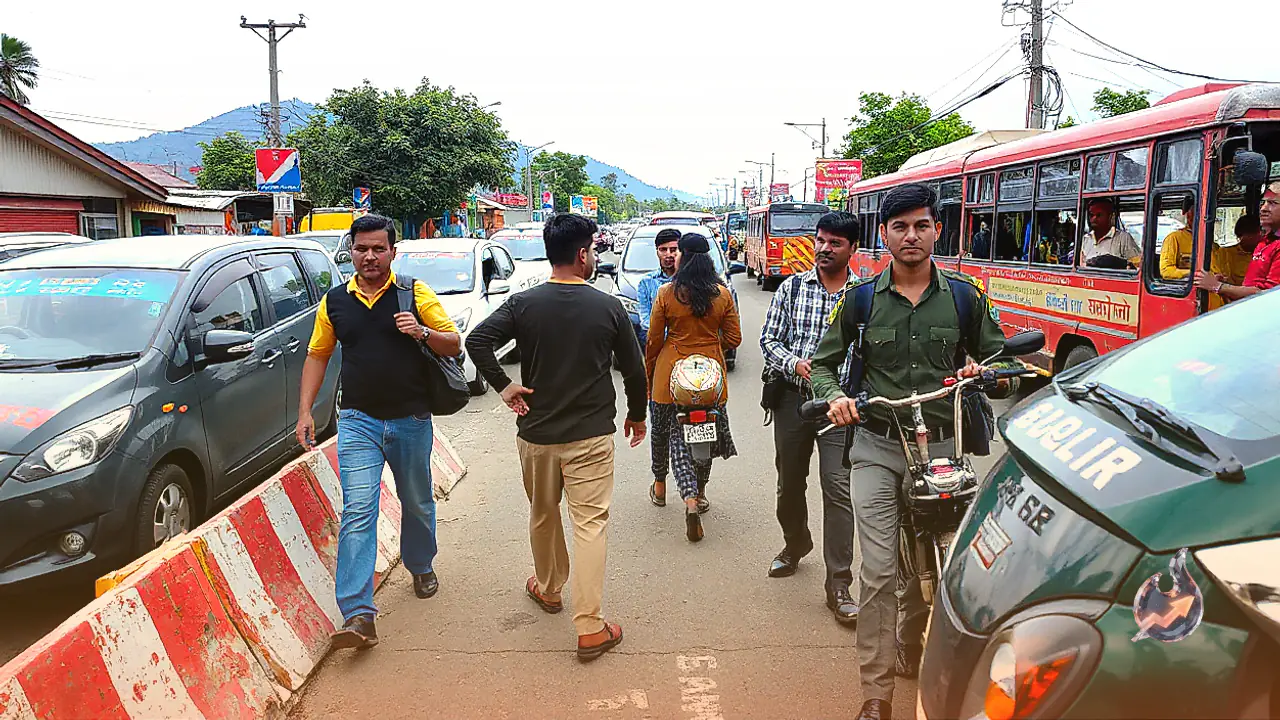
Crucial arterial stretches, including Jawaharlal Nehru Marg, Bahadur Shah Zafar Marg, Netaji Subhash Marg, Ajmeri Gate junction, and Chandni Chowk Road, are bound to experience unprecedented vehicular saturation. Such localized congestion would paralyze connectivity across Central and Old Delhi. Trade bodies caution that the resulting gridlock could mimic the severe restrictions of a lockdown, effectively shutting down vehicular and pedestrian access to the surrounding commercial districts.
Twenty Historic Markets and Daily Stakes of Rs 12,000 Crore
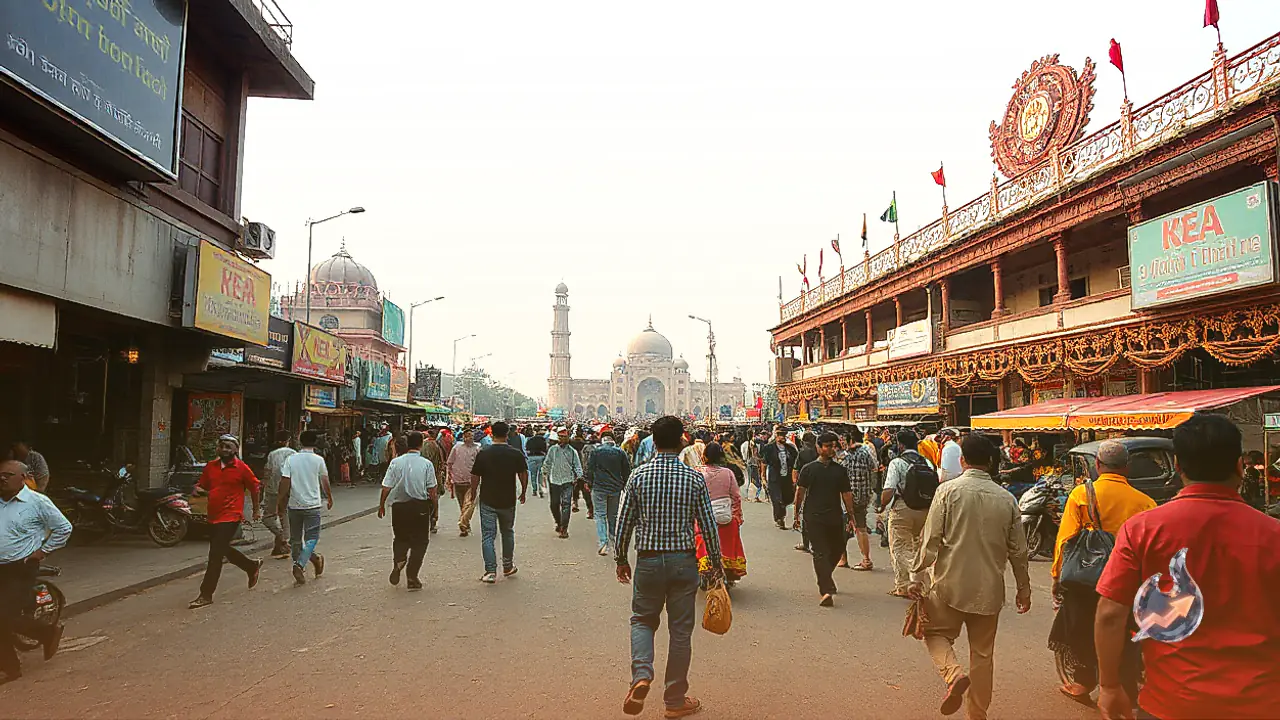
Within a five-kilometer radius of Ramlila Maidan sit roughly 20 of northern India's most significant historical wholesale and retail hubs. This cluster includes Chandni Chowk, Sadar Bazar, Connaught Place, Palika Bazar, Janpath, Bhagirath Palace electrical hub, Khari Baoli spice district, Kashmiri Gate automotive zone, Naya Bazar grain center, Lajpat Rai Market, Chawri Bazar, Kinari Bazar, Dariba Kalan jewelry quarters, Ballimaran, Fatehpuri, Tilak Bazar, Karol Bagh, Jama Masjid, Nabi Karim leather center, Gaffar Market gadgets hub, and the Ajmeri Gate-Paharganj hospitality and retail strip.
These interconnected markets function as primary supply conduits for traders across the nation. On any normal working day, nearly 5,000 transport carriers arrive at these hubs from 56 distinct industrial zones across Delhi, such as Narela, Bawana, Okhla, Mayapuri, Mundka, Udyog Nagar, and Mangolpuri. Simultaneously, approximately 3,000 outward-bound trucks dispatch consignments daily from these centers to 25 prominent cities in the National Capital Region, including Gurugram, Noida, Ghaziabad, Faridabad, Sonipat, and Panipat, as well as several states across India. The association estimates that these combined districts generate between Rs 10,000 crore and Rs 12,000 crore in daily turnover. Breaking this logistics chain right before festival dates will inevitably inflict compounding financial losses extending far beyond the borders of the capital.
Cargo Stoppages Likely to Surface from October 31
The merchant body highlighted that logistical disruptions will not remain confined to the official event date. Vehicular convoys originating from far-off states are expected to begin clustering around Delhi's border checkpoints at Singhu, Tikri, Ghazipur, and Badarpur as early as the afternoon of October 31. As entry gates become choked with passenger carriers, law enforcement agencies are anticipated to set up barricades and issue route diversions along central thoroughfares by that very evening.
Commercial transport operators have already conveyed deep reluctance regarding moving inward shipments into the city from October 31 onward. Should freight movement be halted or delayed at that crucial junction, stores will be unable to replenish stock to satisfy intense holiday demand. Shoppers turned away by stock shortages or unreachable streets could permanently shift their seasonal spending to regional markets outside the capital, dealing a severe blow to traditional storefronts.
October 10 Demonstration as a Precedent and Two Concrete Proposals
To substantiate its warnings, CTI cited the logistical chaos witnessed during a recent demonstration at Jantar Mantar on October 10. During that assembly, a gathering of only 5,000 to 7,000 participants resulted in an eight-hour traffic breakdown across broad swathes of Central Delhi. A congregation nearly two hundred times larger, gathering in the much denser geography surrounding Ramlila Maidan, would inevitably paralyze movement throughout the city center. Given that holiday shoppers operate on tight timelines, severe transit hurdles will simply divert footfalls away from prime Delhi markets.
To prevent this outcome, the trade chamber put forward two concrete, pragmatic solutions to the leadership of the alliance. The primary recommendation is to defer the Ramlila Maidan rally until after Diwali, specifically proposing November 10 or 11, allowing crucial pre-festival transactions to proceed smoothly. Alternatively, if shifting the date is politically unfeasible, the association urged that the event be moved to Burari Ground on the capital's northern fringe. That venue offers dedicated parking capacity capable of handling roughly 15,000 vehicles, providing ample space to stage a mass political demonstration without strangling the bustling commercial lifelines of Old Delhi.