






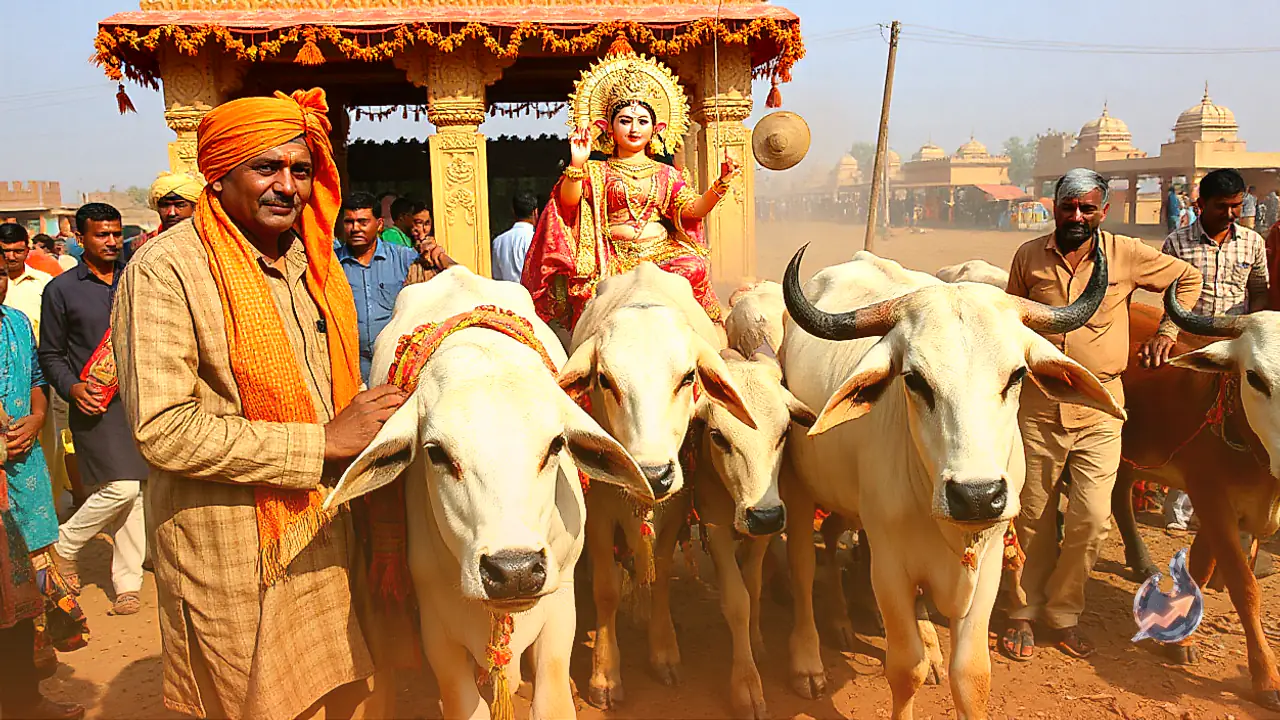














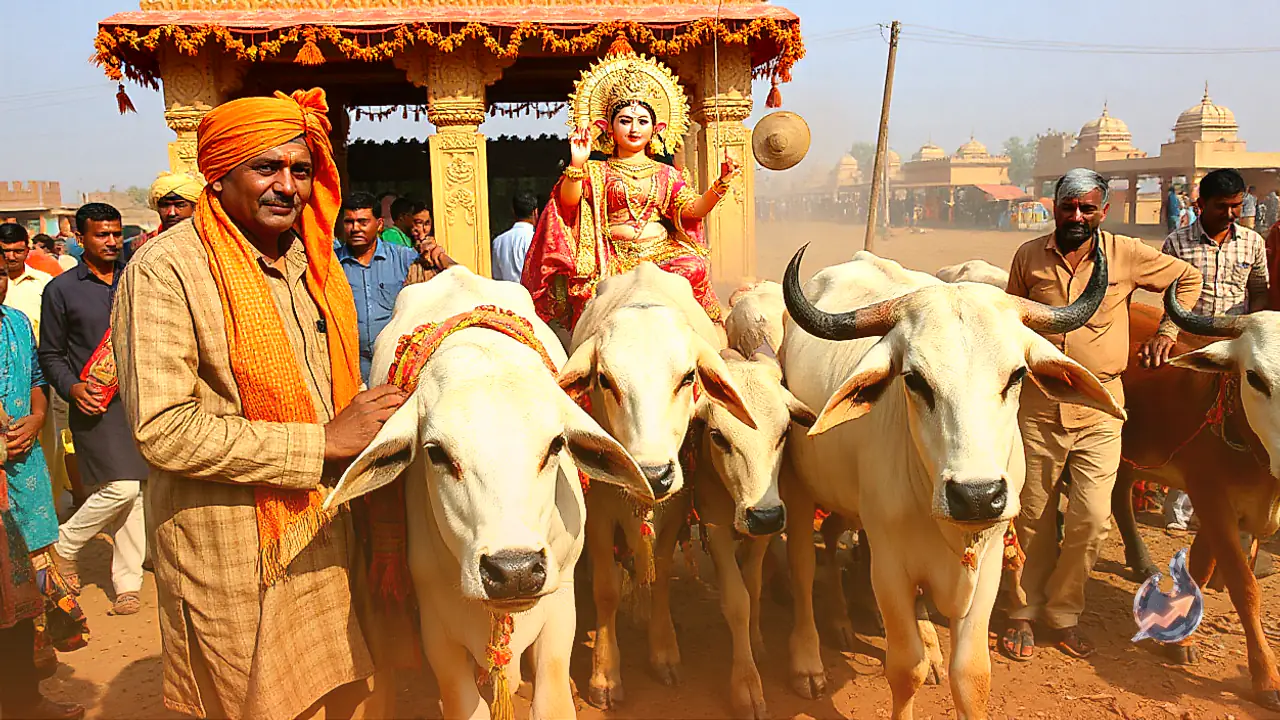

The festival of Diwali brings joy and prosperity, but in the rural pockets around Bhilwara, it also marks a time to honor the livestock that sustain rural life. Following the worship of Goddess Lakshmi, villagers observe a special tradition dedicated to worshipping cows, bulls, and other farm animals. Farmers consider these animals an integral part of their households, praying earnestly for their well-being and prosperity. On this day, cattle are bathed, decorated, and revered with offerings of vermilion, rice, flower garlands, lamps, jaggery, and green grass.
Traditions and Significance of Livestock Worship
According to local priest Pandit Kamlesh Vyas of Bhilwara, livestock serves as the backbone of agriculture and rural livelihood. Farmers depend heavily on animals for farming operations, milk production, and various daily necessities. Expressing gratitude towards these animals through a dedicated ritual after Diwali has therefore become an enduring practice. On this festive day, cattle are meticulously bathed and groomed. In many rural communities, they are further adorned with vibrant fabrics and festive ornaments.
During the worship ceremony, a tilak of vermilion and rice is applied to the foreheads of the animals. They are then draped in flower garlands while oil lamps are lit nearby. Animals are generously fed jaggery and fresh green grass as a token of appreciation. It is widely believed that the health and happiness of livestock directly contribute to the household's prosperity. This age-old tradition reinforces the profound bond of affection and respect between humans and animals.
Important Precautions During the Ritual
While celebrating and worshipping livestock, owners must keep several critical guidelines in mind to ensure the safety and comfort of the animals. First, cattle should be washed with clean water and their bodies dried thoroughly afterwards. During colder days, owners must avoid bathing animals with freezing water to prevent illness. Additionally, cattle should be sheltered in clean, well-ventilated areas.
Care must be taken when applying the ceremonial tilak to ensure that vermilion or other ritual substances do not accidentally enter the eyes, nose, or mouth of the animals. While lighting lamps and incense sticks, keepers must maintain a safe distance from the livestock to prevent any distress or accidental injuries from fire. The prasad offered to them must always be clean and fresh.
Dietary Guidelines and Animal Welfare
The excitement of the festival should not lead to careless feeding practices. Animals must never be fed stale, spoiled, or contaminated food during the celebrations. Furthermore, handlers should avoid forcefully decorating or tightly restraining cattle, ensuring they remain comfortable throughout the proceedings.
Worshipping livestock after Diwali is not merely a religious custom, but a powerful reminder of animal welfare, love, and utility. Farmers are encouraged to look after the health, hygiene, and nutritional needs of their animals consistently beyond just the festival day. This holistic approach ensures that the true spirit of the celebration is preserved alongside proper animal husbandry.