


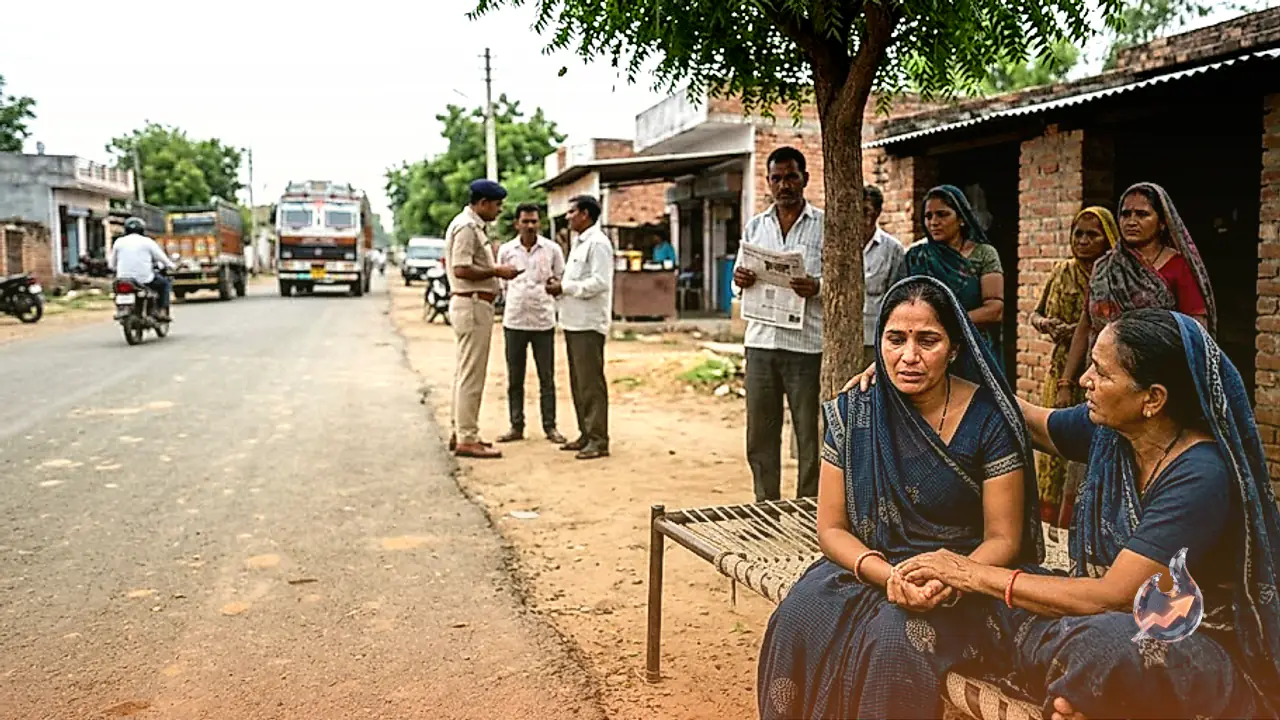




















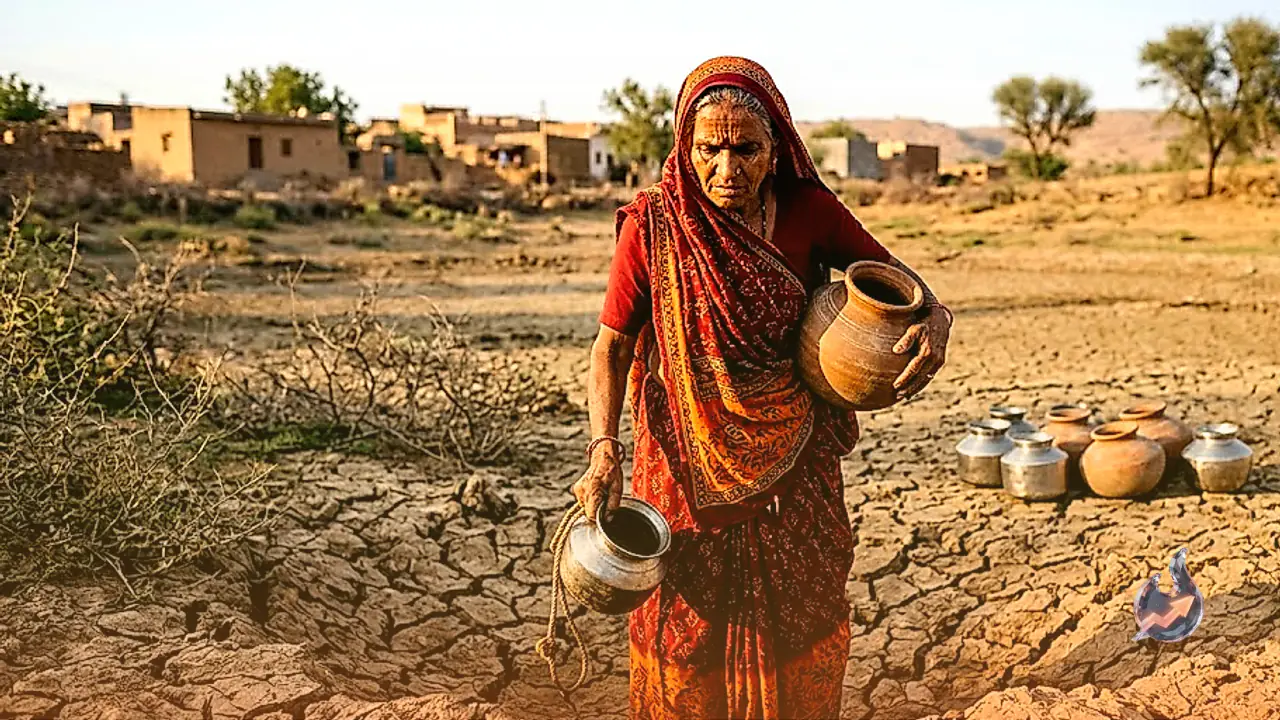

A worrying water crisis is unfolding in Rajasthan's Nagaur district as the monsoon season approaches its final stretch. Although official rainfall records indicate that the district received roughly 81 percent of its average seasonal rainfall, the situation on the ground presents a starkly different reality. Long before the end of September, small and large ponds across the district are running completely dry. In contrast to the 673 mm of rainfall recorded last year, Nagaur has received only 324 mm this season between June 1 and September 30. This drastic reduction has sparked severe concern among rural households and livestock owners.
Parallels Drawn to the Severe 2002 Drought
The early drying up of water bodies has revived memories of past severe dry spells. Local experts point out that similar conditions were last observed nearly 24 years ago, during the severe drought of 2002-03 when local ponds dried up well before November. Although the aggregate rainfall figures for this year do not technically classify as a drought on paper, the peculiar pattern of rainfall failed to recharge local reservoirs. Heavy, sustained downpours were missing, preventing sufficient surface runoff from catchment areas into local ponds and tanks.
Impact of Scattered Rain and High Evaporation Rates
Throughout this monsoon period, rainfall across Nagaur remained scattered and intermittent rather than heavy or continuous. Storm clouds frequently gathered over the region, but cleared after brief spells of light rain. Furthermore, rainfall distribution remained uneven, leaving long dry intervals between shower events and depriving the soil of consistent moisture. Small water pockets that collected minor amounts of water rapidly depleted due to high rates of evaporation caused by intense heat during the clear intervals between rain spells.
Severe Deficit in Canal Water Supply
The drying up of local water bodies has put unprecedented pressure on the regional public water supply network. Nagaur currently receives only about 74 MLD (million liters per day) from the canal network, against a daily required demand of approximately 125 MLD. With canal supply falling far short of actual requirements, the depletion of local ponds removes a vital safety net for both livestock and daily household needs. Ponds also play a critical role in maintaining local groundwater tables, making their early drying a serious threat for the upcoming dry months.
Monsoon Withdrawal Timeline and Forecast
According to meteorologist Radheshyam Sharma, changing wind patterns and decreasing atmospheric moisture levels indicate that the monsoon withdrawal process could begin after September 20. While localized drizzle remains possible before the final departure, significant rain is unlikely. Data over the past decade reveals that monsoon withdrawal was delayed by about 13 days compared to normal on two occasions. Normally, complete monsoon withdrawal across the country wraps up by October 15. As the weather clears permanently, local authorities face an urgent challenge to secure alternative drinking water sources.