


















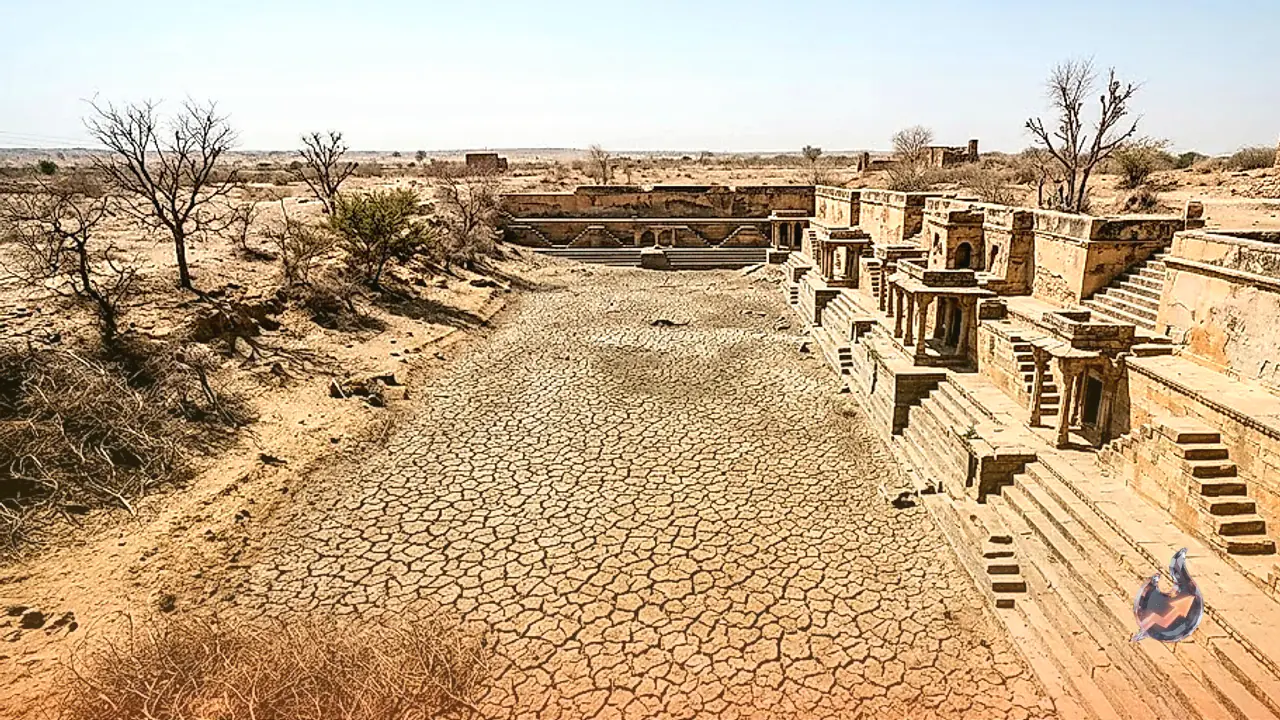

A severe water deficit and erratic monsoon precipitation have pushed substantial rural swathes of Rajasthan into drought. Following directions from Chief Minister Bhajan Lal Sharma to evaluate moisture stress and crop conditions, the state Disaster Relief Department conducted an extensive field and administrative assessment. Based on the findings submitted by the relief authorities, the state government has officially identified 53 tehsils across 13 districts as drought-affected. In response to the emerging agricultural distress, specialized relief initiatives are slated for rollout across these designated administrative zones.
Arid and Semi-Arid Belts Among 13 Impacted Districts
The drought declaration encompasses a broad geographical corridor ranging from the deep desert tracts of western Rajasthan to tribal and central districts. The 13 districts listed under the government notification include Banswara, Barmer, Balotra, Churu, Dungarpur, Beawar, Jaisalmer, Jalore, Jodhpur, Phalodi, Nagaur, Pali, and Sirohi. Across these zones, agrarian communities are coping with dwindling pondage, sharp drops in seasonal crop vitality, and emerging pressures on livestock maintenance.
Severe Stress Identified in 44 Tehsils
The technical evaluation divided the affected jurisdictions based on moisture depletion thresholds, placing 44 tehsils under the severe drought category. These hard-hit administrative blocks include Garhi and Arthuna in Banswara, alongside an extensive cluster in Barmer comprising Gadra Road, Chohtan, Barmer, Baytu, Sedwa, Ramsar, Sheo, Dhanau, and Barmer Rural. In Balotra district, Gudha Malani, Kalyanpur, and Pachpadra face severe distress, while Churu district sees its Rajgarh tehsil similarly impacted.
In Dungarpur, severe conditions prevail across Aspur, Galiakot, Jhouthari Pal, and Sagwara. The western desert expanse of Jaisalmer has seen Fatehgarh, Bhaniyana, Sam, and Ramgarh fall into this extreme bracket. In Jalore, nine administrative blocks including Ahore, Chitalwana, Jaswantpura, Bagoda, Bhinmal, Raniwara, Sanchore, Sayla, and Bhadrajun are facing acute moisture deficiencies. Within Jodhpur district, severe status covers Osian, Tiwri, Balesar, Bawari, Shergarh, and Sekhala. Phalodi district registers severe shortfalls in Phalodi, Bap, Bapini, and Aau, while Pali district counts Sumerpur and Sirohi district lists Shivganj among the severely impacted regions.
Nine Administrative Blocks Placed Under Moderate Drought
Beyond the severely affected clusters, the disaster management report classified nine tehsils under moderate drought conditions. While moisture deficits in these areas are somewhat less extreme, agrarian output and fodder availability remain visibly strained. The moderately affected list features Sajjangarh in Banswara district, alongside Simalwara, Paldeval, and Obri in Dungarpur district. It also encompasses Raipur in Beawar district, the Jaisalmer tehsil of Jaisalmer district, Piparcity in Jodhpur, Setrawa in Phalodi, and Khinvsar in Nagaur district.
Metrics Behind the Official Drought Classification
The state administrative machinery utilized multiple verification parameters prior to finalizing the drought list. Officials relied heavily on data feeds from the central government Drought Monitoring Portal alongside on-ground hydrological indicators. Core triggers included prolonged precipitation deficits during key growth phases, depleted levels in surface reservoirs, and steep declines in local aquifer reserves. Widespread crop failures and stunted vegetative cover further validated the administrative intervention. Earlier in September, Maharashtra witnessed a comparable regional intervention when Devendra Fadnavis announced drought across 265 talukas, covering nearly 75 percent of the state.