





















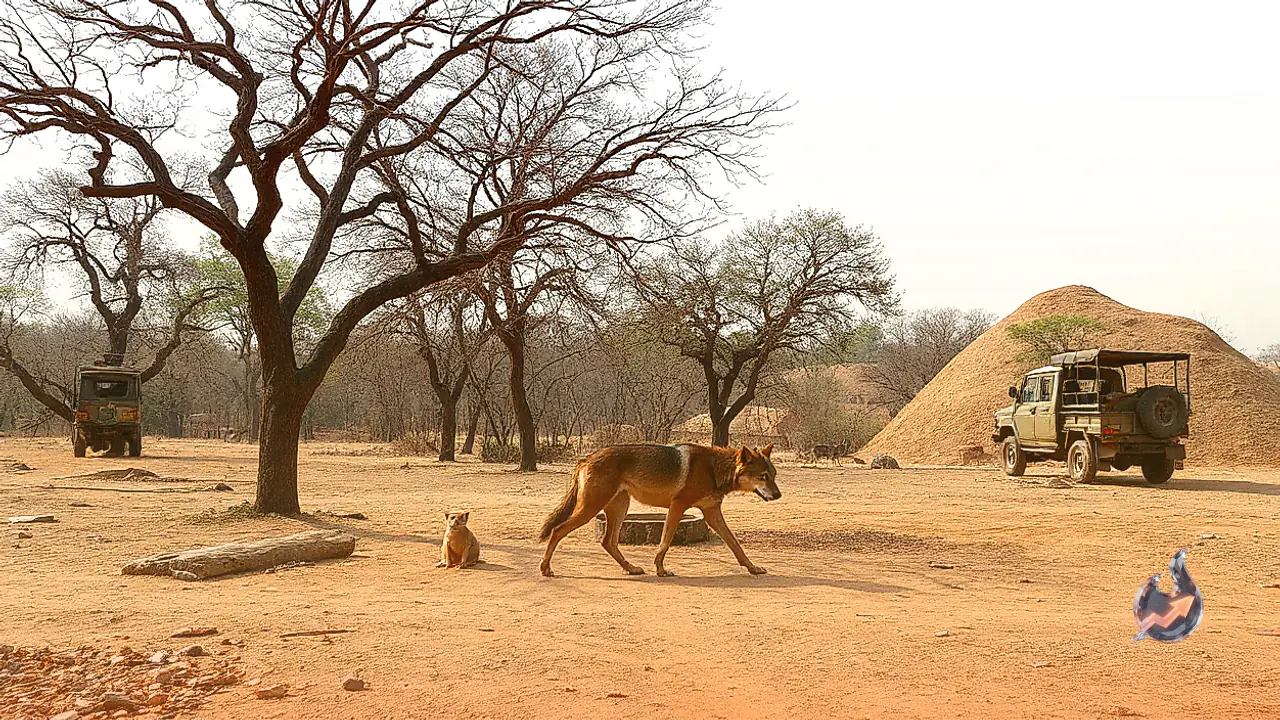

Forest authorities in Rajasthan have rolled out an extensive wildlife conservation plan designed to restore the state's dwindling wolf population. The initiative focuses on the forest belts of the Hadoti division and Ramgarh Vishdhari Tiger Reserve. Alongside these core areas, a detailed field survey has commenced around Mukundra Hills Tiger Reserve to map exact wolf counts, evaluate their natural shelters, and track their routine movement patterns across regional terrain.
Community Participation and Digital Tracking for Safe Corridors
A distinctive feature of this wildlife initiative is the active involvement of local residents and community stakeholders. The department is directly engaging forest-edge villagers, wildlife enthusiasts, independent researchers, and nature photographers to build ground-level support. To streamline data collection, the forest administration has introduced a dedicated Google form that allows anyone who spots a wolf in or near forest fringes to submit precise sighting details. Field personnel from the Kota division will utilize this crowdsourced data to establish protected transit corridors that keep wolves safe from habitat fragmentation.
Fifteen Years of Sharp Demographic Swings
Official records highlight drastic fluctuations in the state's wolf headcount over the past fifteen years. In 2010, Rajasthan held an estimated population of 1,289 wolves, but the figure dropped sharply over the following decade to 682 by 2020. The decline worsened in 2022, when total sightings hit a low of 532 animals. A modest turnaround emerged in the 2024 wildlife census, which recorded an improved statewide tally of 771 wolves. Wildlife specialists emphasize that consistent habitat protection and undisturbed conditions in Hadoti could help the predator population recover rapidly.
Dedicated 800-Hectare Sanctuary and Eco-Tourism Prospects
Preliminary wolf preservation measures had already been underway for two years across the Bhimjhari and Banka-Gopalpura buffer pockets of Ramgarh Vishdhari Tiger Reserve. Taking those efforts forward, officials are now carving out a specialized 800-hectare safe habitat within the plateau terrain of Uparmal under the Gopalpura forest range. This protected zone will cater specifically to wolves and bears. Comprehensive mapping of the landscape is currently progressing, paired with feasibility studies for community-based eco-tourism aimed at generating regional livelihoods while strengthening wildlife security.