























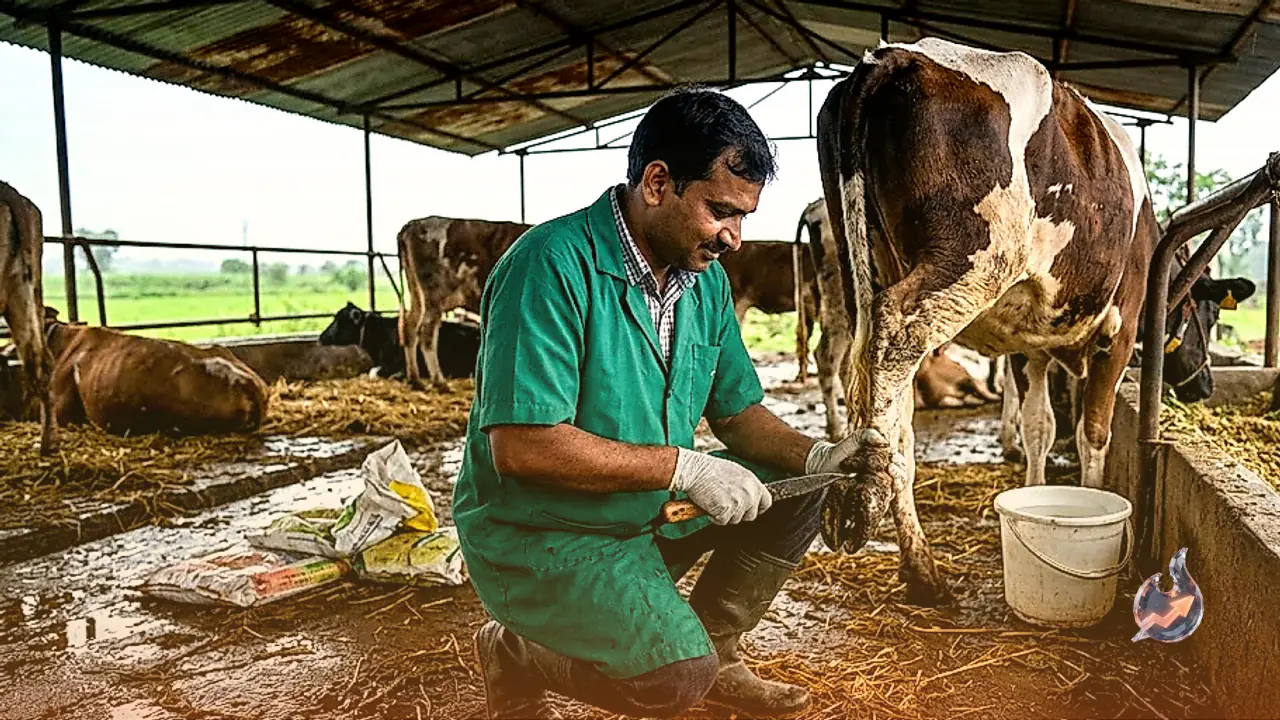

Monsoon rains bring welcome relief for farms, but for those who keep cattle and buffaloes, the same season opens the door to a fresh set of health risks. Damp shelters, muddy floors and wet fodder combine to create ideal conditions for infection, and veterinarians say even a small lapse in care can leave animals seriously ill, with a direct hit to milk output and a farmer's income.
Wet bedding puts hooves and lungs at risk
According to veterinarian Vinod Chaudhary, animals forced to stand on constantly wet, muddy ground for long stretches can develop wounds on their hooves and conditions such as foot rot. Sitting in damp, poorly ventilated areas also affects the lungs, raising the risk of respiratory illness and pneumonia. That is why he recommends keeping the spot where animals sit slightly raised off the ground, dry and clean at all times.
It is not just bedding that needs attention during the humid months. Rising moisture in the air allows fungus to develop quickly on oilcake, bran and grain feed. Feeding mouldy fodder over an extended period reduces an animal's productivity, and in pregnant animals it can even raise the risk of miscarriage. Farmers are advised not to stack feed sacks directly against the floor or a wall, but instead to store them on wooden planks or bricks, in a dry, well ventilated spot.
Balance green fodder with dry feed
Green fodder is abundant once the rains set in, but feeding animals a sudden, large quantity of it can upset their digestion and cause diarrhoea, which in turn cuts milk yield. To avoid this, green fodder should always be mixed in a balanced ratio with dry fodder or straw. Animals should also not be sent out to graze first thing in the morning while dew or rainwater is still sitting on the grass. Giving them a little dry fodder before letting them out reduces the chances of bloat.
Fresh grass can carry parasites into the gut
Once the rain lets up, fresh grass grows quickly across fields and pastures, but along with it come various parasites and their larvae, which end up inside the animal's body. This is why some animals keep growing weaker and produce less milk even though they are eating plenty of fodder. To guard against this, farmers should deworm their animals periodically. Timely vaccination is equally important to protect them from infectious diseases such as haemorrhagic septicaemia and foot-and-mouth disease.
Slippery floors are especially dangerous for pregnant animals
During the rains, dung mixed with water makes the floor of a cattle shed slick. If a heavy cow or buffalo slips on such a surface, it risks injury or a fracture, and the danger is even greater for a pregnant animal. Farmers are advised not to let water and dung accumulate on the floor, spreading dry sand as needed. Adding shallow grooves to a concrete floor also helps, since they give the hooves better grip and lower the chance of a fall.
Clean udders prevent mastitis
When animals sit in mud and filth during the rains, dung and soil stick to their udders. That grime can introduce infection at the time of milking and raise the risk of mastitis. Udders should therefore be washed with clean water or a disinfectant solution before milking, then wiped dry with a clean cloth before milk is drawn. The hands of the person milking, along with the utensils used, must also be kept completely clean.
Stop waterlogging and keep external parasites away
Vinod Chaudhary says standing water around the shed lets mosquitoes, flies and ticks multiply rapidly, and these can spread diseases such as surra and babesiosis among animals. Farmers should therefore make sure water does not collect around the enclosure and should keep the area clean on a regular basis. If any animal shows signs of illness, it should be tied up separately from the healthy ones immediately, with its own feed and water containers kept apart so the illness does not spread.