























Farmers growing bananas in Darbhanga could be staring at a risky few weeks, as rising moisture in the fields during September sharply raises the chances of disease striking the crop. That is why agricultural experts have laid out a set of precautions farmers need to follow right now.
A Crop Tied to Lakhs of Livelihoods
Banana cultivation supports the income of lakhs of families across large parts of the country, including Bihar. The advisory comes from Professor (Dr.) S.K. Singh, former Co-Director Research at Dr. Rajendra Prasad Central Agricultural University, Pusa, and Professor In-Charge at the Banana Research Institute, Gorual. He points to the latest APEDA report, which estimates India's banana production at nearly 39.9 million tonnes in 2026, with exports already touching 462 million dollars. That scale means growers can no longer focus on volume alone; producing blemish-free fruit that meets export standards has become essential.
Excess Moisture Puts Roots at Risk
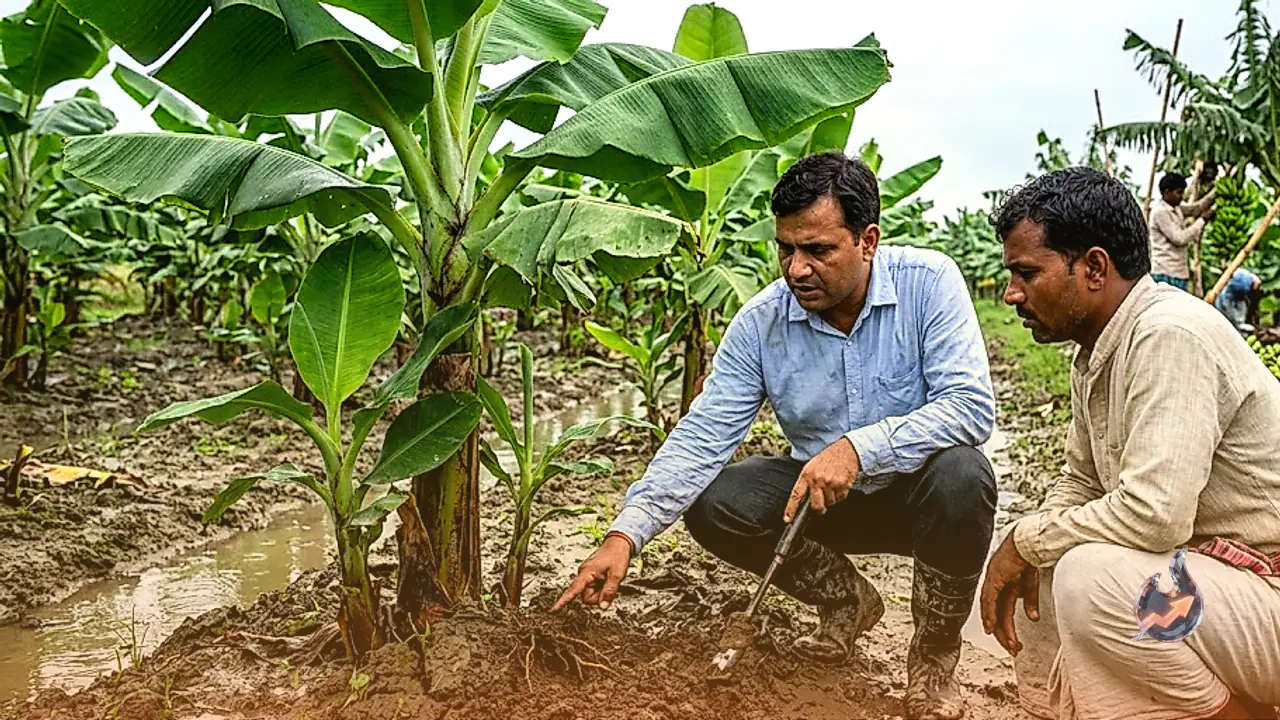
Fields tend to stay waterlogged for long stretches in September, and that takes a direct toll on banana roots, weakening them and opening the door to root rot alongside Fusarium wilt. Experts advise farmers to stop irrigation the moment standing water appears and open drainage channels immediately. If flooding sets in, digging deep drains between the rows to clear the water becomes the first priority.
Heavy Bunches Need Support
Heavy bunches combined with soft, waterlogged soil and strong winds raise the risk of plants toppling over. Plants that have already fruited should be propped up with two bamboo poles or a sturdy rope so the bunch doesn't bear excess pressure and the plant doesn't snap. Once the last hand has emerged, removing the male flower and fitting a bunch sleeve further improves fruit quality.
Keep Green Leaves, Watch for TR-4
Diseased and dried-up leaves should be removed, but green leaves must be left untouched since they nourish the bunch. Farmers have been told to stay especially alert for Fusarium wilt TR-4. If the lower leaves of a plant start yellowing and brown-red streaks appear inside the stem, no sucker should be taken from that plant at all, since doing so risks spreading the infection to others.
Advisory on Nitrogen, Weeds and Harvesting
This month, farmers are advised against unnecessary nitrogen application, weed build-up and keeping excess suckers. Harvesting should be timed to the fruit's maturity rather than a fixed calendar date. Cut bunches should not be left out in the sun, and the banned chemical calcium carbide must never be used to ripen the fruit, since it carries risks for both health and crop quality.