






















West Bengal schools told to swap skirts for full-sleeve uniforms as dengue cases climbWest Bengal
6 Sept 2026, 12:19 am (42 min ago)· 1

West Bengal schools told to swap skirts for full-sleeve uniforms as dengue cases climb

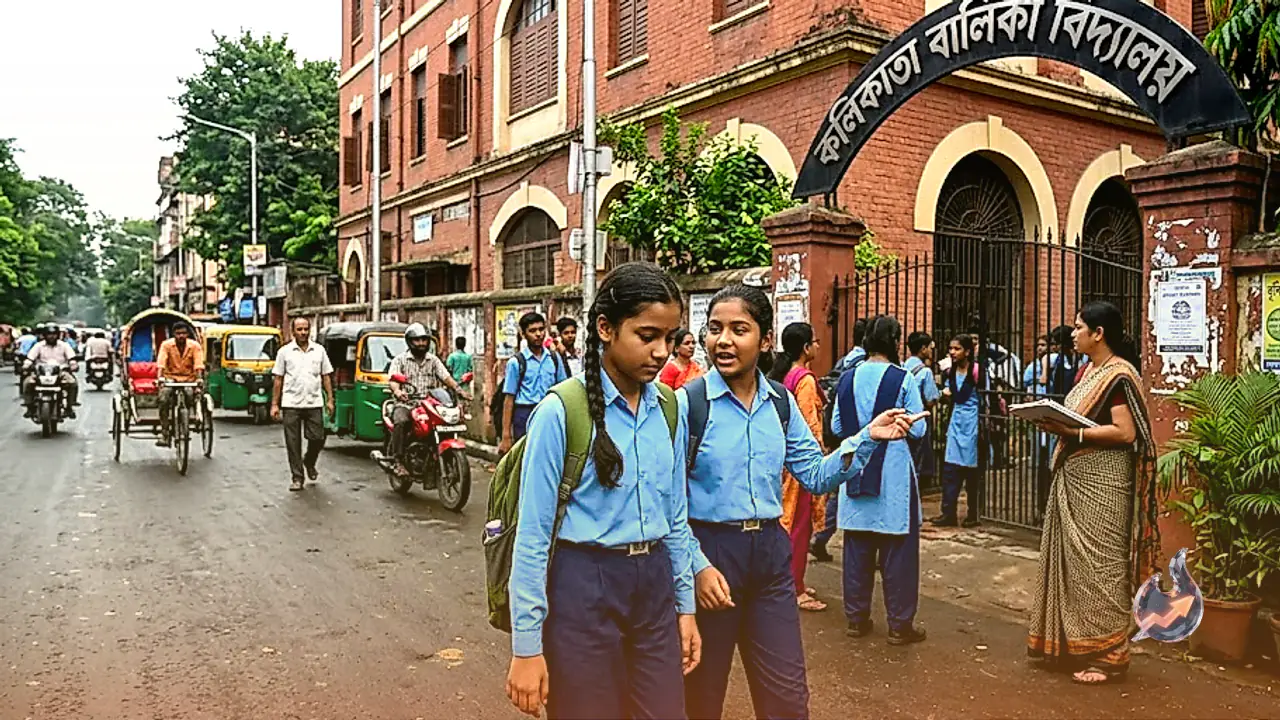
With dengue cases crossing 4,000 and 7 deaths reported in West Bengal, Health Minister Dr. Sharadwat Mukherjee has urged schools to make children wear full-sleeve clothing instead of skirts.

Dengue cases are climbing steadily across West Bengal, and that has prompted the state's Health Minister, Dr. Sharadwat Mukherjee, to make a pointed appeal about what children wear to school. He said mosquito bites are spreading both dengue and malaria, so covering the body as much as possible is the simplest way to keep children safe.

Full pants and shirts for boys, salwar suits for girls

Dr. Sharadwat Mukherjee has urged headmasters to make sure children wear full-body clothing at school for the next three months, whatever the regular uniform happens to be. He was direct about one thing: girls should not be sent to school in skirts, and should instead wear a salwar that fully covers the legs. He also pointed out that many parents rely on knee-high socks, but that does not offer real protection, because the socks are thin and cling to the skin, leaving children just as exposed to bites. For boys, he recommended full-length pants paired with full-sleeve shirts. He called this a genuinely important step and said the goal is to try to bring dengue numbers down specifically across September, October and November.

Also read

More than 4,000 cases and 7 deaths so far

Dengue outbreaks in West Bengal tend to turn severe every year during the monsoon season. In 2026 alone, the state has already recorded more than 4,000 dengue cases. The worst-affected areas are Kolkata, Howrah, North 24 Parganas, Murshidabad and South 24 Parganas. Official figures put the state's dengue death toll at 7 so far. Health officials are clearly worried about the numbers rising further in the coming weeks, which is why this school-level prevention push has been rolled out.

Dengue symptoms to watch for

  • High fever, typically 101 to 105°F, lasting 2 to 7 days
  • Nausea and vomiting
  • Severe headaches and pain behind the eyes
  • Skin rashes
  • Muscle and joint pain
  • A drop in platelet count
  • Bleeding from the nose or gums
  • Restlessness and difficulty breathing
  • Persistent vomiting, at least 3 times within 24 hours

How to protect against dengue

  • Wear clothing that covers the body fully.
  • Do not let water collect anywhere at home, especially in coolers, flowerpots, tyres, tanks or buckets, and clean them out every week.
  • Use a mosquito net even while sleeping during the day.
  • Fit mesh screens on windows to keep mosquitoes from entering the house.

Health officials believe that even these small precautions can meaningfully cut dengue numbers, provided schools and parents both take the appeal seriously.


Questions & Answers

How many dengue cases has West Bengal recorded so far?
The state has recorded more than 4,000 dengue cases so far in 2026.
How many people have died of dengue in the state?
Official figures show 7 dengue deaths have been recorded in West Bengal so far.
What has the Health Minister asked schools to do?
Dr. Sharadwat Mukherjee has asked schools to make boys wear full pants and full-sleeve shirts, and girls wear salwars that cover the legs instead of skirts.
For how long is this appeal meant to apply?
The appeal covers three months, September, October and November.
Which areas have seen the worst dengue outbreak?
Kolkata, Howrah, North 24 Parganas, Murshidabad and South 24 Parganas have reported the highest number of cases.
Why don't knee-high socks offer enough protection?
The minister said the socks are thin and cling to the skin, which still lets mosquitoes bite through them.

Comments 2

Karan Malhotra@karan-malhotra·27m ago

With over four thousand cases and seven deaths, the situation highlights how critical administrative vigilance is alongside public health measures. When a vector-borne illness threatens children, institutional interventions like dress code adjustments transition from mere suggestions to vital components of epidemic control. However, while school-level appeals are useful, the ultimate success of containment depends heavily on municipal authorities aggressively eliminating mosquito breeding sites at the grassroots level to stop the outbreak at its source.

Rohan Verma@rohan-verma·26m ago

This administrative measure is not limited to Bengal alone; it serves as a crucial lesson for densely populated states like Uttar Pradesh, where vector-borne diseases escalate severely after the monsoon. Unless local bodies aggressively execute fogging and anti-larval spraying outside schools and in residential zones, merely changing children's uniforms cannot permanently curb the epidemic's momentum.

Citizen journalism

Become a TrendKia journalist

Voice of the people

Share news, photos and videos from your area with TrendKia and let your voice reach the nation. Every citizen a journalist.

Join now
CH 01 LIVE
TrendKia TV ON AIR