





















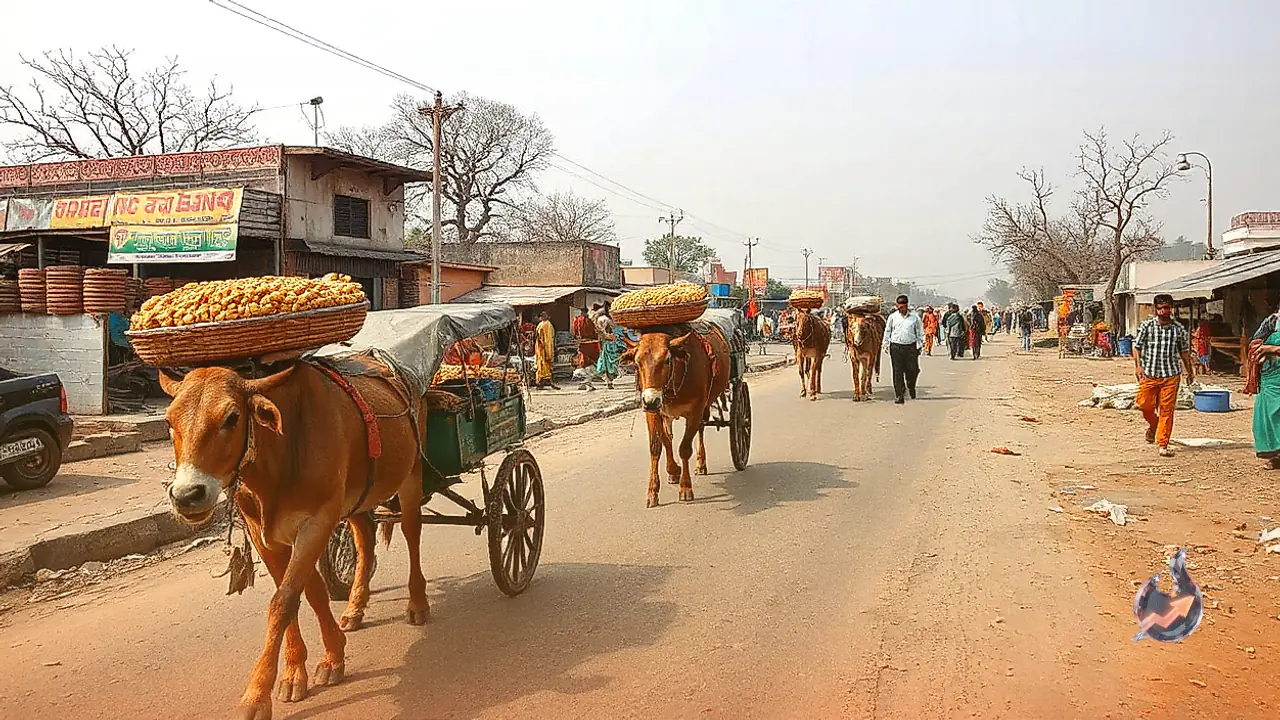

With the arrival of winter, the demand for traditional food items and seasonal delicacies experiences a notable surge across local markets. A unique sight currently captivates residents in Bharatpur, where genuine jaggery sourced from Uttar Pradesh has emerged as a major center of attraction. Rather than being stocked inside modern retail shops or commercial storefronts, this authentic sweetener is retailed through a remarkably traditional method. Vendors are showcasing various selections of the product directly from decorated bullock carts stationed around the city. This nostalgic approach of presenting different varieties on wooden carts continues to draw curious onlookers and buyers alike, reviving old-fashioned vending traditions. Prepared strictly from pure sugarcane, the items possess a distinct quality that winter shoppers deeply appreciate during the colder months.
Diverse Varieties and Customer Preferences
Several distinct forms of this traditional sweet are available for purchase from the carts, prominently featuring spherical jaggery laddoos and powdery granular variants. Each option offers a unique texture and flavor profile, enabling buyers to select products that match their specific culinary requirements. Individuals who cherish authentic, traditionally crafted flavors make it a point to visit these mobile setups. The merchant managing the cart explains that bringing diverse batches directly to the market allows patrons to inspect the color, texture, and overall purity before making a purchase. Sales witness a significant boost as winter deepens, with numerous households procuring the items for daily consumption. Additionally, several buyers utilize the product to prepare traditional sweets and seasonal regional recipes at home.
Pricing Structure and Market Presence
The cost of the offerings varies depending on the specific texture and processing style of the items. Round jaggery laddoos are currently being retailed at approximately 100 rupees per kilogram in the market. Meanwhile, the powdered variety commands a slightly higher rate, reaching up to roughly 150 rupees per kilogram. These distinct price points reflect the differences in processing and variety. As winter tightens its grip, the traditional sweetener from neighboring Uttar Pradesh continues to secure a firm foothold in Bharatpur, blending nostalgic vending methods with timeless flavors to delight local consumers.