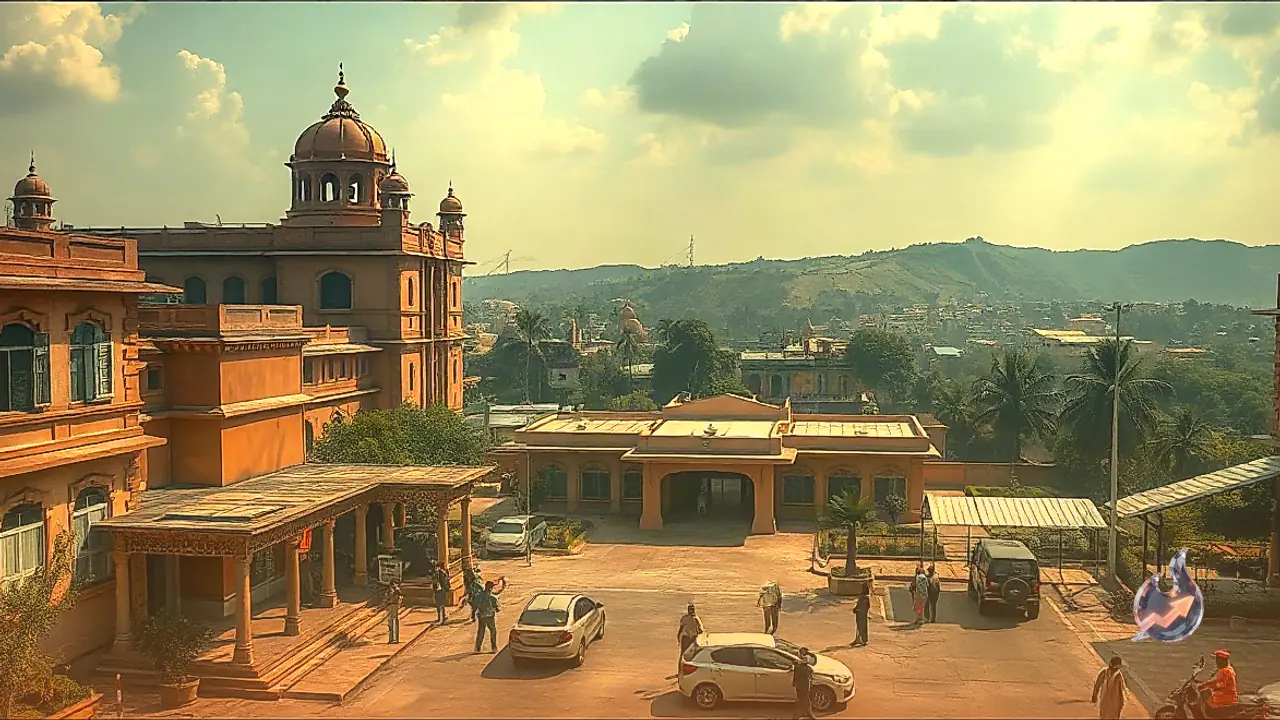























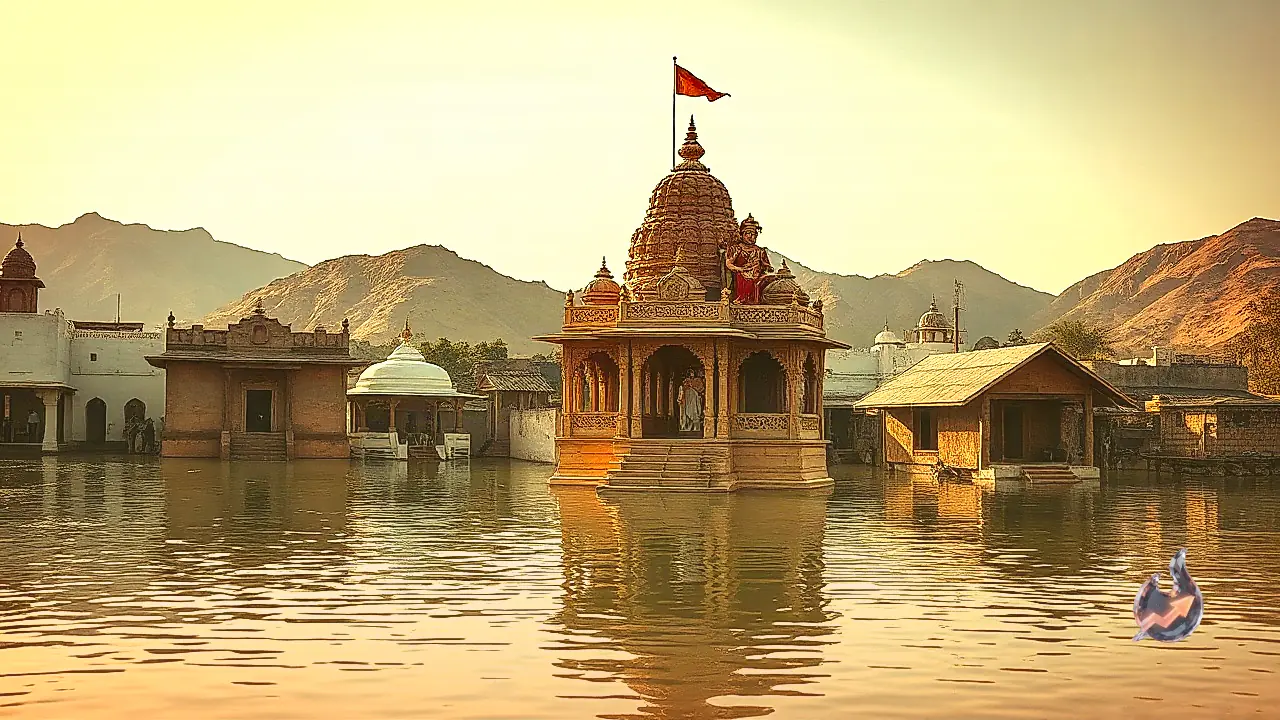

Across Rajasthan, several historic shrines dedicated to Lord Hanuman continue to draw pilgrims due to their distinct architecture and deeply entrenched folklore. Among these holy sites, an exceptionally intriguing temple stands near Karauli, where the presiding deity remains surrounded by deep water for the greater part of every year. During the monsoon downpours, the entire structure becomes completely inundated, yet the shrine has stood steadfastly amidst the surging waters across decades without suffering structural collapse.
Located in the Foothills of Veerwas Village
This remarkable shrine is situated a short distance away from the main urban limits of Karauli city, nestled right beneath the rugged hills of Veerwas village. While the architectural elevation of the building reflects a modest and conventional design, its defining feature remains its persistent submersion under surrounding water. According to regional residents, they have observed the premises encircled by water for nearly four decades. As seasonal rains elevate local runoff, the structure goes fully under water, yet the shrine continues to maintain its ground with remarkable firmness.
Sculpture Captures the Epic Ahiravan Rescue Sequence
The sacred idol enshrined within the inner sanctum displays an extraordinary design seldom found elsewhere. In this sculpted form, Lord Ram and his brother Lakshman are positioned reverently upon both shoulders of Hanuman. Local devotees explain that this iconography draws its inspiration directly from the well known Ahiravan episode chronicled in the Ramayana. According to scriptural accounts, when the demon ruler Ahiravan deceitfully abducted Ram and Lakshman to Patala, Hanuman descended into the subterranean realm, vanquished the adversary, and carried both princes back safely. The Karauli idol captures the visual essence of this miraculous liberation.
Darshan Feasible for Only Two to Three Months Annually
Bharat Singh Jadaun, a resident of Veerwas village, shares that he has witnessed the structure submerged in water since his early childhood years. Throughout the monsoon phase, the entire holy place sinks beneath the surface, while devotees must wait for receding water levels to secure a clear glimpse of the deity. Residents note that the complex remains enclosed by water for approximately 8 to 10 months in any given calendar year. It is only during the peak summer window, when evaporating water causes the levels to drop substantially, that pilgrims can walk up to the sanctum. During transitional periods, visitors must wade through knee deep water, leaving barely two to three months when visitors can offer prayers with relative ease.
Devotees Flock to Bagichi Wale Hanuman for Fulfilled Vows
The shrine is revered locally as Bagichi Wale Hanuman, and worshippers maintain an unshakable conviction that heartfelt petitions made before this altar are answered without fail. Congregation numbers swell significantly on Tuesdays and Saturdays, when visitors arrive to offer ceremonial chola to the deity despite logistical challenges posed by surrounding water.
Abhishek Singh Jadaun, another local villager, remarks that seeing Hanuman depicted with Ram and Lakshman seated upon his shoulders is an exceptionally rare sight across Hindu sacred art. This distinct depiction, paired with the enduring phenomenon of the temple standing unharmed in standing water, continues to bring devotees from surrounding regions to witness the holy precinct.